Healthcare SEO challenges became substantially more complex after Google’s core algorithm update in mid-2018. The update, known as the “Medic Update, targeted health and wellness websites and created new ranking hurdles for medical professionals online. Your healthcare website might have seen declining visibility in search results since 2018 – and you’re not alone.
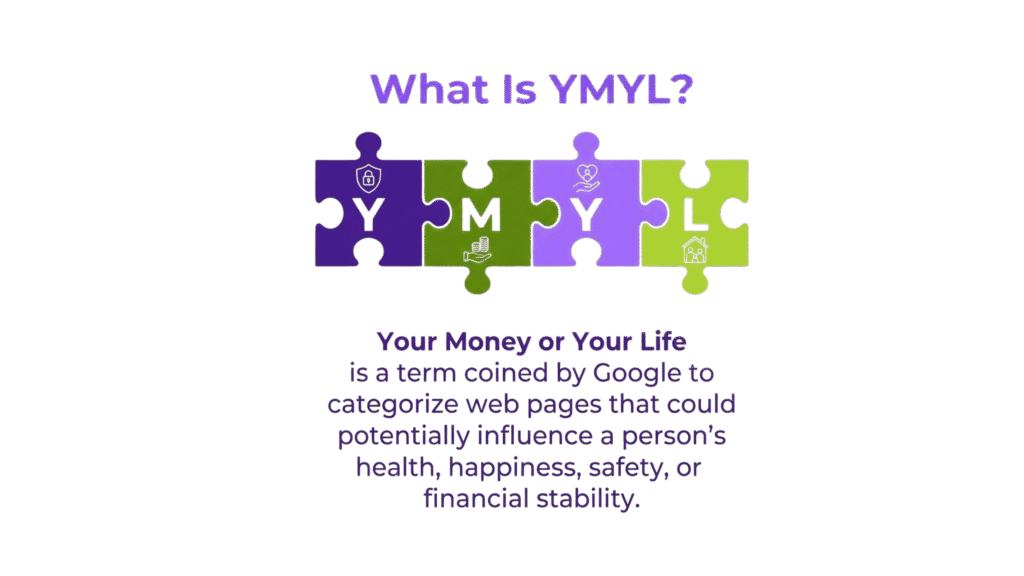
The reason lies in Google’s special classification called YMYL (Your Money, Your Life). This classification covers any webpage that could affect people’s safety, financial stability, health, or happiness. Google reviews these websites more strictly. Technical problems like the meta noindex tag can stop search engines from properly indexing your healthcare website’s pages. Most healthcare sites face issues with slow page speeds, while Google gives priority to local results for healthcare services.
Here, will help you understand why your healthcare website might be losing rankings and what technical SEO problems could hurt your visibility. You’ll also learn how healthcare SEO services can help overcome these medical SEO barriers. The discussion includes the vital role of E-E-A-T for healthcare websites and useful solutions to boost your rankings.
Understanding Google’s Standards for Healthcare Sites
Google evaluates medical websites more strictly than almost any other online industry. You need to understand these standards to overcome healthcare SEO challenges and make your site more visible.
What is YMYL And Why Does It Matters
Your healthcare website belongs to Google’s “Your Money or Your Life” (YMYL) category. This vital label means your site can affect people’s health, safety, financial stability, and overall well-being. Google holds these websites to the highest standards of accuracy and credibility.
The logic behind this extra scrutiny makes sense – wrong medical information could harm users who depend on it for crucial healthcare decisions. Search algorithms examine healthcare websites much more carefully than non-YMYL content.
YMYL classification covers several healthcare provider categories:
- Health and safety information
- Medical treatments and advice
- Disease diagnosis and symptoms
- Pharmaceutical information
- Healthcare facility information
Medical professionals should know that ranking well takes more than just SEO tactics. Your site must build real trust and authority before technical optimization can work.
How E-E-A-T Affects Your Rankings
E-E-A-T means Experience, Expertise, Authoritativeness, and Trustworthiness. Google recently added “Experience” to their previous E-A-T framework to highlight real-life credentials. This framework now serves as the main quality assessment tool for healthcare websites.
Each element shapes your healthcare site’s ranking potential:
Experience: Showing hands-on clinical knowledge and patient care expertise. Expertise: Highlighting professional medical credentials and specialized training Authoritativeness: Getting recognition from other medical authorities and institutions Trustworthiness: Keeping accuracy, transparency, and security in all content
Qualified healthcare professionals should either write or review every piece of medical content with their credentials clearly visible. More than that, detailed author bios, clear contact information, and transparent privacy policies signal legitimacy to users and search algorithms.
E-E-A-T might not directly affect rankings, but it shapes how Google’s algorithms judge your site’s quality. Medical SEO requires these quality signals as essential building blocks for ranking success.
The Impact of the Medic Update and Beyond
Google’s “Medic Update” in August 2018 altered the map for healthcare SEO services. This algorithm change targeted health and wellness websites and reinforced E-A-T principles. Many medical websites experienced a sharp decline in their rankings after this update.
Sites that struggled most had:
- Outdated medical content without expert input
- No author credentials or verification
- Poor security or slow loading speeds
- Generic content lacking medical backing
All the same, sites that showed genuine medical authority managed to keep or improve their positions. The update clearly favored content from recognized healthcare professionals over general writers.
Over the last several years, Google has kept fine-tuning its approach to healthcare SEO challenges with more updates. The March 2024 Core Update made medical content requirements even stricter, putting more weight on trustworthiness and source reputation.
Your website must focus on quality over quantity to overcome these medical SEO barriers. Each page needs clear medical expertise, credible source citations, and current information. Health advice publishers who don’t meet these standards risk both ranking drops and potentially harming their audience.
These Google standards matter beyond just improving rankings—they help provide the trustworthy medical information that search engines and patients just need.
Common Medical SEO Barriers You Might Be Overlooking
Healthcare websites often rank poorly despite offering quality services. Technical barriers can quietly hurt your SEO efforts even with great content strategies. Let’s get into the most common healthcare SEO challenges that might be hurting your site’s performance.
Lack Of Author Credentials And Bios
Doctors face big hurdles when creating content – 31% don’t have enough time because of busy schedules, and 10% find it hard to balance writing with patient care. Author credibility remains essential for healthcare websites.
Google can’t verify your content’s E-E-A-T signals without proper author credentials. Healthcare providers need to showcase their experience through professional credentials and years of practice. Detailed author bios that include medical qualifications, certifications, and specializations build credibility that users and search engines need.
Every piece of content needs a brief author bio with relevant credentials (MD, FACS, Ph.D.) and possibly a photo. This builds authority and creates a personal connection with future patients.
Inconsistent NAP Across Directories
NAP (Name, Address, Phone number) consistency affects your local search rankings directly. Research shows NAP inconsistency is the biggest problem affecting local search rankings, with 41% of businesses showing inconsistent listings.
Google questions your business’s legitimacy when your practice’s contact information varies across online directories. This leads to lower local search rankings. About 80% of consumers don’t trust businesses with inconsistent names or contact details online.
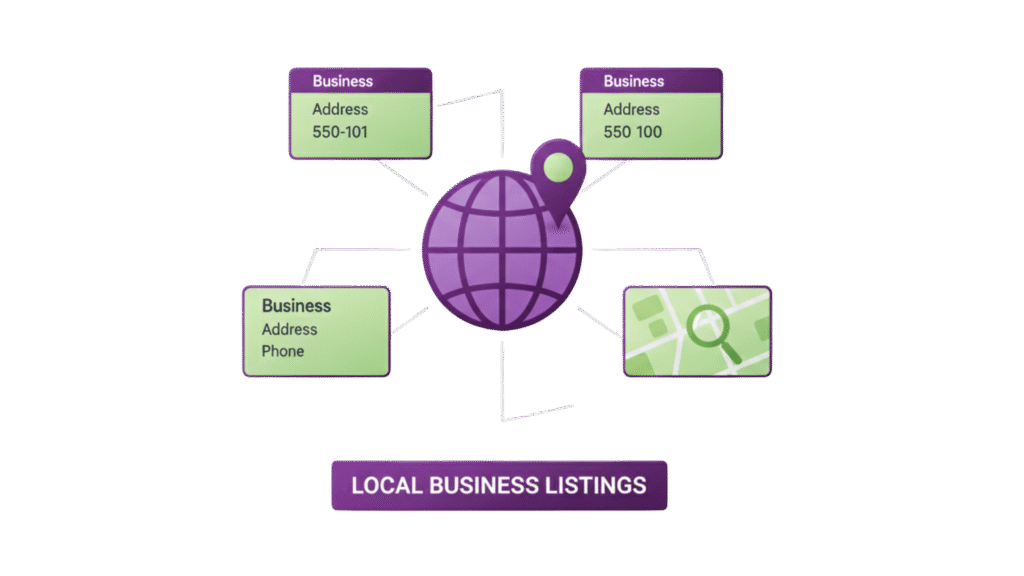
This hurts healthcare practices, especially since 74% of patients check a provider’s NAP information before booking appointments. You need regular NAP audits to keep information consistent across all digital platforms.
Missing HTTPS Or Poor Site Security
Website security matters for rankings and compliance. IBM reports that healthcare data breaches cost more than any other industry at USD 9.23 million. Healthcare has become a prime target for cyberattacks. All web applications connected to vital health data are vulnerable to cybersecurity breaches.
Google penalizes websites without SSL security. Your healthcare website must use secure sockets layer (SSL) technology to protect page, form, and transactional data. Sites with SSL certificates have URLs starting with “https” instead of “http.” Google’s Transparency Report shows 93.2% of browsing time on Google Chrome happened on SSL-protected websites.
Security builds patient trust. Your protected health information (PHI) needs encryption during transmission between systems and while stored in databases.
Outdated Or Unverified Medical Content
Search engines reward websites with clear, relevant, and current information. Outdated or messy content can hurt your credibility a lot. You might have old service pages, keyword-stuffed content, or poorly organized layouts.
Errors in facts or grammar won’t build trust in your services. Healthcare websites must stay current with the latest research. Everything you publish needs to be accurate, trustworthy, and safe for readers.
You can beat these medical SEO barriers by reviewing your content regularly to find outdated information. Use reputable sources like government health agencies and peer-reviewed journals to build reliability. Content showing real medical authority performs better than generic health information.
Finding and fixing these hidden healthcare SEO challenges helps improve your rankings and build patient trust. Healthcare SEO services are a great way to get help spotting these invisible barriers and creating effective solutions.
Technical SEO Issues That Hurt Healthcare Rankings
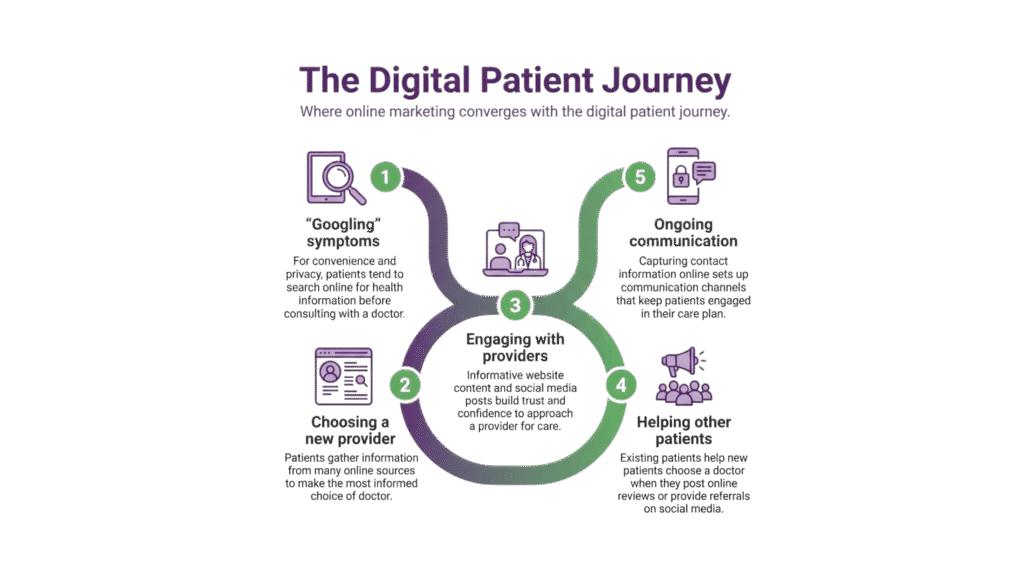
Your healthcare website might look great on the surface, but technical SEO problems could hurt your search visibility quietly. These technical roadblocks can keep your site from ranking well, even with great content and proper credentials.
Improper Use Of Meta Noindex Tags
The meta noindex tag often causes poor healthcare rankings. This simple line of code (<meta name=”robots” content=”noindex”>) tells search engines to skip your page in search results. You might have this tag enabled by accident through a checkbox in your content management system.
You can find this issue by looking at your page’s source code and searching for “noindex”. Tools like Moz or Screaming Frog can crawl your site and show all pages with this tag. The fix is simple – remove the tag and ask Google to index the page through Google Search Console.
Slow Page Speed And Poor Mobile Experience
Page speed affects patient engagement and your healthcare SEO challenges directly. Research shows pages loading in 3.1-4.0 seconds lose 6% of conversions. Pages taking 9.1-12.0 seconds lose 84% of conversions. Mobile optimization matters more since 82% of patients view medical websites on their phones.
These technical improvements can boost your site performance:
- Compress images to under 30KB for mobile devices
- Enable browser caching for repeat visitors
- Minimize HTTP requests by consolidating scripts
- Implement lazy loading for below-the-fold content
Broken Internal Links And Poor Site Structure
Bad website architecture hurts your medical SEO barriers efforts. Patients should find information within one or two clicks. Broken links create dead ends that frustrate users and confuse search crawlers.
Your pages should be within three clicks from the homepage. Strategic internal linking helps reinforce topical relevance. Regular site audits help you spot structural weaknesses that affect your healthcare SEO services performance.
Duplicate Content And Missing Canonical Tags
Duplicate content can hurt your page’s authority in search rankings. Provider profiles shown across multiple domains often cause this issue. Google might skip ranking these pages, which reduces your visibility.
Canonical tags solve this problem: <link rel=”canonical” href=”https://yoursite.com/your-preferred-URL” />. This HTML element tells Google which version should appear in search results when placed on duplicate pages. Original content needs self-referential canonical tags to avoid confusion.
These technical healthcare SEO challenges need specialized SEO services and healthcare expertise to diagnose and fix problems specific to medical websites.
Why Content Relevance and Authority Matter More Than Ever
Quality content directly affects your healthcare website’s search rankings. A recent study revealed that 86% of Americans use the internet to look up medical advice before seeing a doctor. Your website needs quality content to attract patients. Here are the major content issues that hurt your rankings.
Poor Keyword Choices And Unclear Page Topics
Your content won’t reach the right audience if you target the wrong keywords. Healthcare sites often chase competitive terms instead of using long-tail keywords that match what patients search for. Your keywords should reflect real patient searches—like “foot doctor in Tulsa” rather than just “podiatrist”.
Search engines and users get confused by unclear page topics. Each page needs one clear topic that connects to your services. Google can’t match your page with relevant searches if it doesn’t understand the content.
Not Enough Content About Core Services
Successful healthcare websites provide detailed content about their main services. Note that educational content needs updates as medical guidelines and treatments change. A website with little information about your specialties creates gaps that weaken your authority signals.
Better content does more than boost SEO—it helps patients trust you. Research shows users spend more time reading thorough, useful information. Pages that visitors leave after staying just 20 seconds tell search engines the content isn’t relevant.
Too Many Keywords And Over-Optimization
Keyword stuffing remains one of the worst healthcare SEO challenges. Some people still think using more keywords improves rankings, but this outdated practice actually hurts them. Google penalizes websites that have:
- Too many repeated keywords
- Keywords that don’t fit naturally
- Multiple pages targeting similar keywords
- Hidden text meant to trick rankings
Using main keywords more than once every 200 words can trigger penalties. You should write natural, readable content instead of forcing keywords where they don’t belong.
Missing Local Content For Nearby Searches
Local SEO significantly affects medical SEO barriers. Patients look for healthcare providers near them, so location-specific content matters. Without local targeting, you miss 77% of Americans who use smartphones to find healthcare.
Your website needs location-specific phrases throughout—in content, page titles, and metadata. Each office location should have its own page with:
- Full address and contact information
- Services specific to that location
- Google Maps integration
- Details about providers
Regular updates with community news help boost local search visibility. Local blog posts like “Flu Shot Clinics in Northern Virginia” build geographical relevance and connect with nearby patients.
How to Improve E-E-A-T for Healthcare SEO Services
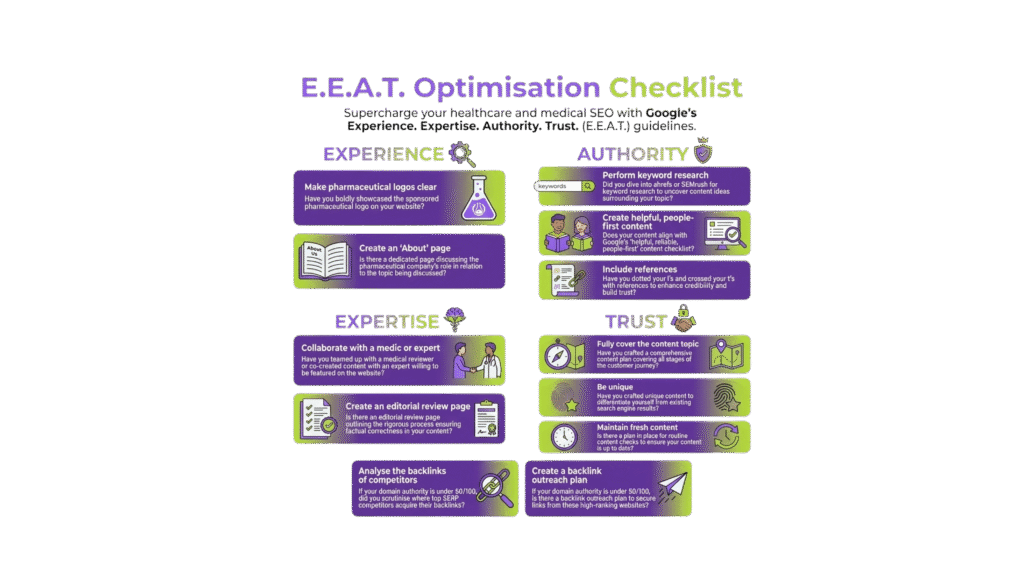
Your medical site needs strong E-E-A-T (Experience, Expertise, Authoritativeness, Trustworthiness) signals. The right approach will help you overcome healthcare SEO challenges and establish your site as a trusted resource.
Add Detailed Author Bios With Credentials
Research shows 92% of patients read physician bios before booking their first appointment. Your author bios should showcase medical qualifications, certifications, and clinical experience. Patients value three core elements in physician bios: care philosophy, reason for practicing medicine, and professional values.
Create dedicated author pages that link from each byline. These pages should highlight educational background, publications, and professional affiliations. Write these bios in third person and keep the language available to patients rather than medical peers.
Encourage Patient Reviews And Testimonials
Recent data reveals 73% of patients look at online reviews when choosing healthcare providers. Google, Facebook, and Yelp reviews affect medical SEO barriers the most. You can get more reviews through post-appointment email requests and QR codes in your office. These reviews boost your local SEO and build trust with potential patients.
Use Schema Markup For Medical Content
Schema markup helps search engines understand your medical content better. You should use specialized types like Medical WebPage, Physician, and MedicalClinic to make your page content clear for search engines. On top of that, it helps to add FAQ schema for common patient questions. This qualifies you for rich results and gives AI accurate answers about your healthcare SEO services. The structured data shows important details in search results, such as contact information, reviews, and operating hours.
Cite Expert Sources And Medical Consensus
Expert sources like the WHO or the CDC should back your medical information. Note that scientific citation needs accuracy, completeness, and consistent application. You should stick to peer-reviewed publications for medical content instead of commercial health websites. Being transparent about content limitations helps maintain credibility with readers and search algorithms.
Conclusion
Healthcare websites face unique challenges in search rankings. Google holds medical websites to higher standards through YMYL classification, making optimization a lot harder than in other industries. The 2018 Medic Update altered the map of the game, and healthcare providers had to adapt their SEO strategies.
Silent ranking killers often lurk in your healthcare website’s technical SEO. Without doubt, issues like accidental noindex tags, slow loading speeds, and duplicate content can undermine even the best content strategy. Regular technical audits should be part of your ongoing website maintenance routine.
E-E-A-T factors are the lifeblood of successful healthcare SEO. Showcasing your medical credentials, patient reviews, and proper schema markup directly affect how search engines review your trustworthiness. Content that shows real expertise will outperform generic health information every time.
Local relevance plays a crucial role for healthcare providers. Patients search for medical services within their immediate area, which makes location-specific optimization vital to capture these high-intent searches. Your site should have dedicated pages for each practice location and include community-specific information.
Note that healthcare SEO goes beyond rankings—it connects patients with needed care. Prioritizing both technical excellence and genuine medical authority creates a website that serves search engines and patients well. Your healthcare website might need specialized SEO services as the next step toward better visibility and patient acquisition if it still struggles despite your efforts.
FAQs
What are some common technical SEO issues affecting healthcare websites?
Common technical issues include improper use of meta noindex tags, slow page speed, poor mobile experience, broken internal links, and duplicate content. These problems can prevent search engines from properly crawling and indexing your site, negatively impacting your visibility in search results.
How important are author credentials for healthcare website rankings?
Author credentials are crucial for healthcare websites. Including detailed author bios with medical qualifications, certifications, and clinical experience helps establish expertise and trustworthiness. This is a key factor in Google's E-E-A-T (Experience, Expertise, Authoritativeness, Trustworthiness) evaluation for medical content.
What role does local SEO play in healthcare website rankings?
Local SEO is critical for healthcare providers as most patients search for medical services in their immediate area. Optimizing for local searches by creating location-specific content, maintaining consistent NAP (Name, Address, Phone) information across directories, and encouraging patient reviews can significantly improve visibility in local search results.
How can healthcare websites improve their E-E-A-T signals?
To improve E-E-A-T signals, healthcare websites should focus on adding detailed author bios with credentials, encouraging patient reviews and testimonials, using schema markup for medical content, and citing expert sources and medical consensus. These strategies help establish trust and authority with both search engines and potential patients.