Local SEO strategy deserves top priority if you operate a business with a physical location. Many people imagine local SEO as a complex formula hidden away by Google, but the reality is much simpler.
Neighborhood page SEO uses proximity ranking to help users discover the closest and most relevant businesses, which makes connecting with local service providers quick and easy. Your success in local search depends on three key factors: your distance from the searcher, your content’s relevance, and the online ‘prominence’ you build through reviews, citations, and effective local SEO tactics.
Here, will walk you through the neighborhood page SEO guide that ranks well across your service areas. You’ll learn to implement hyperlocal SEO strategies that resonate with nearby customers and build the online presence needed to dominate local search results in your target neighborhoods.
Start with a Local SEO Audit
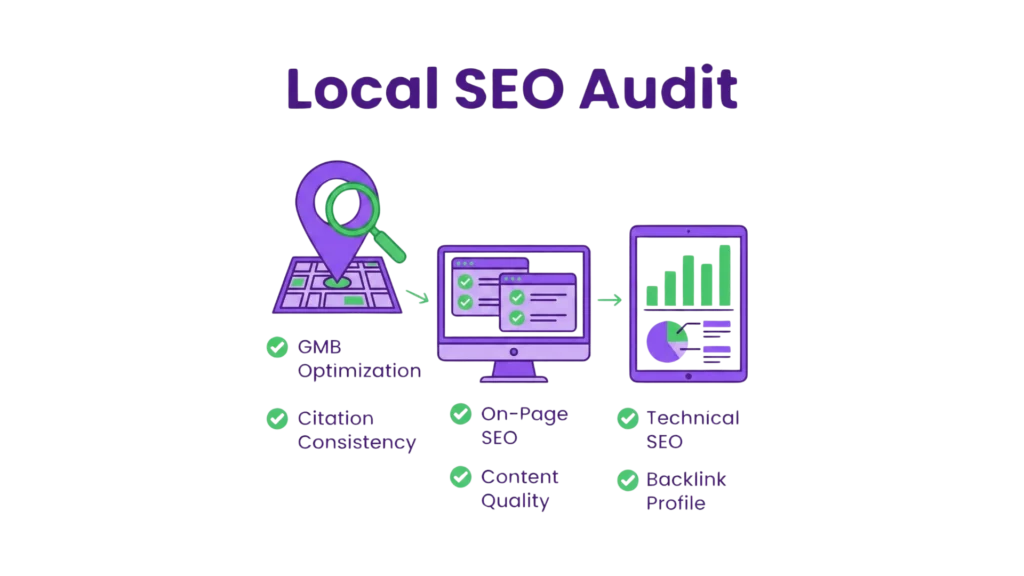
A local SEO audit helps you understand your position in the digital world before starting any neighborhood-focused SEO campaign. You need this vital first step to spot strengths, find weaknesses, and build a targeted hyperlocal SEO strategy.
Check Your Current Neighborhood Visibility
Your local search visibility becomes clear when you track how your business ranks for neighborhood-specific keywords. Most businesses make the mistake of looking at state-level rankings. These rankings often don’t match what users see in specific cities or neighborhoods. Studies show that 48% of cities experienced complete ranking elimination despite strong state performance.
You can get a full picture of your neighborhood visibility by:
- Using a rank tracking tool like Map Rank Tracker to monitor your business’s rankings across different geographic points for the same keywords
- Tracking rankings at high spatial resolution (parcel level) instead of broad areas
- Checking visibility in all neighborhoods within your service area
- Getting into both Google Maps and organic search results
Studies show virtual neighborhood assessments can save time while staying accurate. Parcel-level virtual ratings take about 16.1 minutes compared to 34.9 minutes for direct ratings, including travel time. This efficiency lets you review your visibility across multiple neighborhoods effectively.
Identify Gaps in GEO-Targeting Signals
Once you know your current visibility, look at the specific signals Google uses to determine neighborhood relevance. Research shows Google looks at four key areas for local rankings:
Your Google Business Profile needs to be complete. This means your business name, categories, hours, photos, and posts should be in order. Google gives priority to listings that stay complete, accurate, and updated regularly.

NAP (name, address, phone) consistency matters across all online platforms. Search engines and potential customers get confused by inconsistencies. Research confirms that citation accuracy plays a key role in local search rankings.
Your website should have neighborhood-specific content. Pages work better with embedded maps, business schema, and links to nearby locations that show local intent.
Mobile website performance can make or break your success. Local searches happen mostly on phones, so your website must work well on mobile devices.
Compare With Local Competitors
Looking at your competition gives context to your neighborhood SEO work. Start by finding your actual local competitors. Use incognito Google searches with your main keywords in target neighborhoods. Note that competitors can be different from one location to another.
Look at their Google Business Profile strategies, focusing on:
- Category choices and keyword use in business descriptions
- Review numbers, quality, and how they respond
- Photo quantity and quality (businesses adding photos get 42% more direction requests and 35% more website clicks)
- How often they post and what content they share
Their neighborhood pages deserve attention too. Look at their content depth, backlink profiles, and where they’re listed online. This shows you exactly how they outrank you in specific neighborhoods.
Real estate SEO services stand out through neighborhood expertise. Google and potential clients value detailed neighborhood guide optimization that shows your deep local knowledge. This positions you as an authority in your service areas.
Create a Scalable Neighborhood Page Strategy

Building effective neighborhood pages needs a flexible approach that works as your business grows. Research shows that pages focused on specific locations can boost local rankings by 21%. After you finish your local SEO audit, you’ll need to build a system that works for all your neighborhood pages.
How To Choose Which Neighborhoods To Target
The right neighborhood selection is the foundation of your hyperlocal SEO strategy. Here’s what should go on your priority list:
- Proximity to your business location – Start with areas within a 30-minute radius of where you are, since this directly affects how visible you’ll be in searches
- Search volume and competition – Look at Google Search Console data to find neighborhoods where you have a good chance of ranking
- Current client distribution – Look at where your existing customers live to spot neighborhoods that already like what you offer
- Strategic expansion areas – Pick areas that fit your business’s growth plans
Real estate SEO services and similar businesses need precise targeting. Having 20-30 neighborhood pages works better than just focusing on cities. This helps you show up first when people look for services in their specific area.
City Vs. Neighborhood Pages: What’s Better?
The best results come from using both city and neighborhood pages in a structured way. Here’s a system that works:
- Top-level pages – These cover cities or major districts
- Second-level pages – These focus on specific neighborhoods, condo buildings, or property types
Search engines understand this structure better when you show how broader areas connect to specific neighborhoods. Businesses without physical locations in every area they serve need this structure even more.
City pages help with general visibility. Neighborhood pages connect you with people searching in specific areas. Using both lets you compete for broader terms while catching specific searches that often mean someone’s ready to buy.
Avoid Duplicate Content Across Pages
Many businesses make the mistake of copying content across location pages. This leaves search engines confused about which version to show first. It wastes your SEO power and crawl budget.

Here’s how to keep your neighborhood pages unique:
- Create unique value – Each page should be at least 40-60% different from others
- Add location-specific elements – Talk about local landmarks, community work, and what local clients say about you
- Make service descriptions different – Focus on services that matter most to each neighborhood’s people and homes
- Use unique visuals – Add pictures and videos that show what makes each neighborhood special
- Get technical SEO right – Use self-referencing canonical tags to show which page version matters most
Don’t just swap out city names and keep everything else the same—Google spots this easily. Take time to create content that really speaks to each neighborhood’s character.
A good system for neighborhood pages helps you dominate local search results everywhere you work. When done right, your neighborhood pages connect you with people looking for your services right in their area.
Write Content That Reflects Local Intent

Your neighborhood pages need strong local content that connects with people searching in your area. Just adding location names across your website won’t cut it. You’ll need to understand what makes each community special and how locals talk about their area.
Use Hyperlocal Keywords Naturally
Hyperlocal keywords go beyond simple location terms. These keywords should match how residents actually describe their area. A good neighborhood page should have:
- Neighborhood-specific terminology – Use nicknames that locals give to areas and regional language variations
- Nearby landmarks or reference points – Point to places people know like “near Pioneer Square” instead of just city names
- Community features – Talk about local parks, school districts, shopping areas, or specific streets
- Local events or organizations – Mention community gatherings, farmers’ markets, or yearly traditions people love
People who search with hyperlocal intent often ask questions like “where can I find” or “what’s the closest” on their mobile devices. Your content should match this natural way of speaking. Make sure your pages answer location-specific questions that match what locals are searching for.
Include Real Examples And Client Stories
Generic neighborhood descriptions don’t build trust. Yes, it is true that 47% of consumers think “locally owned” matters in their buying choices. Here’s how you can show you really know the area:
- Get testimonials from customers in each neighborhood
- Write case studies about local problems you’ve solved
- Show how you participate in community events or partnerships
- Include interviews with local business owners or community leaders
Real estate SEO services need solid neighborhood expertise. A property page that talks about “Victorian homes in Oakwood Heights” connects better than just saying “homes for sale.” Success stories from local clients help potential customers see how your services fit their needs.
Add Visuals Of Local Landmarks Or Events
Visual content makes your neighborhood pages more relevant. Good images and videos help boost customer engagement and search visibility. Here’s how to make the most of your visuals:
- Take real photos of neighborhoods instead of using stock images
- Add location details to image file names and descriptions
- Make videos that show neighborhood walkthroughs or local events
- Create maps that show where you are relative to local landmarks
These visuals help search engines understand where you operate. They also give potential customers a better feel for your service area. Photos of local landmarks, community events, and familiar neighborhood spots help search engines connect your business to specific local searches.
Boost Trust with Reviews and Social Proof

Reviews and social proof work as powerful trust signals for your neighborhood pages. Research shows that 88% of consumers trust online reviews as much as personal recommendations. This makes them crucial for your hyperlocal SEO success. Local residents’ genuine feedback boosts potential clients’ confidence in your business whenever they search for services in specific neighborhoods.
Encourage Reviews From Local Customers
You need a smart plan to build neighborhood-specific reviews. The numbers speak for themselves – 97% of consumers say reviews influence their buying decisions. Your priority should be getting authentic feedback from residents in each area you serve:
- Ask directly – 51% of customers will leave a review if you just ask them
- Use preferred channels – The data shows 54% prefer email requests, 45% like in-person asks, and 29% respond best to text messages
- Include clear instructions – Add direct links to your review profiles because 30% of customers skip reviews due to confusing processes
- Send timely reminders – A gentle follow-up helps since many customers simply forget
Your review requests should mention the neighborhood name in follow-up messages. This helps attract hyperlocal feedback that boosts your neighborhood page SEO.
Respond To Feedback To Build Credibility
Getting reviews is just half the battle – how you respond matters just as much. The numbers are clear: 64% of customers expect responses to negative reviews, and 40% want acknowledgment of positive feedback. Quick responses show your dedication to specific neighborhoods, which is vital for real estate SEO services and similar businesses.
Time is critical here. Most reviewers (60%) want responses within two days. This quick involvement signals Google about your active community engagement. Businesses that respond to reviews see impressive results – 12% more reviews overall and a 0.12-star rating increase.
Stay professional with negative feedback. The results might surprise you – 33% of customers posted positive reviews after getting responses to their negative comments. Another 34% removed their original negative feedback entirely.
Use Review Schema To Enhance Listings
Google changed its guidelines for review schema markup in 2019. These changes stopped “self-serving” review stars from showing up for LocalBusiness schema types. You can still tap into the full potential of review markup by focusing on specific services or products instead of your entire business.
Add product or service-specific schema to neighborhood pages that have real reviews. This can trigger rich results that make your listings pop in searches. One crucial point – only use review schema for pages with actual reviews. Making up or manipulating this data is off-limits.
Note that your website’s review schema doesn’t affect your Google Business Profile. This profile only uses reviews submitted through Google directly. The best approach is to focus on both platforms. This maximizes your neighborhood visibility and helps build trust in every community you serve.
Why Choose RankFast for Local SEO Services
The success of your local search performance depends on choosing the right partner for neighborhood SEO implementation. RankFast offers specialized expertise that will change your visibility in target communities.
Expertise in Hyperlocal SEO And Real Estate Seo Services
RankFast works exclusively in real estate SEO and has helped over 200 companies boost their online presence. Unlike general marketing agencies, RankFast understands the unique challenges that competitive real estate markets with distinct demographics present. The core team creates informed strategies to line up your Google Business Profile, website, and content for maximum local effect. This specialized approach helps you capture high-intent neighborhood searches that show stronger purchase intent.
Custom Neighborhood Page Strategies
Your neighborhood pages get customized optimization that targets terms unique to your area. RankFast’s approach has:
- Google Business Profile optimization that boosts visibility and brings foot traffic
- Local directory citation management to ensure consistent business information
- Creation of compelling, location-specific content that appeals to your local audience
This systematic execution brings dramatic traffic growth—one business achieved a 200% increase in organic traffic and generated many more qualified leads.
Proven Results Across Multiple Industries
RankFast produces measurable outcomes that affect your bottom line. Their clients have increased clicks from 5K to 30K within six months and achieved more than 100 keyword rankings on Google SERP, with over 20 keywords ranking in the top 10 results. The team excels at punctuality and adapts well to client feedback, while maintaining excellent communication throughout your SEO experience.
Conclusion
Making your business stand out in neighborhood search results needs a well-laid-out approach. This includes detailed local audits, targeted page creation, and content that truly speaks to the communities you serve. Your neighborhood SEO investment brings the most important returns by boosting visibility right where it counts—in areas where your potential customers live and search.
On top of that, managing your online reputation through reviews and social proof builds trust that search engines and local customers value. Real estate SEO company create a complete neighborhood SEO strategy that makes your business the clear choice for local searchers.
Your digital marketing plan should prioritize these neighborhood page SEO guide tactics. Local businesses thrive or struggle based on how visible they are in neighborhood-specific searches. The principles outlined in this piece are the foundations for neighborhood SEO success. RankFast’s specialized local SEO services can help you put these strategies to work and save time while boosting your visibility in every neighborhood you serve.
Put these strategies to work today and watch your local visibility grow in every community you serve.
FAQs
How can businesses choose which neighborhoods to target for their SEO efforts?
Businesses should prioritize neighborhoods based on proximity to their location, search volume and competition, current client distribution, and strategic expansion areas. It's recommended to create 20-30 neighborhood pages for more precise targeting, especially for real estate and similar services.
What's the best approach to avoid duplicate content across neighborhood pages?
To avoid duplicate content, make each page at least 40-60% unique. Incorporate location-specific elements, differentiate service descriptions for each area, use distinct visual elements, and implement proper technical SEO with self-referencing canonical tags. Focus on creating genuinely valuable content tailored to each neighborhood's unique characteristics.
How important are reviews for neighborhood SEO, and how can businesses encourage them?
Reviews are crucial for neighborhood SEO, with 88% of consumers trusting online reviews as much as personal recommendations. Businesses can encourage reviews by asking directly, using preferred communication channels, providing clear instructions, and sending timely reminders. It's also important to respond to feedback promptly to build credibility.
What role does visual content play in neighborhood SEO?
Visual content significantly enhances local relevance for neighborhood pages. Using authentic photos of neighborhoods, geotagged images, video content showcasing local areas, and maps highlighting business locations in relation to landmarks helps search engines understand geographic relevance and gives potential customers a better sense of the area served.