Google dominates 97% of the traffic share. Your eCommerce product pages face a quiet crisis despite this overwhelming presence.
The numbers paint a concerning picture. Click-through rates have dropped by 30%. Businesses have lost 15% to 25% of their organic web traffic. The search world looks completely different now. Bain & Company reports that 80% of consumers depend on AI results for at least 40% of their searches. The demand for GenAI in shopping experiences has reached 71%.
This radical alteration brings challenges and chances to your online store. Traditional eCommerce SEO optimization techniques remain relevant. The technical SEO landscape needs a complete reimagining. Your product pages become practically invisible without proper optimization for this AI-driven approach.
Here, we reveal why most product pages struggle in the AI search era and show you how to make yours succeed.
The Shift from Search Results to AI Answers
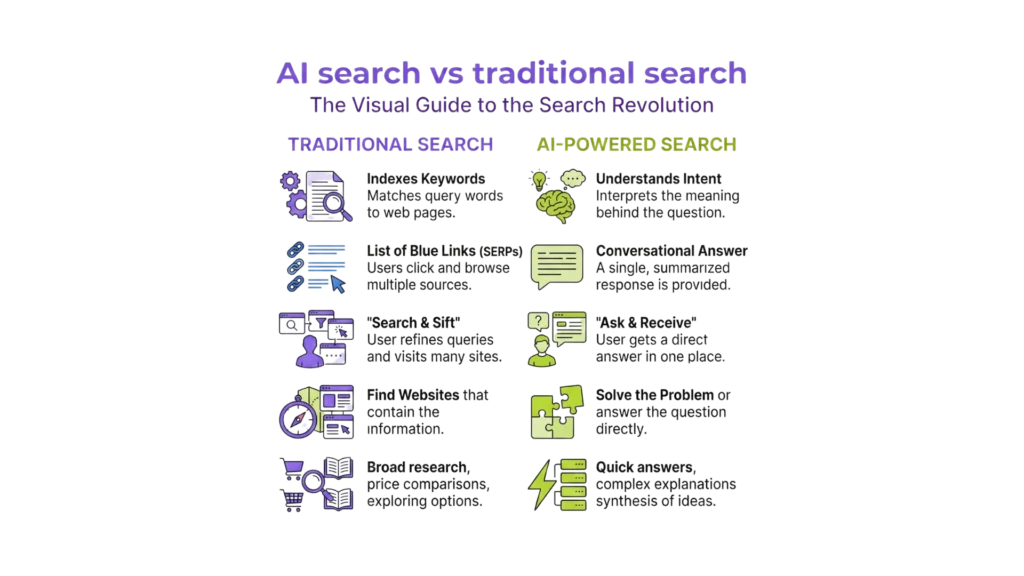
The way people search has completely revolutionized. People no longer type basic keywords – they talk to AI tools in everyday language, asking for things like “lightweight waterproof hiking boots under $100” or “gifts for a science-loving 12-year-old”.
How AI Overviews and ChatGPT Change Product Discovery
AI tools now shape how shoppers find products well before they visit your website. Google searches with AI summaries make up about 50% of all searches, and experts predict this number will exceed 75% by 2028. On top of that, ChatGPT serves around 700 million users every week, and many use it to research products.

This transformation has led to remarkable results – AI referrals to retail sites jumped by 1300% during the 2024 holiday season. The real success story isn’t just about more traffic. Visitors coming from AI search are 4.4 times more likely to buy compared to regular organic search visitors.
What sets this apart? AI systems don’t just scan pages randomly. They build a complete picture from structured data that includes:
- Merchant feeds and schema markup
- Marketplace listings and verified databases
- Product images and trusted review sources
Why Traditional SEO Metrics No Longer Tell The Full Story
Many e-commerce brands see good rankings and healthy crawl metrics, but their products don’t show up in AI-generated answers. This creates a growing gap between visibility and actual influence.
Regular metrics like traffic and rankings can’t capture how AI guides purchase decisions before clicks happen. AI tools now help 71% of people search, and nearly half prefer it over traditional search (31%), brand websites (9%), and review sites (6%).
What does this mean? Your technical SEO for ecommerce strategy needs to evolve. Smart ecommerce SEO agencies know that optimization goes beyond being found – it’s about being recommended. AI search only references a brand’s own sites in 5-10% of cases.
The best ecommerce SEO company partners now need two approaches – they must keep traditional SEO visibility strong while developing ecommerce SEO optimization strategies that make AI systems want to recommend your products.
8 Reasons Product Pages Die In AI Search
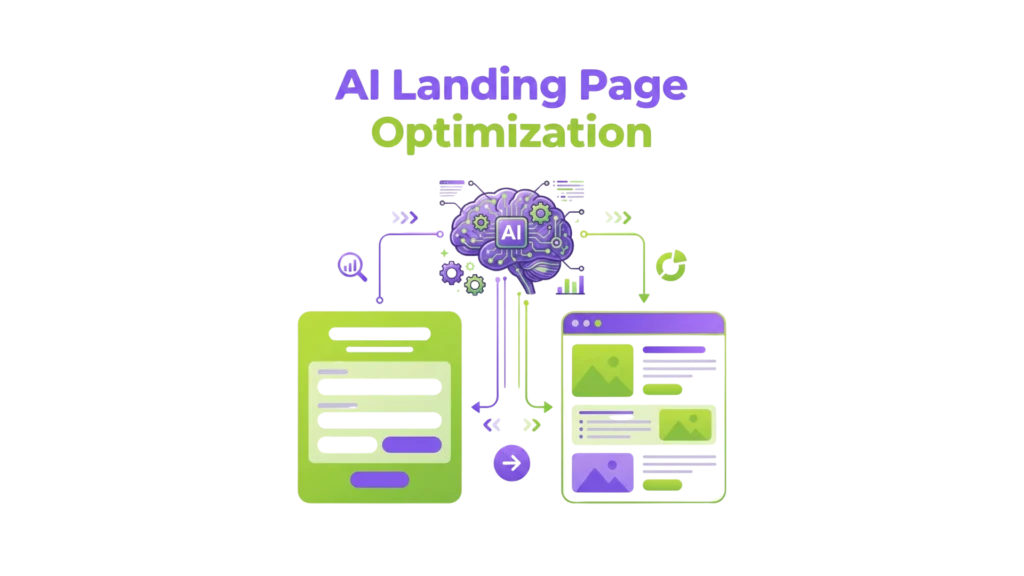
Your product pages might work perfectly but remain invisible to AI search systems. A whopping 93% of consumers read online reviews before buying. This shows a fundamental change in how people make buying decisions. Let’s get into why most product pages don’t work in this new digital world.
1. No Structured Data Or Schema Errors
Schema markup turns your content into machine-readable signals. This helps AI systems identify entities and understand context better. AI search tools can’t extract vital product details like pricing, availability, and specifications without proper structured data. A newer study, published in 2023 by schema markup improved brand visibility in Google’s AI Overviews.
2. Thin or Duplicate Product Descriptions
AI systems can spot genuine expertise and value. They filter out pages with little usefulness, limited insights, or surface-level coverage. Backlinko research shows that content depth relates to search position. SearchMetrics found that top-ranking pages have 1,600+ words on average. AI systems see generic, copied, or minimal descriptions as low-value content.
3. Missing or Outdated Pricing And Availability
AI search needs accurate, current information. Your products might get excluded or show wrong information if pricing data isn’t current. You should update price changes right away since AI tools check for fresh content. Clear examples help with complex pricing models – like “approximately $___ for a team of 50 users”.
4. Lack of Real Customer Reviews Or Ratings
Reviews provide measurable trust and relevance signals. About 53% of consumers trust reviews as much as personal recommendations. Businesses need new, consistent reviews to stay visible on AI platforms. Your business appears or vanishes based on review quality when consumers use AI-powered local search.
5. No Internal Linking To Related Products
Internal linking builds relationships between products. This helps AI understand your catalog’s structure. Well-placed links create semantic connections that help AI systems grasp your product hierarchy.
6. Poor Image Optimization And Missing Alt Text
Google pulls information from page content, captions, and titles. Descriptive alt text gives vital metadata that AI uses with computer vision algorithms to understand images. Don’t use generic filenames like “IMG00023.JPG” or stuff keywords in alt attributes.
7. No FAQ Or Use-Case Content
FAQ content works well for AI visibility. It uses a machine-readable format that matches natural language questions. Well-structured FAQs become easy for AI search algorithms to digest. This increases their chances of showing up in featured snippets and direct cited answers.
8. Infrequent Content Updates Or Stale Data
AI systems value regular content updates. Add publication dates and “last updated” timestamps to show freshness to AI crawlers. Fresh content matters most for product pages where specs, pricing, and availability change often.
How to Optimize for AI-Driven eCommerce SEO

AI-driven eCommerce needs a smart strategy that goes beyond traditional SEO tactics. These optimization strategies will help your products stay visible in AI search results.
Focus On Intent-Based Content, Not Just Keywords
The digital world now demands a change from keyword-focused to intent-based content as AI understands user intent better than exact keyword matches. Your content should answer specific questions that shoppers ask.
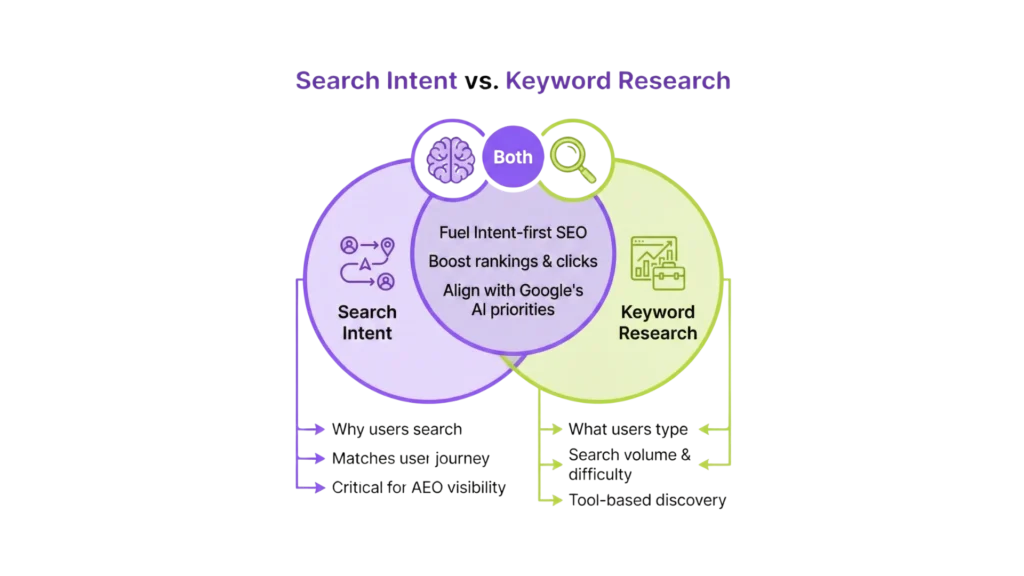
Product pages need FAQ sections with direct answers to common questions. AI tools have become popular with 71% of consumers using them for search. Your content should address specific scenarios where your product solves real problems.
Use Structured Data To Define Product Attributes
Structured data works as a bridge between your website and AI algorithms. Schema markup helps AI systems understand what you’re selling. Products with detailed schema markup show up in AI shopping recommendations 3-5x more often than others. eCommerce sites should use Product, Offer, Review, FAQ, and Breadcrumb list schemas.
Update Content Regularly To Maintain Freshness
AI search engines trust fresh, verified content more. Quarterly content updates will keep your site machine-readable and ahead of newer competitors. You should refresh your data, links, examples, and schema regularly.
Track AI visibility Using Prompt Testing
Amplitude’s AI Visibility helps track your brand’s presence in AI-generated answers. Test how answer engines cite your pages using branded and commercial prompts. This reveals where your AI visibility strategy needs improvement.
Why Choose RankFast as Your eCommerce SEO Agency
Your choice of ecommerce SEO agency can make all the difference in today’s AI-dominated digital world.
Proven Expertise in AI-first SEO Strategies
RankFast excels in Generative Engine Optimization (GEO) and AI SEO. We make sure your products show up in traditional search results and appear on conversational platforms like ChatGPT, Perplexity, and Copilot. Many agencies stick to outdated practices, but RankFast creates results through AI-driven optimization strategies that link SEO insights directly to your sales performance.
Full-Service Support: Audits, Schema, Content, And Tracking
RankFast delivers complete solutions, starting with detailed technical SEO for ecommerce audits and advanced schema implementation. Our ecommerce SEO link building prioritizes quality over quantity and builds authority through mutually beneficial alliances. We also create AI-ready product content that works for both algorithms and customers.
Trusted By Global Ecommerce Brands
Our clients stay with us – we maintain a 95% retention rate. Revenue growth beats industry averages by 2.6x. These results come from our analytical approach that combines ecommerce SEO optimization with proven conversion strategies.
Transparent Reporting And Measurable Results
You’ll see everything clearly through our custom dashboard with interactive monthly reports. We show completed tasks, upcoming strategies, and key metrics. You’ll always know how your SEO campaign progresses. Each report tracks measurable KPIs, including organic traffic, visitor behavior, and most importantly, your conversions.
Want to boost your eCommerce visibility? Contact RankFast today.
Conclusion
Your eCommerce business just needs to pay attention to the AI search revolution right now. Our research shows that AI-generated responses shape purchase decisions before customers even click. Traditional SEO metrics don’t tell the whole story anymore. Your product pages must adapt beyond keyword optimization to succeed in this new landscape.
These AI-first SEO strategies need special expertise to implement properly. RankFast’s eCommerce SEO services provide the technical knowledge and proven methods to help your products succeed in both traditional and AI search environments. You can track real improvements in visibility and conversions through their transparent reporting system.
Brands that understand and adapt to AI search will own the future of eCommerce discovery. Your product pages will either fade away or lead in this new era – you decide. Start today to keep your products visible, recommended, and profitable in the AI search age.
FAQs
Why are product pages failing to appear in AI search results?
Product pages often fail in AI search due to a lack of structured data, thin content, outdated information, missing reviews, poor internal linking, and infrequent updates. These issues make it difficult for AI systems to understand and recommend products.
What role does structured data play in AI search visibility?
Structured data is crucial for AI search visibility. It helps AI systems understand product attributes, pricing, and availability. Implementing proper schema markup can significantly increase the likelihood that products appear in AI-generated shopping recommendations.
How can eCommerce businesses optimize their content for AI search?
To optimize for AI search, focus on creating intent-based content, implementing comprehensive structured data, regularly updating product information, and including FAQ sections. Also, ensure your content addresses specific use cases and customer questions.
What metrics should eCommerce businesses track for AI search performance?
Beyond traditional SEO metrics, businesses should monitor their presence in AI-generated answers using prompt testing across various AI platforms. Track how often your products are cited or recommended in AI responses to relevant queries.