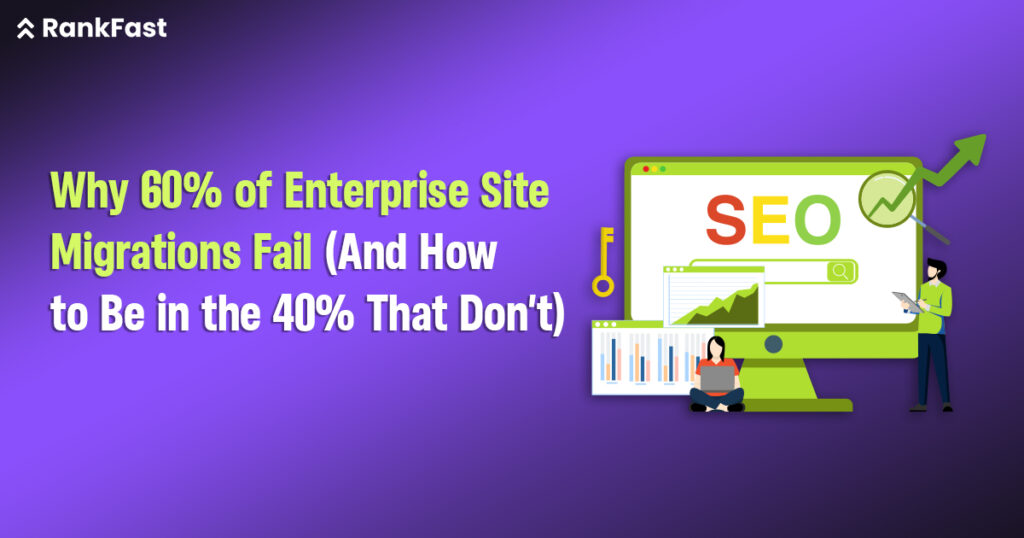
The statistics are shocking – more than 80% of data migration projects either run over or completely fail. This sobering fact deserves attention as you implement enterprise SEO optimization services.
The reality gets grimmer. Data migrations blow past their budgets 64% of the time and 54% miss deadlines. Cloud migrations paint an even bleaker picture – 75% exceed budget while 37% lag behind schedule. These delays and overruns get pricey, with average extra costs hitting $268,000.
These projects fail with alarming regularity. Poor planning, gaps in governance, and limited platform expertise doom 73% of data migration projects. The root cause might surprise you – 68% of failures happen due to execution problems, not technical issues.
Your enterprise site migration can beat these odds. Success depends on careful preparation, deep expertise, and proven methods. The right corporate enterprise SEO services partner can help you join the successful 40% that complete their migrations.
Here, we reveals the common reasons behind enterprise migration failures and offers a proven framework to succeed. A strategic approach to ecommerce SEO agency helps avoid the expensive mistakes that derail most organizations during this crucial change.
The Real Cost of Failed Site Migrations
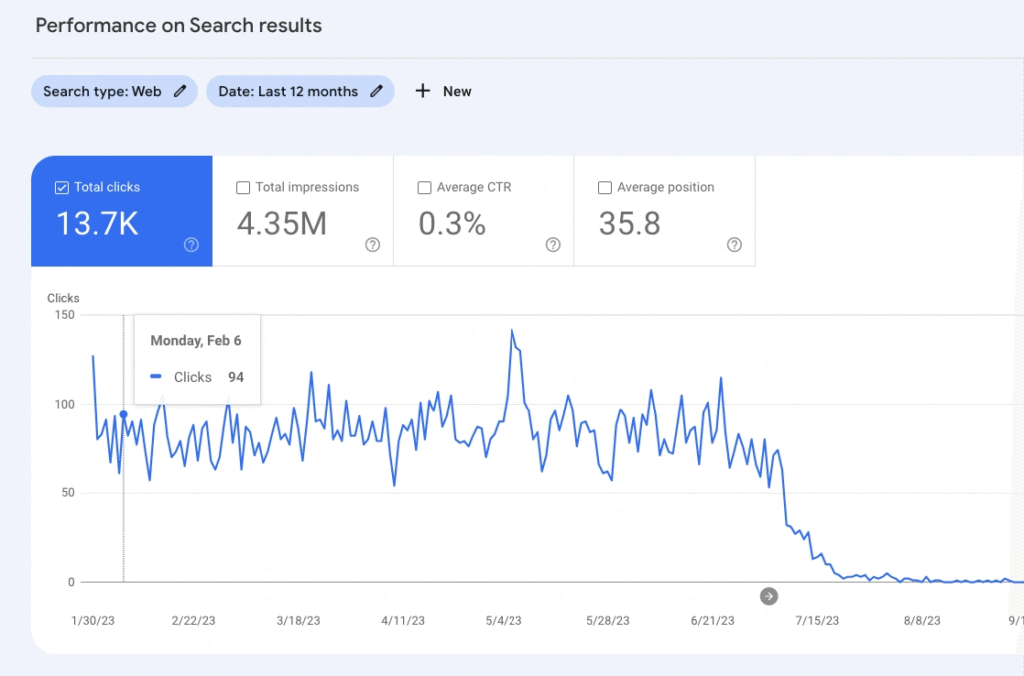
Website migrations work just like major surgeries – done right, they revolutionize your digital presence, but mistakes can cause serious, lasting damage. Failed migrations create a domino effect of problems that hurt your entire online business, unlike smaller site updates.
Lost Traffic And Rankings
Your analytics dashboard usually sends the first warning signals of a failed migration. Companies see their traffic fall by 50-80% right after a problematic migration. These aren’t small changes – they’re devastating drops that can last for months.
The reasons behind these traffic losses seem simple:
- Missing or improper redirects (301s vs 302s) that fail to transfer SEO equity
- URL structure changes that confuse search engines
- Staging environment settings accidentally pushed to production
- Content gaps where important pages simply disappear
An apparel brand lost 80% of their organic visibility overnight due to poor migration handling. WooCommerce’s story proves even more dramatic – their organic visibility dropped over 90% after switching domains. They had to switch back to their original domain after months of problems.
Websites with thousands of pages and complex structures need enterprise SEO optimization services to prevent these devastating ranking losses.
Effect On Revenue And Brand Reputation
Failed migrations hurt finances well beyond temporary traffic drops. A company lost almost $75,000 in revenue while fixing migration issues. Several factors cause this direct revenue loss:
- Broken checkout systems that prevent transactions
- Lost customer emails and data
- Vanished product pages that were driving sales
- Competitors gaining market share during your downtime
Brand damage continues long after technical fixes. Users quickly lose trust when they encounter 404 errors, broken features, or missing content. A migration expert points out that “rebuilding that trust and brand equity is an intangible but real cost”.
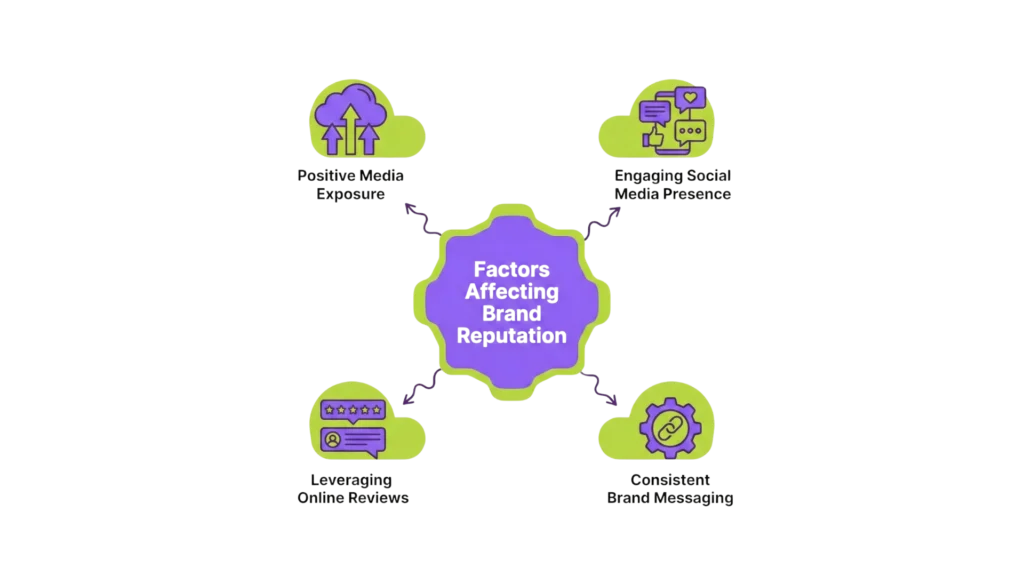
Companies often spend heavily on paid search to offset organic losses. This emergency expense wouldn’t exist with proper corporate enterprise SEO services managing the migration.
Team Exhaustion
Team burnout remains the most overlooked cost of failed migrations. Research shows that 60% of employees feel exhausted from extra work created by change programs. This “transformation fatigue” has become so bad that half the workforce has thought about quitting.
Failed migrations create problems across every department:
- Development teams tackle emergency fixes and growing backlogs
- Customer service handles angry users and more complaints
- Marketing explains performance drops to leadership
- SEO specialists work to recover lost rankings
An experienced enterprise SEO company helps prevent burnout by structuring the migration correctly from day one. Many migration disasters happen not from poor teams or tools but from too many moving pieces.
Traffic losses, revenue drops, and team burnout make proper migration planning crucial for business success. Working with specialized SEO services for enterprise organizations can determine whether you have a smooth transition or spend months trying to recover.
What Causes 60% of Migrations to Fail
You need to know why enterprise site migrations fail before starting your own. Let’s get into four big problems that trap 60% of organizations.
Lack of Data Visibility
Most migrations fail because teams don’t fully understand their data environment. A chain reaction of problems starts when you lack critical insights into your migration dataset. Teams struggle to identify traffic-driving content, find scattered data across silos, and understand how users interact with the current structure.
This blind spot creates several immediate problems:
- Teams can’t figure out which pages need migration
- No way to prioritize high-value content
- User paths become unclear
A migration expert puts it well: “When you don’t understand what’s in your data, it can lead to problems with the migration”. Companies working with experienced enterprise SEO optimization services dodge this issue by analyzing their data fully before starting.
Improper Scoping And Planning
Poor original planning often derails migrations. The numbers tell the story – 83% of migration projects either completely fail or blow past their budgets and timelines. Organizations rush into migration without getting the full picture.
Website migrations need “military precision” in planning right from the moment you first think about migrating. Skipping proper scoping leads to:
- Budget overruns
- Missed deadlines
- Bad data is moving to the new system
- Team confusion and mixed messages
An enterprise SEO company demands detailed planning before any migration starts. They document current assets and create clear migration paths.
No SEO Integration
Traffic drops up to 40% within weeks of launch when teams bring in SEO experts too late. This ranks among the most damaging migration mistakes. Corporate enterprise SEO services should help from day one, not after issues pop up.

Teams miss critical elements when SEO becomes an afterthought:
- Redirect planning and setup
- URL structure preservation
- Content relevance signals
- Technical SEO fundamentals
“Prevention is better than cure with website migrations,” – early involvement of SEO services for enterprise organizations helps maintain rankings during transition.
Security And Compliance Oversights
Data breaches hit 40% of migrations where information spreads across multiple environments. Security and compliance failures go beyond technical issues – they can destroy businesses.
Data breaches in public clouds cost organizations $5.17 million on average in 2023. The price of non-compliance hits even harder at $14.82 million on average.
Smart companies work with an experienced enterprise SEO agency that knows both technical and compliance aspects. This helps ensure your new digital presence stays secure without hidden vulnerabilities.
A 5-Step Framework to Join the 40% That Succeed
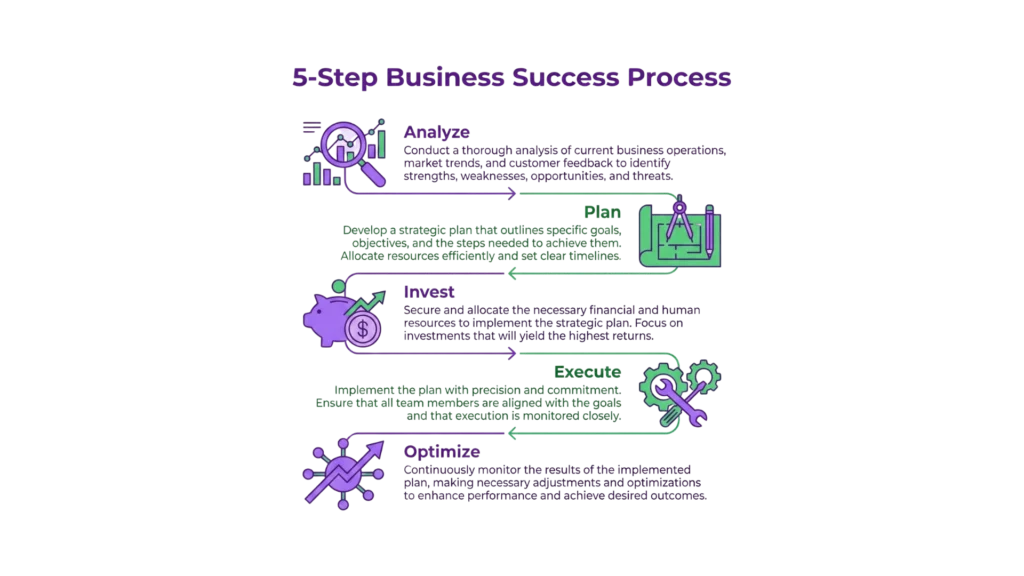
Site migrations succeed when you plan them well. Research shows 40% of migrations work while 60% fail. Here’s a proven five-step framework based on ground experience that will help your enterprise site migration succeed.
Step 1: Inventory And Audit Your Current Site
Your first task is to complete a content audit before starting any migration. This step helps you understand what you have and keeps important content safe. Your audit should include:
- Complete URL inventory using tools like ScreamingFrog’s SEO spider
- Documentation of all pages, documents, and images
- Identification of top-performing pages based on traffic and conversions
- Assessment of current SEO health, including ranking keywords and backlinks
The original assessment creates your migration baseline. This lets you measure success after the move and spot any issues that pop up.
Step 2: Define Goals And KPIs With All Teams
Clear objectives and key performance indicators need all stakeholders’ input. About 83% of migration projects fail or go over budget because we planned poorly. Here’s how to avoid this:
- Identify the core team from IT, security, operations, marketing, and SEO teams
- Create a baseline report documenting performance 90 days before migration
- Define what success looks like for your specific migration
- Set practical goals that match business objectives
Corporate enterprise SEO services should join early. This ensures SEO stays part of the plan from day one instead of fixing problems later.
Step 3: Build a Phased Migration Roadmap
A phased approach keeps business running smoothly during migration. About 73% of data migrations don’t deal very well with poor planning. Your roadmap should:
- Sort workloads by business importance and complexity
- Start with lower-risk, non-critical workloads
- Create a well-laid-out timeline with clear phases
- Give clear ownership for each component
An experienced enterprise SEO agency helps create a roadmap that protects your SEO value throughout the move.
Step 4: Test, Verify, And Monitor
The staging environment needs thorough testing before launch. This step catches and fixes issues before they hit your live site:
- Run functional, performance, and SEO testing
- Make sure URLs are available and redirect properly
- Verify that SEO elements like meta tags and redirects work correctly
- Test site functionality across different devices and browsers
Good testing with enterprise SEO optimization services prevents the huge traffic drops that often follow migrations.
Step 5: Post-Migration SEO and Performance Review
The work continues after launch. Watch everything closely in the first month as unexpected issues often appear. Make sure to:
- Compare pre and post-migration metrics regularly
- Watch key SEO elements like crawl errors and indexation
- Document what you learned for future phases
- Optimize based on analytics insights
This framework, when implemented with experienced SEO services for enterprise organizations, improves your chances of joining the successful 40% of migrations.
How to Avoid SEO Pitfalls During Migration

Technical SEO aspects during migration can make or break your project’s success. Your organic traffic could drop by fifty percent or more from small migration mistakes[link_1]. Recovery might take months or years. Here’s how you can protect your SEO value throughout the process.
Preserve URL Structure And Redirects
A solid redirect strategy is maybe the most important SEO element in any migration. Your search rankings depend on mapping each old URL to its new destination.
Your URL preservation needs these steps:
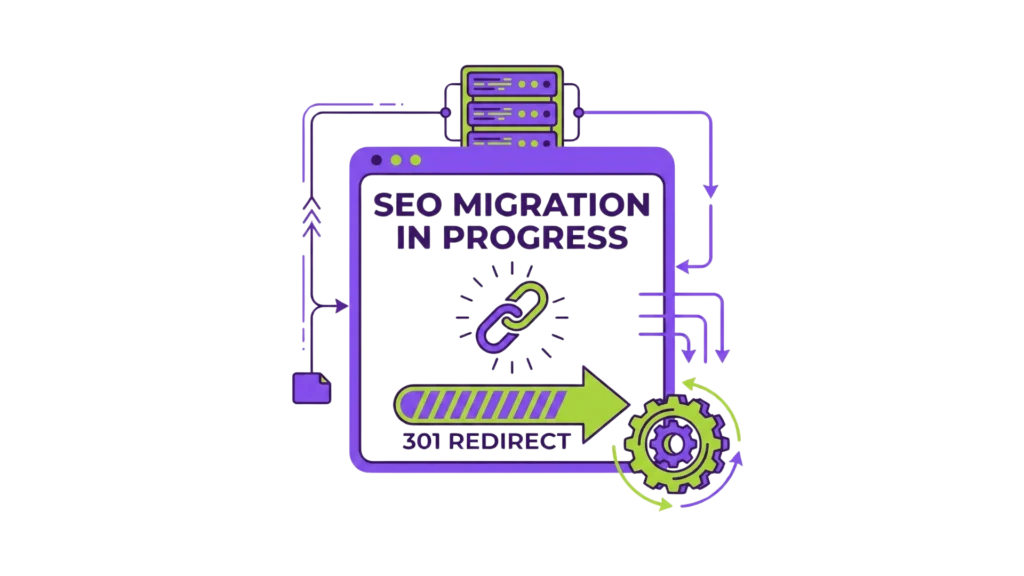
- Use 301 (permanent) redirects instead of 302 (temporary) ones to transfer SEO authority properly
- Create one-to-one redirect maps rather than sending multiple pages to a single destination
- Focus on high-traffic and high-value pages in your strategy
- Keep your redirects working for at least one year after migration
Your organic traffic could drop 50-90% within weeks without proper redirects. A partnership with an enterprise SEO company will give a smooth handling of these technical details.
Update Internal Links And Sitemaps
After setting up redirects, update all internal linking structures. Crawl your site after migration to find any internal links that still point to old URLs. These old links waste link value, create unnecessary redirects, and make search engines confused about your site structure.
Your XML sitemap needs these updates:
- Create a new sitemap with your updated URL structure right after migration
- Add all indexable pages but leave out duplicates or non-indexed content
- Submit the new sitemap through Google Search Console quickly
Monitor Crawl Errors And Indexation
Watching your site after migration is vital since issues often show up slowly. The Coverage report in Google Search Console helps spot crawl errors that point to problems with your site structure or server setup.
Use Enterprise SEO Tools For Tracking
Good monitoring needs specialized enterprise SEO optimization services with advanced tools. Platforms like BrightEdge, Conductor, and Botify give detailed insights into site performance. These tools catch technical issues before they hurt your rankings and help you fix problems based on business value.
Choosing an Enterprise SEO Company That Gets It Right
Your migration’s success depends on choosing the right enterprise SEO partner. Looking beyond fancy presentations will help you find a partner with ground experience.
Why Experience With Enterprise Platforms Matters
Smaller agencies often struggle with enterprise websites. A skilled enterprise SEO company knows that enterprise planning cycles set budgets in Q3 or Q4 for next fiscal year. They understand that enterprise SEO merges with your organization’s product, marketing, and sales goals.
These agencies with platform experience deliver:
- One view that unites search data, content analytics, and technical insights
- Enterprise-grade security with proper certifications
- Room to grow with your business needs
How RankFast Ensures SEO Optimization From Day One
RankFast takes a fresh approach to enterprise SEO optimization services. They create strategies that match your business goals instead of using cookie-cutter tactics.
RankFast spots opportunities that make the biggest difference quickly. This helps them show results in weeks, not months. Their method goes beyond basic SEO checklists and focuses on analysis, content precision, and amplification.
What To Expect From A Top Enterprise SEO Agency
A quality enterprise SEO agency gives you a dedicated contact person. This person keeps communication smooth and teams lined up. You’ll get clear reports that link SEO results to business outcomes—not just keyword rankings.
The team catches problems early before they get pricey. Top agencies don’t wait for issues to surface. They run regular automated site checks and watch competitors closely.
Team up with RankFast’s enterprise SEO services to join the 40% of successful migrations. They blend technical know-how with stakeholder management to make your project work.
Conclusion
Website migrations can make or break your enterprise business. Our data shows 60% of migrations fail because of mistakes that could have been avoided. These failures lead to massive traffic losses, dropping revenue, and exhausted teams. You don’t need to become part of these statistics.
Without doubt, migrations succeed with the right preparation and expert help. You can join the successful 40% by using our five-step framework. A complete inventory, clear goals, step-by-step implementation, solid testing, and constant monitoring will substantially boost your success rate.
Migrations might seem complex, but you have support. RankFast, as your enterprise SEO partner, brings specialized expertise and dedicated support to solve problems before they hurt your revenue. Their approach will blend with your business goals while keeping your SEO value intact.
Want your migration to succeed? Get in touch with RankFast’s enterprise SEO services today and become part of the 40% who nail it on their first try.
FAQs
How can businesses avoid SEO pitfalls during migration?
To avoid SEO pitfalls, businesses should preserve URL structure, implement proper redirects, update internal links and sitemaps, monitor crawl errors and indexation, and use enterprise SEO tools for tracking. These steps help maintain search rankings and organic traffic during the transition.
What are the key steps for a successful enterprise site migration?
A successful enterprise site migration involves five key steps: conducting a comprehensive inventory and audit of the current site, defining clear goals and KPIs with all teams, building a phased migration roadmap, thorough testing and validation, and implementing a post-migration SEO and performance review.
How long should redirects be kept active after a site migration?
It's recommended to keep redirects active for at least one year after the migration. This ensures that any lingering links or bookmarks to old URLs continue to function, preserving SEO value and providing a smooth user experience.
Why is it important to involve SEO experts early in the migration process?
Involving SEO experts from the beginning of the migration process is crucial to prevent traffic drops and maintain search rankings. Early SEO integration ensures proper planning for redirects, URL structure preservation, and technical SEO fundamentals, which are essential for a successful migration.