For more than two decades, search engine optimization had a firm foundation: users entered terms into search engines, which produced sorted lists of links, and companies competed to appear in those lists. That strategy is what enterprise SEO services, particularly those dealing with Fortune 500 and other large corporations, are based on. Improving outcomes and increasing incoming traffic was central to everyone’s job responsibilities, reporting systems, performance metrics, and funding.
That foundation is now shifting.
The rapid development of large language models and AI search tools has resulted in an entirely new style of thinking. AI systems do not provide a list of connections; rather, they combine information and provide direct responses. Nowadays, visibility is determined not just by rankings, but also by how effectively a brand’s information is gathered, digested, and incorporated into machine-generated responses.
Because of this transformation, the world’s largest corporations are having to reconsider how their SEO teams operate. The modification is not only cosmetic. It involves organization, strategy, and philosophy. Search, data science, artificial intelligence, content engineering, and brand authority are all combining to create a new discipline that was formerly part of marketing.
Looking at how large organizations are restructuring their SEO teams reveals not just where search is headed, but also what digital exposure will need in the next few years.
The Catalyst: Why AI Search Changes Everything
Google and other conventional search engines got to where they are now by organizing and ranking webpages. SEO teams improved the system’s performance by selecting keywords, creating backlinks, and uploading content important to ranking elements.
Platforms for large language models, such as OpenAI’s, are considerably different. They don’t just list pages. They comprehend what others say, figure out what they mean, and come up with solutions. This alters how items may be found in three distinct ways.

The first change is that the layout switches from search results to conversations. People may quickly ask queries instead of entering fragmented keywords. Second, the outcome shifts from connections to responses that have been combined. Rather than 10 possibilities, users often get just one solution. Third, the software replaces the human as the decision-maker. The AI determines whether sites are reliable enough to utilize.
This implies that firms that formerly competed for first position now compete to be featured in machine-generated information.
Why Traditional SEO Team Structures Are Becoming Obsolete
Most enterprise SEO agencies were founded at a period when search engines behaved predictably. Their structure was often a production line: researchers identified keywords, authors created content, technical specialists enhanced sites, and analysts reported on traffic and rankings.
The search environment promoted scale and homogeneity, therefore the assembly-line strategy was effective. However, search engines powered by AI prioritize comprehension, authority, and conceptual correctness above mere volume.
It became evident to large enterprises that even highly rated sites were receiving less visits when AI snippets addressed inquiries directly. That revelation revealed a fault in the way things were built: SEO professionals focused on websites, while AI systems read data. These aren’t the same aims.
Businesses then discovered that their SEO teams were configured to function best with an outdated interface.
The Organizational Shift From Department to Intelligence Function
Leading organizations are not only modifying their strategy, but also adjusting SEO in their own internal systems. SEO is no longer limited to marketing departments; it is increasingly being utilized by data, product, and technology departments.
This shift demonstrates a broader recognition that in today’s search universe, machine reading is as vital as human thinking. Structured data, knowledge graphs, semantic relationships, and entity signatures all need technology teams to collaborate, which traditional marketing teams cannot achieve on their own.
Search visibility is currently seen as an information layer that influences several sectors of large corporations such as Microsoft and Amazon. Product teams are intrigued because AI search affects the way features are discovered. Public relations professionals are concerned because discussing a brand might affect how people trust it. Engineers are interested because the architecture of a website influences how fast computers interpret its information.
SEO is no longer an afterthought. It is spreading upstream and becoming an important field.
New Roles Emerging Inside Enterprise SEO Company
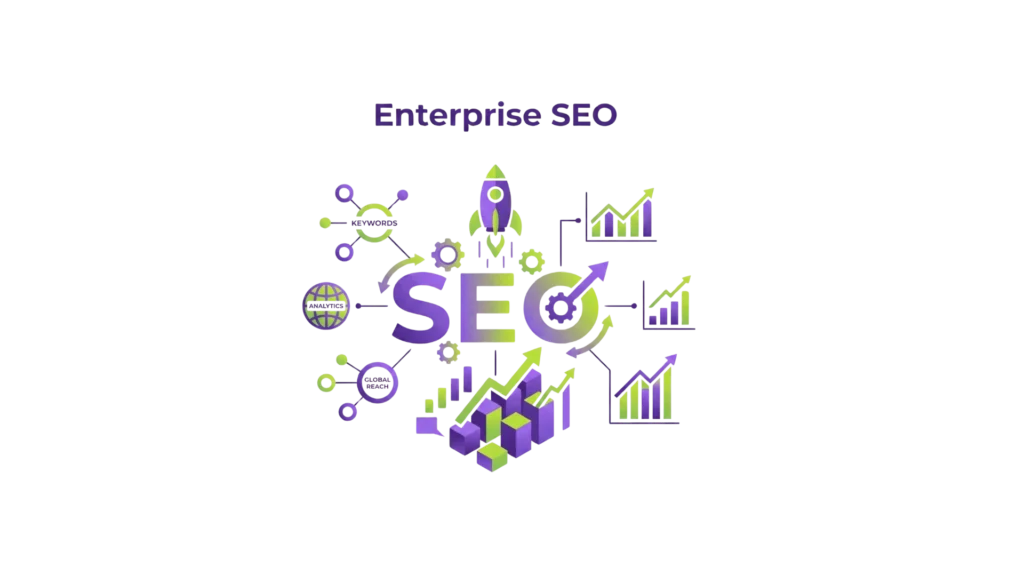
As firms adapt their operations, whole new job titles are being formed for tasks that didn’t seem relevant a few years ago. These positions demonstrate the necessity for professionals in several disciplines.
The AI Search Strategist is one of these positions. Their task is to figure out how various AI systems perceive and discover information. Another position is that of Entity Optimization Specialist, who is responsible for ensuring that a brand is seen as a distinct, trustworthy entity across all data contexts. Structured Data Architects are also being employed by businesses. These folks create models that computers can read and comprehend, allowing algorithms to accurately interpret meaning.
The growth of “hybrid” professionals, who understand both SEO and data science, might be the most significant evidence. They must not only monitor traffic, but also consider how algorithms portray a brand in information systems.
These professions demonstrate a shift in philosophy: SEO is no longer only about influencing outcomes. It is about altering people’s ways of thinking.
The Rise of Entity-Based Optimization
The shift from keyword-centric SEO to entity-centric optimization is one of the most critical concepts driving organizational transformation.
Keywords inform you about questions. Entities convey meaning.
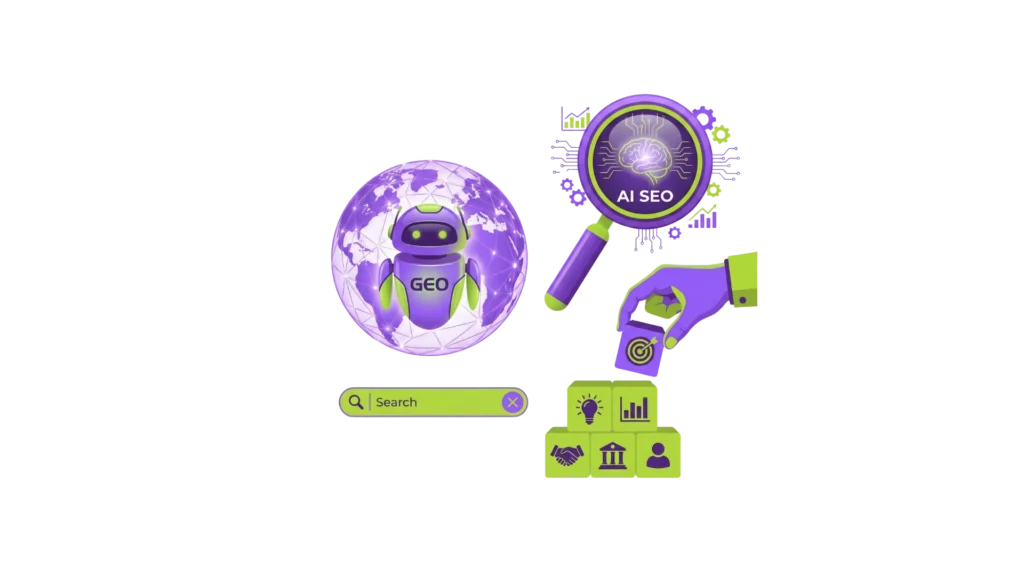
Large language models rely heavily on entities such as people, locations, objects, companies, ideas, and their relationships. When looking for solutions, AI systems utilize networks of objects rather than individual sites. This implies that firms must ensure that their brand is well defined, connected to, and trusted throughout the web.

Businesses are investing in structured data systems, knowledge graph integration, and ensuring that all digital goods are semantically coherent in order to achieve this. SEO professionals, developers, and data strategists often collaborate on these initiatives to ensure their success. This is another reason why companies should be reorganized.
Workflow Transformations Inside Enterprise Teams
When the members of a team change, the work that is completed frequently changes as well. In the past, SEO was done in a straight line: research keywords, develop content, optimize pages, establish links, and monitor results. That approach believes that exposure is chosen after the release.
In the era of LLM, visibility begins before content is created.
Intent modeling is now the initial stage in every contemporary business process. Teams investigate how people ask questions in a natural manner, how AI systems interpret such queries, and what sources people utilize. Then, material is created to do more than merely rank; it is also intended to be a reliable source of information that algorithms can trust.
The time required to report is also shifting. Real-time awareness dashboards are replacing monthly rating reports. These dashboards display how often a brand appears in AI replies, how often it is acknowledged as a source, and how accurately its information is delivered.
This move reflects a larger shift in thinking: success is measured not by your rank, but by how much tools rely on you.
The Integration of SEO With Brand Authority and PR
One of the most striking shifts in the structure of large corporations has been the combination of SEO teams with brand and public relations units. This merger may seem unusual at first, but it makes sense in a search context driven by AI.
Language models hunt for indicators of trustworthiness all throughout the internet. When computers determine how trustworthy something is, they seek mentions in reliable media, consistent brand descriptions, and strong reputation indicators. These indications were formerly associated with public relations rather than SEO.

Businesses on the leading edge understand that brand reputation is a ranking factor for AI algorithms. So they’re synchronizing their public relations campaigns, media outreach, and SEO strategies to ensure that their messages are consistent and accurately referenced across all digital channels.
In real life, this implies that news coverage is more than merely getting people’s attention. It also refers to robots’ ability to see.
Metrics That Matter in the LLM Era

Success indicators shift as organizational structures evolve. Click-through rate and search rating are two outdated metrics that are no longer adequate on their own. Big firms are redefining success by using AI-enabled measurements.
They now keep track of how often their name appears in AI responses, if their content is cited, and how accurately the algorithms describe their products or services. Some firms even monitor mood analysis across all machine outputs to ensure their brand message remains consistent.
Because these new metrics need a variety of analytical abilities, organizations are also recruiting data-focused SEO professionals. It is far more difficult to assess computer judgment than to evaluate page traffic.
Technology Stacks Are Being Rebuilt
Technological and organizational changes occur concurrently. Big firms are replacing their traditional SEO tools with systems designed for AI monitoring, object tracking, and semantic analysis.
Platforms now look at more than simply word rankings; they also consider how computers comprehend material meaning, link themes, and determine authority indications. These technologies often link to corporate data warehouses, allowing SEO data to guide larger business decisions.
The shift in technology emphasizes a fundamental point: in the LLM era, SEO is as much about data infrastructure as it is about content.
Cross-Functional Collaboration Is Becoming Mandatory
Cross-functional merging is one of the features that distinguishes modern commercial SEO services. Many factors influence AI search visibility, including technological design, data veracity, content clarity, brand authority, and user interest indicators. All of these aspects are not managed by a single department.
As a result, firms are implementing platforms that allow SEO specialists to collaborate with engineers, researchers, artists, and product managers. SEO leaders are increasingly participating in meetings when new products are being developed since how features are defined and goods are called may influence how prominent they are in search results.
Previously, SEO was seen as something done after the site was live. This level of integration would not have been feasible back then. It’s now an essential component of the planning process.
Risk Management: Why Companies Cannot Ignore This Shift
Many firms do not alter the way their teams function until something essential is at risk. There are significant hazards to doing nothing in this scenario.
Companies who do not adapt their SEO strategy for AI-driven search may discover that results always reference their competitors while their own brand is not featured. Users are more reliant on AI recaps, thus not appearing in such replies may make it much more difficult to be noticed.
This lack of exposure might directly result in lost profits in industries where research is the initial step in making a purchasing decision. When a company works on a worldwide scale, even little drops in discoverability might result in lost opportunities worth millions of dollars.
This is why top leadership is increasingly involved in SEO change efforts, rather than simply marketing teams.
Case-Style Patterns Observed Across Large Enterprises
Even if each firm restructures in its own unique manner, similar themes are emerging among large organizations such as Apple and Meta.
One pattern is the expansion of centers. Companies are forming global teams of professionals to manage keyword strategy across all markets, rather than having distinct SEO teams for each market or product. Specialization represents a distinct tendency. Companies are recruiting specialists in specialized fields, such as structured data or AI monitoring, rather than hiring generalists to handle everything.
The executive control design is the third option. SEO strategy is increasingly being discussed at the highest levels of management since it influences how consumers perceive a business, locate items, and compare to rivals all at the same time.
The Future Role of SEO Professionals
The way corporate teams are structured demonstrates how the SEO sector is developing. In the future, specialists will require a combination of business intuition, technical understanding, and analytical thinking abilities.
It will be very beneficial to have specialists that understand natural language processing, data models, and logical relationships. People who can arrange knowledge such that robots can interpret it, rather than simply humans, will be in great demand.
The most successful persons in this sector will not consider themselves as search engine optimizers, but rather as creators of discoverable content.
Looking Ahead: The Next Phase of Search Evolution
Big firms are going through changes that make me believe the search industry is entering a new era rather than merely a temporary trend. Discoverability will become more dependent on how effectively computers interpret a brand’s information as AI interfaces are integrated into common products.
This is not to say that traditional SEO will become obsolete. It will still be critical to prioritize technological efficiency, material quality, and reputation. Nonetheless, these components will be part of a bigger discipline investigating machine understanding and trust.
Companies who see this trend early will be well-positioned to dominate in the next era of digital exposure. Those who wait too long may attempt to catch up in a world where the rules have already changed.
Conclusion: SEO Is Becoming an AI Visibility Strategy
Not because of hype, but because of adjustments being implemented by the world’s largest firms’ SEO teams. It is a deliberate answer to a significant shift in how people get information. Large language models have influenced the interface, measures, methods, and talents required for success.
This used to be a marketing talent, but it’s gradually becoming a strategy that touches practically every aspect of a company’s digital operations. Businesses used to concentrate on outcomes, but now they prioritize understanding. People who used to worry about traffic are now concerned with incorporating everyone into AI information systems.
Companies must adapt fast if they want to remain competitive in this new environment. Working with an innovative digital strategy firm like Rankfast can help you examine how AI systems presently perceive your brand, identify areas where your business is not being recognized, and make the structural adjustments required to ensure your company is appropriately shown in AI-driven search results.
Don’t wait until competitors dominate AI results. Request an AI Visibility Assessment today and position your brand to be discovered, understood, and recommended.
FAQs
What is the difference between traditional SEO and LLM optimization?
Traditional SEO focuses on improving rankings in search engine results pages through keywords, backlinks, and technical optimization. LLM optimization focuses on ensuring that AI systems correctly interpret, trust, and reference a brand’s information when generating responses.
What new roles are emerging in modern enterprise SEO teams?
Modern SEO teams are adding specialized roles such as AI search strategists, entity optimization specialists, structured data architects, and search intelligence analysts. These roles help organizations improve visibility across AI platforms, not just search engines.
How do large language models affect website traffic and visibility?
Large language models can reduce website clicks because users often receive complete answers directly from AI systems. However, brands that are cited or referenced in those answers gain authority, trust, and higher likelihood of being chosen by users.
What skills do SEO professionals need in the AI-driven search landscape?
SEO professionals increasingly need skills in semantic analysis, data interpretation, structured data implementation, and AI content optimization. Understanding how algorithms interpret language and entities is becoming just as important as traditional SEO knowledge.