The world of enterprise SEO services is changing fast, with 88.2% of content marketing teams planning to keep or increase their budgets this year. Your business needs to adapt to these changes, especially since AI traffic to websites has grown 9.7x in the last year. The SEO software market will reach $84.94 billion by 2025, showing just how crucial these services have become.
Here we will help you direct your way through the fast-changing world of enterprise SEO in the age of AI and LLMs. You’ll learn how to review potential partners, use innovative strategies, and boost your returns in today’s AI-driven search landscape.
Core Enterprise SEO Services for 2025
Large-scale websites just need specialized services to make SEO work. Technical foundations, strategic content approaches, and entity-based optimization are now the core pillars of effective enterprise SEO programs for 2025.
Technical SEO Audits for Large-Scale Sites
Site size multiplies technical SEO’s complexity exponentially. Enterprise websites with thousands—or even millions—of pages just need regular complete audits to stay visible in search. Recent research shows 62% of marketers report their marketing tech stack is too complex. This makes systematic technical audits a significant part of finding and fixing hidden issues.
A full enterprise technical SEO audit should get into:
- Site architecture analysis: Reviews URL structures and internal linking strategies to support crawl efficiency
- Crawlability assessment: Identifies crawl budget waste and ensures search engines can efficiently discover important content
- Core Web Vitals evaluation: Measures LCP, FID, CLS, mobile-friendliness, and other performance metrics
- Schema implementation review: Verifies structured data accuracy and coverage
Your site could miss valuable traffic or face penalties without regular audits due to non-compliance with updated guidelines. Websites exceeding 500,000 pages benefit more from focused crawls that identify patterns than trying to audit every page. This approach helps spot systematic issues that create site-wide improvements once fixed.
Content Strategy Lined Up with AI Search
AI has changed how we must approach content strategy. Your content should satisfy both traditional search engines and AI-powered search experiences. Contextual relevance and structured information have become must-have components of effective enterprise SEO, beyond just keywords.
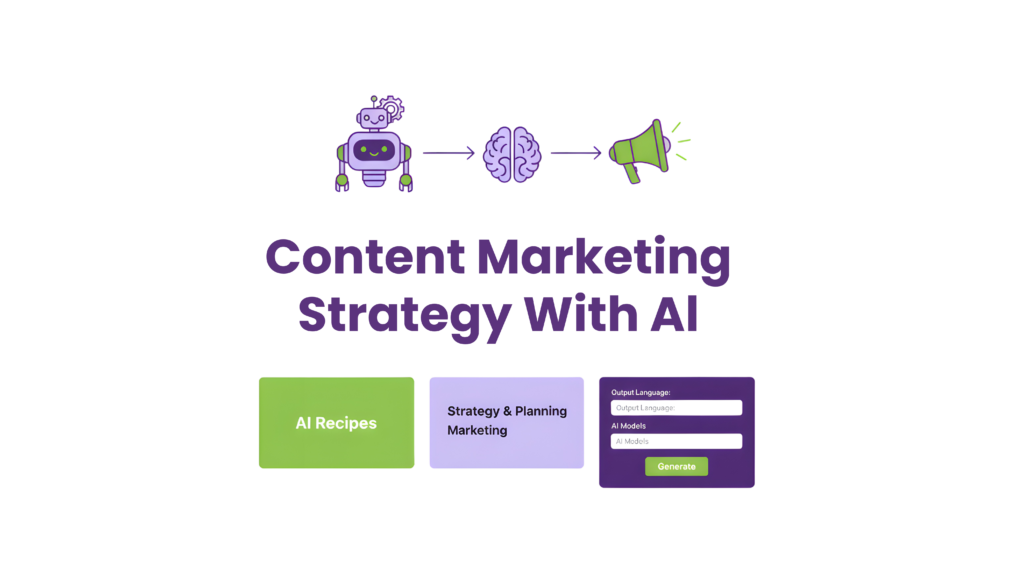
Content strategy’s line up with AI search matters as 66% of marketers expect SEO tool capabilities to substantially change their marketing outcomes. Your content strategy should focus on creating well-laid-out, expertly written, and machine-readable content as AI search grows.
AI-driven content strategies work best when you:
Make sure Google can find, crawl, and index your pages properly. Structure your content with clear headings, concise paragraphs, and FAQ sections that answer user questions directly. Add complete schema markup to help machines better interpret your content.
On-Page Optimization for Entity Relevance
Entity-based SEO has transformed search engines’ content understanding. Search engines now identify entities (people, places, things, concepts) and their relationships instead of just matching keywords.
Google’s move toward understanding “things, not strings” means your on-page optimization must develop to highlight entity importance. This approach needs optimization for:
Contextual relationships: Connect related entities naturally in your content to build topical authority. A page about enterprise software should include related entities like implementation processes, integration capabilities, and support services.
Semantic markup: Use schema.org vocabulary through JSON-LD to define your pages’ entities clearly. Search engines can interpret your content’s meaning better and you’re more likely to appear in rich results.
Entity disambiguation: Clear context clues and appropriate structured data help remove ambiguity from your content. Search engines can identify which specific entity you’re discussing, especially when entities share names.
Entity-focused on-page optimization, rather than just keywords, positions your enterprise site better for both traditional and AI-powered search success.
AI-Powered SEO Strategies for Maximum ROI
Your ROI in today’s digital world needs AI-powered strategies that go beyond traditional SEO approaches. Generative AI’s growing presence has created specialized techniques that can boost your visibility and conversion rates.
Answer Engine Optimization (AEO) for LLMs
AEO structures content specifically for large language models (LLMs) like ChatGPT and Google’s AI Overviews. Traditional SEO wants website clicks, but AEO aims to get cited or referenced directly within AI-generated responses.

Your content must adapt to how LLMs process information to optimize for answer engines. These models learned to complete sentences by predicting masked words, then they understand natural dialog better than marketing copy. Your enterprise site needs content that:
- Gives clear, direct answers to specific questions
- Has scannable sections with descriptive headings
- Uses natural phrasing instead of promotional language
- Has unique insights LLMs haven’t seen elsewhere
LLMs work at the passage level instead of ranking entire pages. They extract smaller chunks of highly relevant content to build precise answers. On top of that, brands with AEO-optimized content show substantially higher conversion rates—one insurance site got a 3.76% conversion rate from LLM traffic versus 1.19% from traditional organic search.
Generative Engine Optimization (GEO) Tactics
GEO builds on SEO foundations but adapts them for environments where visibility depends on citations and reasoning rather than rankings. This new discipline optimizes content to appear in AI-generated responses across platforms like ChatGPT, Claude, Perplexity, and Google AI Overviews.
Traditional SEO focuses on keywords and backlinks, but GEO implementation needs:
- Well-laid-out structure with headers, bullet points, and numbered lists that AI can parse easily
- Schema markup to help AI engines understand content context (making content 53% more likely to be cited)
- Citation-worthy content with statistics, expert quotes, and original research
- Content structured for multi-step logical reasoning instead of keyword matching
GEO success metrics are different from traditional ones. You’ll need to track AI citation frequency, brand mentions in responses, and conversion quality from AI-referred visitors. HubSpot’s AI Search Grader can help check your current AI search visibility.
Using AI Tools for Predictive Keyword Targeting
Predictive AI looks at patterns in historical data to forecast future trends. This helps you spot emerging keywords before they become highly competitive. Your enterprise SEO strategy can be proactive rather than reactive.
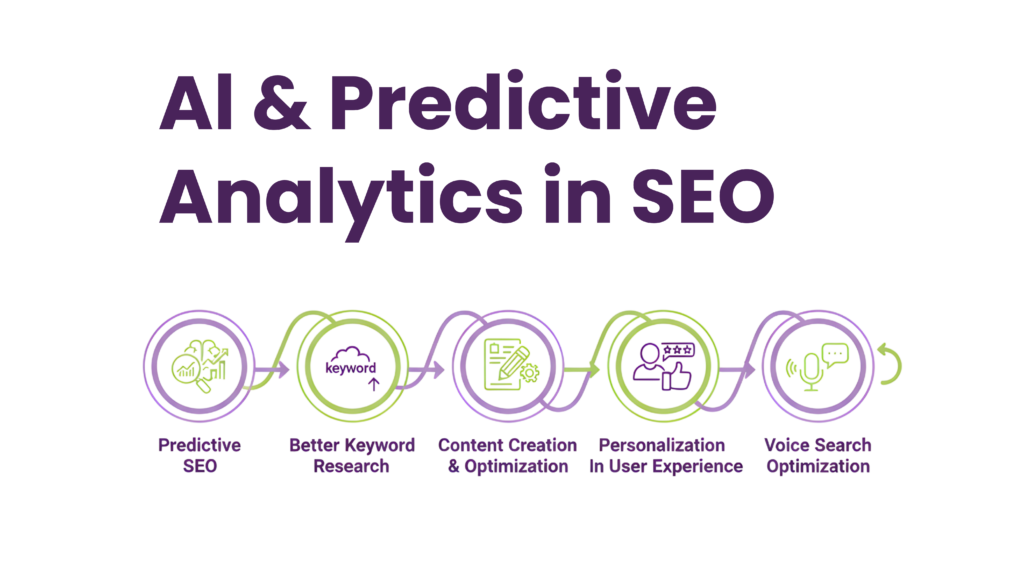
AI-powered keyword targeting brings several advantages. It processes big amounts of data—including website traffic, search trends, and user behavior—at once and in real-time. It can also spot changes in search patterns faster, helping you identify emerging trends before competitors.
Predictive AI in SEO works by:
- Finding keywords that grow in popularity among search users
- Forecasting content that could earn featured snippets
- Predicting ranking outcomes based on past performance and algorithm updates
- Looking at competitor keyword strategies to find what works
The AI marketing market grows faster, set to jump from USD 12.00 billion in 2020 to over USD 107.00 billion by 2028. This shows how AI tools become essential for keyword targeting, ad optimization, and informed decision making.
These AI-powered strategies can give your enterprise competitive advantages through predictive insights, optimized content for both traditional search and answer engines, and better visibility across the growing AI search ecosystem.
Enterprise SEO Optimization Services by Category
Different business models need specific SEO approaches that match their challenges and audience behaviors. Enterprise organizations working in a variety of verticals need category-specific strategies to boost their search visibility and ROI.
Local and International SEO for Global Reach
Enterprise businesses expanding beyond geographic boundaries need a dual approach to search visibility. Local SEO targets customers in specific regions. International SEO removes geographical barriers to reach global audiences. Research shows that 44% of online shoppers start their product search on Google. This makes geo-targeted optimization vital for enterprises with physical locations or region-specific services.

Local SEO implementation starts with consistent NAP (name, address, phone number) information across business listings. The next step involves creating localized content that addresses regional interests and search patterns. Google My Business optimization becomes your best tool to handle location-specific queries. It improves visibility in the Google 3-Pack—the map listings shown for local searches.
Global reach requires a choice between country-specific domains (ccTLDs), subdomains, or subdirectories based on your resources and goals. Hreflang tags are mandatory. They help search engines serve the right language version to users in different regions. Poor geo-targeting risks showing content to wrong audiences or creating duplicate content issues.
E-Commerce SEO for Product Visibility
E-commerce enterprises face unique search challenges with big product inventories. Google’s organic search results drive 43% of all e-commerce traffic. This makes product page optimization a key revenue driver. In spite of that, many online stores treat SEO as an afterthought despite its exceptional ROI.
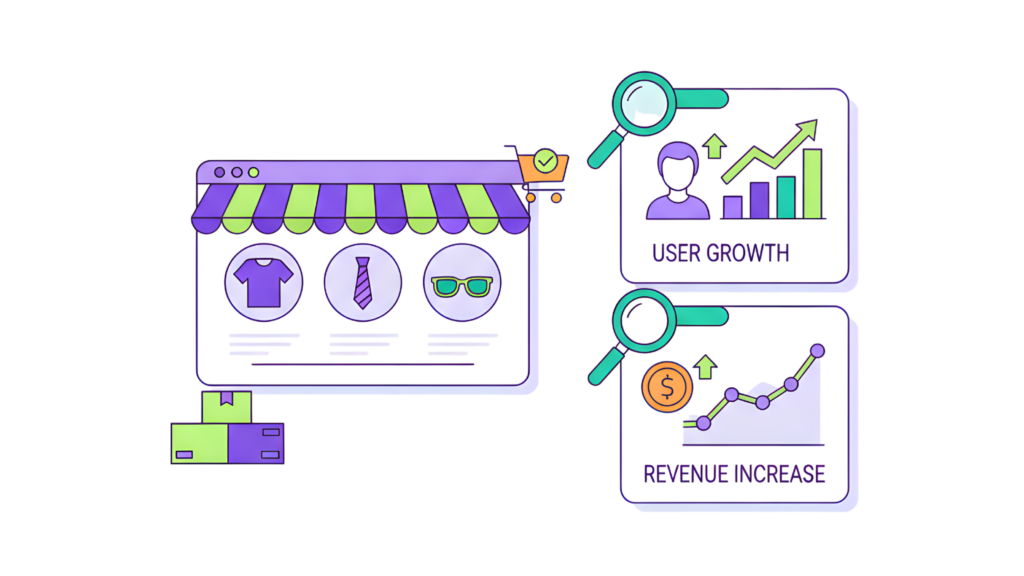
Product visibility improves with these optimizations:
- Detailed, unique product descriptions (300-500 words) that cover key buying criteria
- High-quality images with descriptive alt text
- Schema markup for rich snippets showing prices, availability, and ratings in search results
- Strategic keyword placement in titles, descriptions, and URL structures
Technical aspects play a significant role in e-commerce SEO success. Fast-loading pages, intuitive designs, and secure connections give your store an edge over competitors. In fact, e-commerce sites generate over three-quarters of US smartphone traffic. This makes mobile optimization essential.
B2B SEO for SaaS and Tech Companies
B2B SEO for technology enterprises follows different rules than B2C optimization. Buyers research solutions for weeks or months before deciding. Your SEO strategy must guide this methodical buying process through targeted content at each funnel stage.
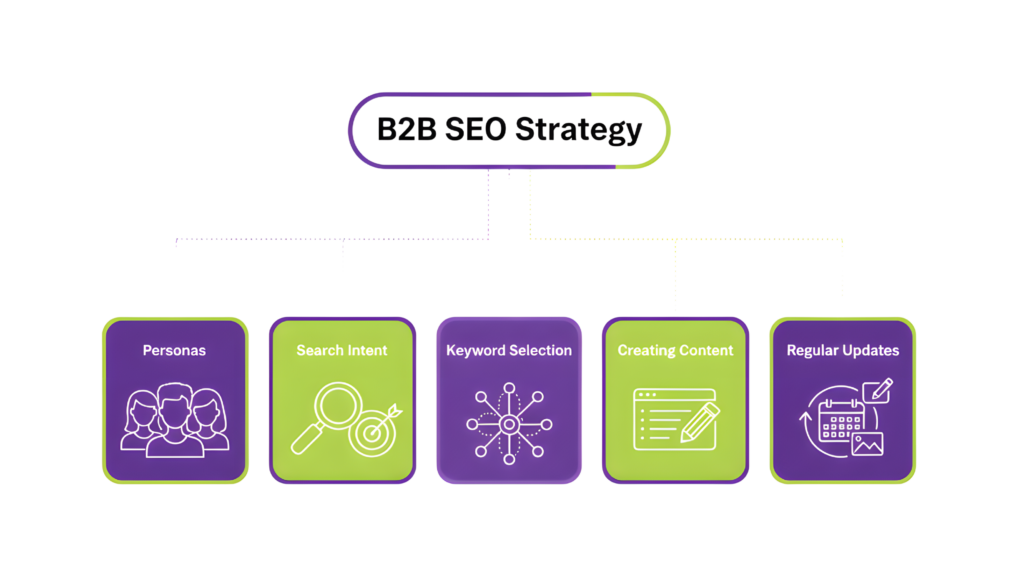
Organic search brings high-intent leads for B2B SaaS products. It puts your solutions in front of decision-makers right at the time they need them. Educational content like blog posts, whitepapers, comparison pages, and case studies should be your primary focus to address complex search intent.
B2B SaaS keywords have lower search volume than B2C terms but attract more qualified leads. A single visitor searching for “enterprise payroll software” could become a six-figure deal. Research shows 57% of B2B marketers rank SEO among the best digital marketing initiatives. B2B SaaS businesses see a 702% return on their SEO investment on average.
Enterprise tech companies’ SEO authority matters more than virality. A focused approach combining technical optimization, educational content, and strategic backlinks delivers results faster than expected. This makes enterprise SEO services vital for sustainable growth.
Choosing the Right Enterprise SEO Company
Picking the right enterprise SEO company needs detailed research and assessment. Your choice will directly affect your organization’s digital performance. A recent survey shows 90% of enterprise organizations see SEO as essential. Finding a partner with proven expertise will make or break your success.
Evaluating Case Studies and Client Results
Case studies show what an enterprise SEO agency can really do. Look at their list of reference clients, especially large global companies in related industries. Good case studies should show clear results like:
- Big jumps in organic traffic (enterprise sites can see up to 120% traffic growth within a year with the right platform)
- Better rankings for competitive keywords
- More revenue or conversions from SEO work
Amazon shows what successful enterprise SEO Services can do. They created millions of algorithm-generated pages for every possible product combination and grabbed about 50%+ of all e-commerce searches. WebMD took a similar path. They became the top health information site through detailed content creation and now get around 107 million monthly organic search visits.
Take time to check the agency’s exact role in getting these results. During your first calls, ask if they helped with strategy, did audits, fixed technical issues, or built backlinks. This helps you understand how much they actually contributed to their client’s success.
Assessing Scalability and Technical Expertise
Enterprise SEO is fundamentally different from small business optimization. It needs adaptable systems and deep technical knowledge to handle thousands—or millions—of pages well.
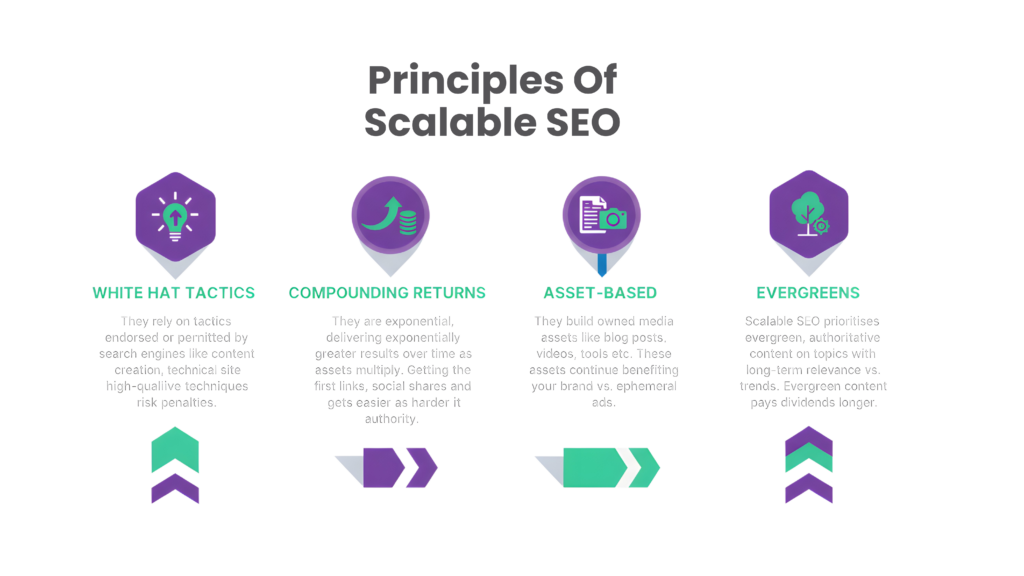
Look for technical expertise in:
- Enterprise-level platforms like BrightEdge, Conductor, or seoClarity
- Advanced tools such as Semrush, Ahrefs, and Screaming Frog
- AI-assisted content workflows and programmatic SEO implementation
The agency should offer a customer-first strategy that balances technical needs with user experience. They should know how to make collaboration easier since enterprise content creation often involves multiple departments. Check their automation capabilities for tasks like scheduled content publishing and keyword tracking. Make sure their platform works smoothly with your existing project management, content creation, and social media tools.
Questions to Ask Before Signing a Contract
Get clear answers to these key questions before you commit:
- About their processes: How do they stick to Google’s Webmaster Guidelines? How do they handle algorithm updates?
- Contract details: How long is the contract? What if you need to end it early? What will it cost?
- Reporting transparency: How often do they report? Which metrics do they track? Can you see a sample report?
- Implementation specifics: Will you work directly with the SEO team on your account? Do they outsource work?
Watch for warning signs like hidden information, outdated methods, unrealistic promises, or prices that seem too good to be true. Good firms will openly share their processes and give you a clear list of deliverables.
The process of choosing an enterprise SEO provider for enterprise seo services should focus on their expertise, track record, pricing, and contract terms. Without doubt, the right SEO partner will mix technical know-how, adaptable execution, and a consultative approach that matches your business goals.
Implementation Best Practices for AI SEO Success
Your AI SEO strategy needs systematic implementation to succeed. Success depends on breaking down organizational barriers. Your teams need the right knowledge and fresh content that engages AI effectively.
Avoiding Data Silos with Unified Dashboards
Different departments often create data silos by working independently with their own systems and information repositories. This prevents you from getting a clear view of your SEO ecosystem. Such fragmentation makes collaboration difficult and stops enterprise leaders from making evidence-based decisions. A centralized dashboard helps collect and analyze up-to-the-minute data. Your teams can quickly spot problems that need attention.

Google Analytics remains a popular dashboard choice. It gives you extensive data about website traffic, user behavior, and conversion rates. HubSpot offers another option with its detailed suite of marketing and sales automation tools. You can monitor key metrics from channels of all types. Your enterprise SEO dashboard should have clear goals that accelerate business growth with enterprise seo services.
A unified enterprise SEO dashboard should combine data from various sources. These include Google Search Console, GA4, and other specialized tools that show specific aspects of your website’s performance. This integration reveals how campaigns on different channels work together. You can scale successful strategies and remove ones that don’t work.
Training Internal Teams on AI SEO Metrics
Start your AI-search training program with clear learning objectives. Include schema markup implementation and knowledge about AI content ranking. Add generative content workflows to the mix. Expert-led interactive workshops work best. They should include live Q&A sessions and ground challenge solutions. Let your team try various AI tools.
Your team will retain knowledge better if you:
- Record training sessions for future reference
- Build a searchable library with playbooks, templates, and tool guides
- Support them through regular office hours where they can discuss real campaign challenges
AI search keeps evolving. Your training should too. Update the content every quarter. This keeps the team motivated and ready for algorithm changes and AI breakthroughs. Such practices create a culture of continuous learning that enterprise SEO needs.
Refreshing Content for Real-Time Retrieval
Content publication marks the beginning of optimization. GA4’s event-based tracking and machine learning capabilities help refine your SEO content strategy. Regular content audits every three to six months help identify content that needs updates, combination, or removal.
Traffic drops need quick investigation. Look for ways to recover through keyword and on-page improvements. Content often loses traffic because it becomes outdated, not because algorithms change. Focus on meaningful updates that improve your content with helpful, relevant, and current information.

Content refresh means updating your website content. Add new information and remove outdated details. Make it easier to read and match current searcher intent. Search engines like Google and Bing give priority to relevant, current content. Focus your updates on pages that matter most – landing pages, evergreen content, and pillar content.
Enterprise SEO Services success with AI requires unified dashboards, team training, and strategic content refreshing. These elements help maintain visibility everywhere. An enterprise SEO agency specializing in these practices might help maximize your ROI.
Why Choose Rankfast as Your Enterprise SEO Agency
Choosing a partner with proven expertise makes all the difference in selecting an enterprise SEO agency. Rankfast distinguishes itself in the digital world of enterprise SEO companies through specialized approaches in enterprise seo services that deliver tangible business outcomes.
Custom AI SEO Frameworks for B2B Brands
Personalization is the cornerstone of Rankfast’s philosophy. Cookie-cutter solutions don’t work in the complex B2B world. Their customized marketing plans tackle your specific business challenges. The team’s expertise spans over 250 projects in industries of all types. They excel at scaling SaaS products, educational services, real estate firms, hotels, and financial companies through targeted search engine strategies.
Dedicated Strategists and Transparent Reporting
Rankfast’s communication clarity sets them apart from other enterprise SEO firms. Based on your priorities, they offer:
- Daily updates to hands-on clients
- Weekly progress reports for regular oversight
- Complete monthly performance analysis
- 24/7 customer support for immediate concerns
Project teams range from 2-10 dedicated employees, which ensures your business receives focused attention throughout the engagement.
Proven Results Across SaaS, E-Commerce, and Tech
Rankfast backs up promises with measurable success. They helped a SaaS company achieve a 226% increase in organic traffic and a 4.5x increase in demo bookings. Another client’s success includes more than 100 keyword rankings on Google SERP with over 20 keywords in the top 10 results. Their global client base exceeds 300, establishing them as an enterprise SEO optimization services provider with proven results.
Conclusion
AI and LLMs have changed how people search online, and enterprise SEO has adapted beyond its traditional methods. Technical audits, AI-aligned content strategies, and entity-based optimization are the foundations of successful enterprise SEO programs. Answer Engine Optimization and Generative Engine Optimization help maximize visibility in traditional and AI search interfaces.
Your business category presents specific challenges. You might need to expand globally, boost e-commerce product visibility, or generate B2B leads. Success depends on choosing an enterprise SEO partner with expertise in your field. The ideal agency combines technical knowledge with strategic vision and turns complex data into applicable information that delivers measurable results.
Your enterprise SEO strategy needs an upgrade for the AI era. Rankfast’s custom AI SEO frameworks, dedicated strategists, and clear reporting have helped hundreds of businesses achieve outstanding results. Our clients see 226% organic traffic increases and 4.5x growth in demo bookings. You can maximize your search visibility and ROI by learning about our enterprise SEO services or local SEO solutions that match your business goals.
FAQs
Q1. What is a good ROI target for enterprise SEO?
For enterprise-level SEO, aim for an ROI above 300%. This level indicates strong profitability and reflects that your SEO efforts are generating significant value for your business.
Q2. How long does it typically take to see a positive ROI from SEO?
On average, businesses can expect to achieve a positive ROI from their SEO campaigns within 6 to 12 months. However, this can vary depending on factors such as industry, competition, and the scope of SEO efforts.
Q3. Is AI-generated content acceptable for SEO purposes?
AI-generated content is acceptable for SEO when used ethically and optimized properly. However, if the content is not well-optimized or used for spam, it will perform poorly in search results and may lead to penalties from search engines.
Q4. What are the main pillars of an effective SEO strategy?
An effective SEO strategy is built on four main pillars: technical SEO, on-page SEO, content, and off-page SEO. Focusing on these areas helps organize your optimization process and ensures a comprehensive approach to improving search visibility.
Q5. How can enterprise businesses maximize their SEO ROI?
Enterprise businesses can maximize SEO ROI by implementing AI-powered strategies, using unified dashboards to avoid data silos, training internal teams on AI SEO metrics, and regularly refreshing content for real-time retrieval. Working with a specialized enterprise SEO agency can also help achieve better results.