Has your enterprise website taken a sudden dive in search rankings? You’re not alone in looking to fix the impact of an enterprise SEO core update. Website rankings don’t drop because of one issue. Three major factors come together to create this volatility. Google’s algorithm uses more than 200 ranking factors, and changes in these factors can cause your site’s rankings to drop suddenly.
The August 2024 update finished rolling out on September 3, 2024. This core update caused immediate ranking changes across industries. Google now uses different methods to assess content quality, relevance, and authority. The evolution from E-A-T to E-E-A-T (Experience, Expertise, Authoritativeness, and Trustworthiness) has altered how Google views enterprise websites. Companies that need enterprise SEO services must understand these changes to recover from Google’s core updates.
This piece will get into why enterprise sites drop in rankings after Core Updates. You’ll find practical strategies to improve technical SEO at scale. We’ll show you how to spot real ranking drops and tell them apart from reporting issues.
Our proven recovery methods will help fix your SEO ranking challenges. These insights will help steady your search visibility in a changing search landscape, whether you run an e-commerce platform, a corporate website, or a content portal.
Understanding The Symptoms of A Ranking Drop
The first step in addressing an enterprise SEO core update is to properly interpret the symptoms of a ranking drop. A catastrophic performance failure might just be a reporting anomaly rather than an actual traffic loss. These nuances play a vital role in developing effective Google core update recovery strategies.
Sudden Drop In Impressions Vs Actual Traffic Loss
Enterprise website owners get immediately concerned when Google Search Console (GSC) impressions show a dramatic drop. But impression numbers tell only part of the story. They show how often your site appears in search results, yet not all these appearances lead to meaningful engagement.
The real question goes beyond “Have impressions dropped?” to “Has this affected real user traffic?” Google states, “You should aim not simply for more impressions, but meaningful impressions. This means being seen by people who will find your information useful and worth reading”.
During September 2023, website owners noticed a sudden decline, especially in desktop searches. The drop matched a reporting change linked to removing the &num=100 parameter. This parameter allows tools to fetch up to 100 search results per page. Many of these “lost impressions” came from bots and tracking tools rather than real users.
Here’s how to check if you face real traffic loss:
- Compare organic sessions in Google Analytics with impression data
- Look for similar decline rates between clicks and impressions
- Check if the drop affects all pages or specific URLs
Average Position Improvement: What It Really Means
Core updates sometimes create a puzzling situation – average position gets better while impressions fall. This seemingly odd scenario makes perfect sense.
GSC calculates position metric as “the topmost position occupied by a link to your property or page in search results, averaged across all queries in which your property appeared”. The average includes only positions with impressions. Your average naturally looks better when lower-ranking positions (positions 20-100) stop getting impressions.
To cite an instance, your site might show impressions at positions #5, #12, #78, and #92. After an update, it only shows impressions at #5 and #12. The math will show big “improvements,” though rankings haven’t actually improved.
Average position values can mislead when:
- Your page ranks first for target keywords, but much lower for other terms
- Your site starts ranking for more queries after the update
- Your site disappears from SERPs for many queries
How To Use GA4 And GSC Together To Verify Real Impact
The most complete view of actual impact comes from combining GA4 with GSC data for proper enterprise SEO optimization services. “Using Search Console and Google Analytics together can give you a more comprehensive picture of how your audience discovers and experiences your website”.
Search Console clicks should match Google Analytics sessions from organic search when cross-referencing these tools. These metrics compare best. The numbers won’t match exactly, but should show similar trends.
Your impact diagnosis should:
- Look atthe Traffic Acquisition report in GA4, filtering for organic Google Search
- Review Landing Page reports with organic session filters
- Build custom explorations that combine GSC metrics with GA4 engagement data
Data from both tools helps determine if your large-scale technical SEO needs immediate fixes or if you’re just seeing reporting anomalies instead of performance issues.
The September Core Update and Reporting Anomalies
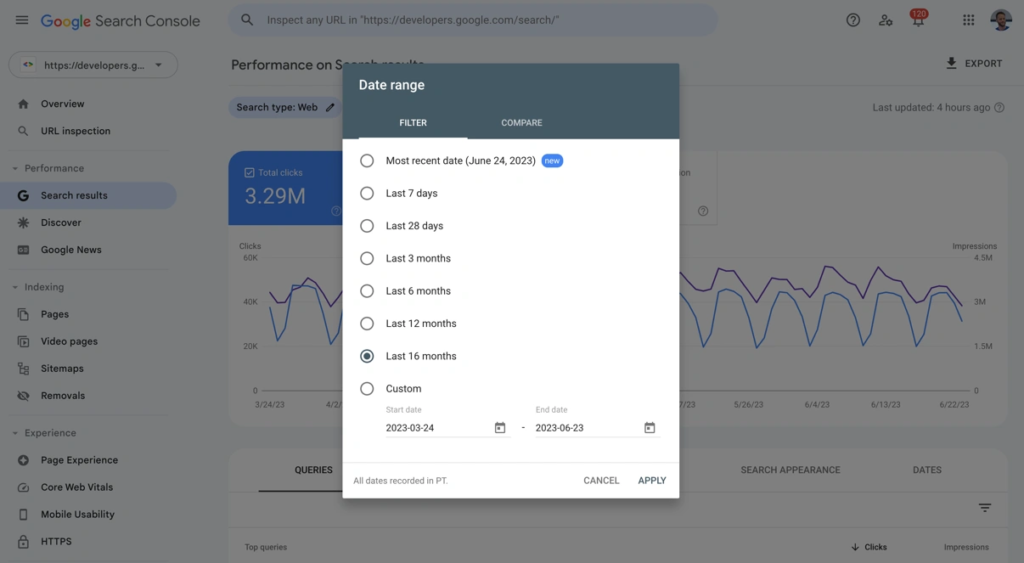
Google’s September Core Update created panic among enterprise website owners due to a technical change. Many rushed to fix what they thought was an SEO problem. They didn’t realize that their apparent “traffic loss” was just a reporting glitch. Here’s what actually happened.
How Removing &Num=100 Parameter Affected GSC Data
Google disabled the &num=100 parameter on September 12, 2025. This URL setting lets users see 100 search results on one page instead of the usual 10. This small technical tweak sent shockwaves through the SEO industry and disrupted Google Search Console (GSC) reporting.
The results were swift and dramatic:
- 87.7% of websites saw their impressions drop after the change
- Affected sites showed about a 15% decline in median impression loss
- Impression counts fell by 30-50% or more for many properties
- The total drop in impressions reached 25% during the week after the parameter removal
Most of these “impressions” in GSC didn’t come from real users at all. SEO tools and bots used the &num=100 parameter to collect ranking data. These inflated impression numbers disappeared when Google removed this parameter.
Sites using large-scale technical SEO wrongly thought they had a significant SEO ranking drop. Real user visibility remained unchanged.
Desktop Impressions Fell More Than Mobile
Desktop impressions dropped much more than mobile ones. Data analysis showed desktop searches had steeper declines compared to mobile. This happened because most SEO rank tracking tools use desktop tracking by default.
A researcher analyzing the data noted, “For most SEO tool tracking projects, many will use desktop tracking as the default project setting”. Some tools only track desktop results, which made this anomaly stand out in desktop metrics.
Both traffic had inflated impression numbers significantly. Some sites’ desktop impressions dropped by over 200,000 daily. This revealed the extent of non-human traffic in GSC data.
A good enterprise SEO core update fix should distinguish between reporting anomalies and real ranking issues before changing strategy.
SEO Tools Got It Wrong
The SEO tool ecosystem went into chaos when Google removed the &num=100 parameter. These tools depended on this parameter to gather ranking data efficiently – getting 100 results in one request. Now they needed 10 separate requests for the same data.
This led to three main problems:
- Tools reported fake ranking drops
- People blamed algorithm changes because of the timing of a Core Update
- Average position metrics looked better despite fewer impressions, causing confusion
Simple math explains this contradictory data. Higher-ranking impressions remained after low-ranking ones (positions 50-100) disappeared. This made average positions look better without actual ranking changes.
To name just one example, imagine your site had impressions for positions #5, #12, #78, and #92. After the change, only positions #5 and #12 remained. Your mathematical average would look much better – but your rankings hadn’t changed at all.
This situation shows why enterprise SEO services need strong data analysis skills. Smart enterprise SEO optimization service providers identified this reporting anomaly and prevented unnecessary panic.
Always compare GSC data with analytics platforms and server logs before starting a Google core update recovery plan. The September 2025 “ranking drop” simply fixed an old flaw in Google’s search visibility reporting.
AI Overviews and the Rise of Zero-Click Searches
AI Overviews have created an unprecedented challenge for enterprise websites trying to maintain visibility. Enterprise SEO core update fix strategies must now deal with a fundamental change in user interaction with search results, beyond algorithm changes and reporting anomalies.
What Is ‘The Great Decoupling’ Of Impressions And Clicks
‘The Great Decoupling’ represents a new disconnect where websites appear more often in search results but receive fewer clicks. This pattern became clear in early 2025 as impressions kept rising while clicks dropped sharply. These metrics now follow different paths, unlike previous years when they moved together.
Research by SparkToro shows that over 58% of Google searches end with zero clicks. Users now find answers without visiting websites. This pattern has become more obvious since AI Overviews started appearing in 47% of searches.
How AI Overviews Affect Enterprise Seo Strategies
AI Overviews have changed the enterprise SEO services landscape by delivering instant, AI-powered responses in search results. A Semrush study of 10,000 informational keywords revealed that AI-generated summaries substantially reduced both organic and paid click-through rates.
Moz research indicates AI Overviews could slash organic traffic by 18% to 64%. Websites with straightforward informational content feel this impact the most. This creates a critical challenge for large-scale technical SEO implementation.
Notwithstanding that, a bright side exists. Google’s data shows that users clicking through from AI Overviews represent higher-quality traffic. These visitors tend to spend more time on your site. AI results give users a broader context, which can lead to a more involved audience.
Optimizing Content For AI Summaries And Featured Snippets
Your enterprise SEO core update fix strategies need adaptation to this new reality:
- Structure content with clear headers (H2, H3) containing relevant keywords, as AI scans these to understand your content
- Use bullet points and numbered lists since AI prefers scannable information
- Format content in Q&A or FAQ style to increase chances of being featured
- Focus on topics where your unique expertise can shine, especially for complex subjects that AI doesn’t deal with very well
Content that AI cannot easily copy helps alleviate SEO ranking drop challenges from AI Overviews. Deep analysis, original research, and experience-based insights provide more value than simple question-answer content.
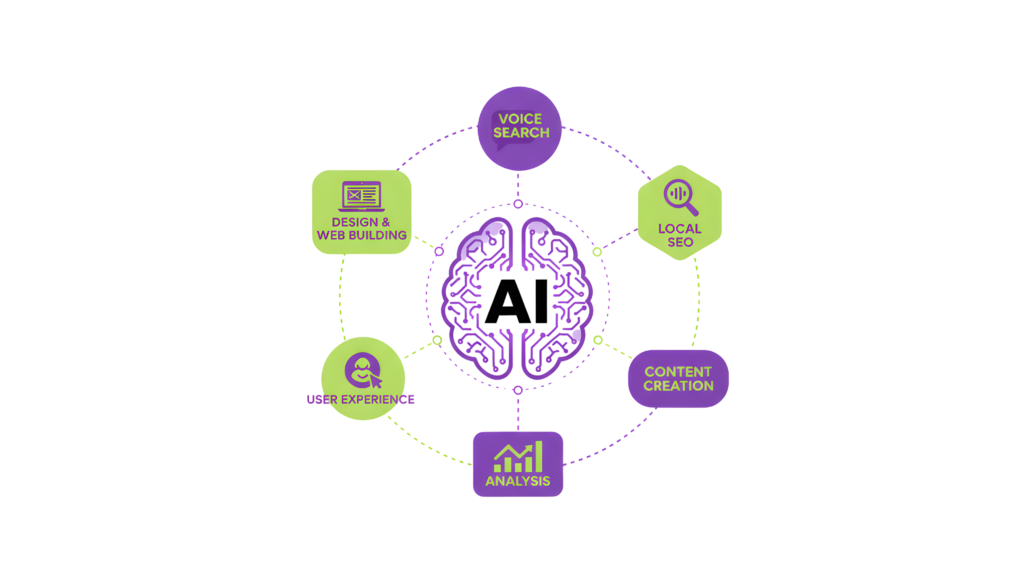
Your enterprise SEO optimization services should prioritize content creation for both humans and AI systems. This approach ensures Google’s core update recovery in this zero-click landscape. The right optimization can turn this challenge into a chance for qualified traffic.
How Core Updates Evaluate Enterprise Content
Google uses specific criteria at the time it assesses enterprise website content through core updates. You need to understand these assessment mechanisms to create a working enterprise SEO core update fix strategy.
E-E-A-T Signals In Enterprise SEO Optimization Services
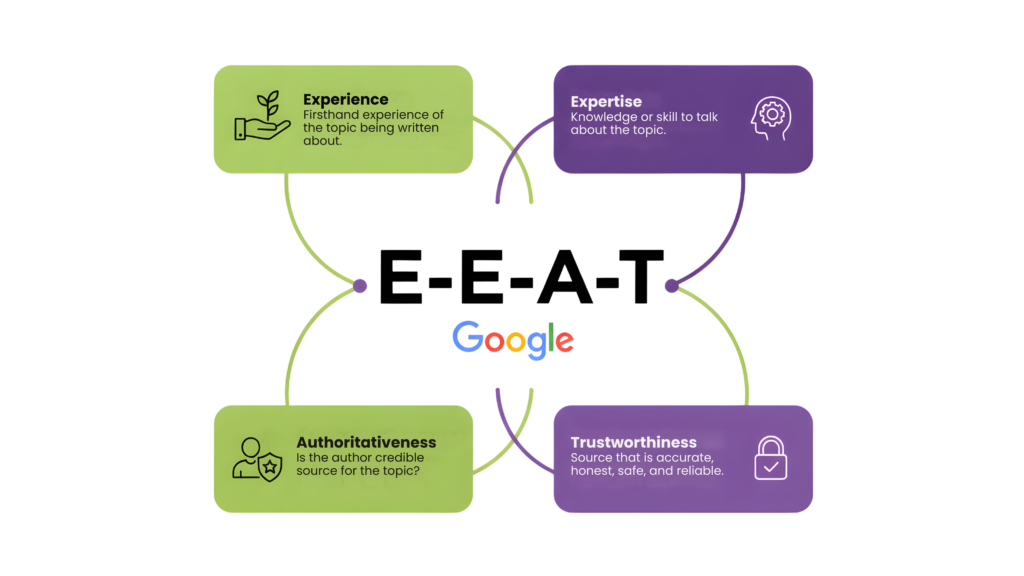
E-E-A-T represents Experience, Expertise, Authoritativeness, and Trustworthiness—a framework Google uses to assess content quality. Google added “Experience” to the traditional E-A-T concept, which has changed how enterprise SEO optimization services approach content development.
Trust forms the foundation of this framework. Google makes it clear: “untrustworthy pages have low E-E-A-T, no matter how Experienced, Expert, or Authoritative they may seem”. Your enterprise site must:
- Show genuine, first-hand experience with discussed products, services, or topics
- Display author credentials and expertise in detailed bios
- Build site authority through quality backlinks and brand recognition
- Create trust through accurate, well-sourced content and secure (HTTPS) connections
Why Thin or AI-Generated Content Gets Devalued
Google’s core updates target and devalue content created for search engines instead of users. The September 2023 Helpful Content Update set this direction, and 2024-2025 updates have strengthened this focus.
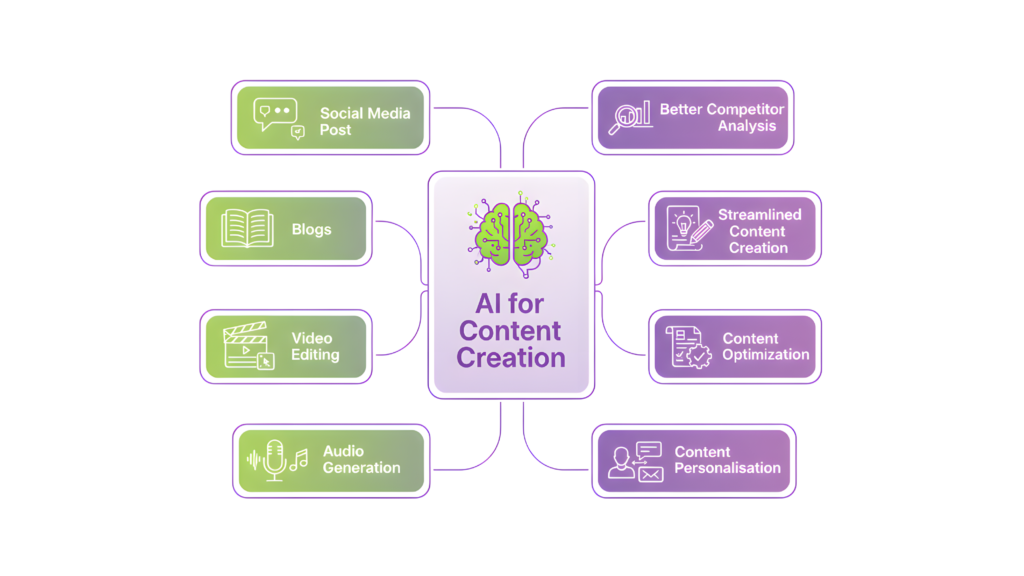
Content that risks devaluation includes:
- Low-quality material that repeats existing information
- Text that hides answers in unnecessary words
- Generic content that misses specific search queries
- AI-generated text without human editing or value addition
Google’s Search Quality Rater Guidelines state clearly: “the Lowest rating applies if all or almost all of the MC [Main Content] on the page…is auto or AI generated…with little to no effort, little to no originality, and little to no added value for visitors”.
Search Intent Mismatch And Outdated Content Issues
Pages might rank for keywords but fail to meet user needs—this intent mismatch leads to ranking drops. Outdated content poses another major risk during core updates.
Search intent optimization covers four main categories:
- Informational: Users want knowledge
- Navigational: Users search for specific websites
- Transactional: Users ready to buy
- Commercial investigation: Users compare options
Content decay happens when valuable content becomes outdated or irrelevant. Core updates scrutinize pages with old statistics, broken links, or information that doesn’t match current trends.
Your enterprise SEO core update fix should check if the content matches the right intent and stays current. Updating old pages often works better than creating new content. This approach maximizes your original investment while keeping content relevant for users and search algorithms.
Diagnosing a Real Google Derank
A methodical diagnosis becomes vital for your enterprise SEO core update fix once you’ve confirmed a real ranking drop. You’ll need a systematic investigation on multiple fronts to determine if technical issues, content problems, or backlink concerns caused the derank.
Technical SEO Checks: Robots.Txt, Noindex, Core Web Vitals
The first step is to verify your site’s indexing status in Google. The Google Search Console’s ‘Pages’ report helps identify excluded pages and their reasons. Quality issues show up as “Crawled – currently not indexed,” while technical configuration problems appear as “Blocked by robots.txt” or “Excluded by ‘noindex’ tag”.
Your robots.txt file needs a thorough check to ensure it doesn’t block important content accidentally. The good news is that only 2% of websites have robots.txt configuration issues. These simple mistakes can devastate your enterprise’s SEO services effectiveness.
Core Web Vitals evaluation plays a key role since these metrics directly affect rankings. The key metrics are:
- Largest Contentful Paint (LCP): Should load within 2.5 seconds
- Interaction to Next Paint (INP): Should respond in under 200 milliseconds
- Cumulative Layout Shift (CLS): Score should be under 0.1
96% of websites have at least one page failing Core Web Vitals assessment. This makes it a common source of SEO ranking drop issues.
Content Audit: Decay, Duplication, And Intent Alignment
Your content analysis should start with checking outdated information. Content naturally decays as statistics become obsolete, links break, or industry trends evolve. Core updates tend to negatively impact outdated content’s performance negatively.
Crawling tools like Screaming Frog help spot duplicate content issues. About 41% of websites face internal duplication problems. The solution lies in implementing canonical tags to point search engines to your preferred version.
The content’s alignment with search intent deserves special attention. Pages should match the user’s purpose (informational, navigational, transactional, or commercial investigation). Large-scale technical SEO updates often cause dramatic ranking drops for content that mismatches user intent.
Backlink Audit: Lost Authority Links And Toxic Domains
Your recovery potential heavily depends on backlink quality. Keep track of any recently lost high-authority backlinks. A scan for toxic backlinks from spammy domains with high spam scores should run simultaneously.
Manual penalties or algorithmic filters can trigger from toxic backlinks. Semrush’s Backlink Audit helps by assigning toxicity scores (0-100) to identify problematic links. For effective Google core update recovery, links scoring above 60% on spam metrics should be considered for disavowal.
A healthy backlink profile needs constant monitoring against spammy or irrelevant domains. This becomes even more critical after core updates when these signals face increased scrutiny.
Recovery Plan for Enterprise SEO After Core Updates
Your enterprise SEO core update fix needs a structured recovery strategy after diagnosis. Each action item should fix specific weak points found in your assessment.
Refresh Outdated Content With First-Hand Experience
Old content greatly affects your rankings. HubSpot saw positive SEO results after removing over 3,000 outdated pieces. Databox experienced a 75% traffic increase after updating just 20 blog posts. You should replace old statistics, fix broken links, and add current information with authentic first-person points of view that show real knowledge.
Improve Author Bios And Trust Signals
Author credibility directly shapes E-E-A-T signals. Detailed author bios showing professional qualifications and relevant experience build authority. Specific credentials verify content authenticity, unlike generic bylines. In fact, author bios have become more important as they provide “human identity, lived experience, and accountability” that AI cannot easily copy.
Use Schema Markup To Win Rich Results
Schema markup helps search engines understand your content and boosts visibility through rich results. The Food Network added schema to 80% of its pages and saw a 35% increase in total website visits. Enterprise sites should focus on Product, Organization, FAQ, and Local Business schema types.
Broaden Traffic Sources Beyond Google
Building an enterprise SEO optimization services strategy only around Google creates risks. You can create multiple entry points to your content through:
- Email newsletters (avoiding sign-up friction)
- Social media (especially Facebook’s 3 billion users)
- Push notifications (direct channel unaffected by algorithms)
- Membership programs (creating a dedicated readership)
Why Choose RankFast for Enterprise SEO Services
You need to think about technical expertise and recovery track record when picking the right partner for your enterprise SEO core update fix. RankFast builds strong SEO foundations that protect your site during algorithm changes, migrations, and system failures.
Proven Recovery Strategies For Large-Scale Technical SEO
RankFast uses technical resilience strategies built for high-stakes enterprise environments. Small errors can snowball into major visibility losses here. Their expandable SEO architecture helps protect your revenue—this is a big deal as it means that one hour of downtime can cost enterprise e-commerce sites over $500,000.
Their approach has:
- Proactive monitoring systems that catch issues before ranking drops
- Automated safeguards against accidental deindexation
- SEO-specific disaster recovery protocols beyond standard IT preparations
Custom Audits Tailored To Enterprise-Level Websites
RankFast’s complete audit process looks at every aspect of your enterprise website:
They start by reviewing technical health through advanced crawlability assessments, mobile responsiveness checks, and Core Web Vitals analysis. Next comes content audits that spot decay, duplication, and intent-matching issues. The final step analyzes backlink profiles to find toxic connections and opportunities to build authority.
Ongoing Support For Algorithm Resilience
Sites with stronger SEO foundations and higher ongoing investment see less volatility during updates. The numbers back this up—80% of clients who saw positive outcomes after recent core algorithm updates had invested in 40+ SEO hours.
RankFast’s ongoing support builds algorithm resilience through:
- Live Core Web Vitals monitoring
- Regular vulnerability audits that spot technical weaknesses
- Continuous content optimization that follows E-E-A-T principles
RankFast becomes your partner for your enterprise SEO core update fix by creating lasting, expandable foundations. These foundations weather algorithm changes while protecting your organic visibility.
Conclusion
Google keeps refining how it evaluates websites, and the enterprise SEO landscape changes faster than ever. When your rankings drop after a core update, you need a clear analysis instead of panicking. What looks like a massive traffic loss might just be a reporting glitch. The September 2025 &num=100 parameter removal showed this when it created false impression drops.
Strong technical foundation matters just as much. A full 96% of websites don’t pass Core Web Vitals tests, which gives you a chance to stand out. Databox showed this works when they got 75% more traffic by updating just 20 blog posts.
Smart enterprise websites don’t put all their eggs in Google’s basket. You should build different ways to reach your audience through email marketing, social media, and membership programs. This creates a stable base that works whatever the algorithms do.
The right partner can make or break your enterprise SEO recovery. RankFast provides detailed enterprise SEO services that spot and fix core update problems through active monitoring, technical strength, and content optimization that matches Google’s latest standards. Their expertise can help turn your ranking challenges into advantages over competitors.
FAQs
Q1. How can I tell if my enterprise site has been affected by a Google core update?
Look for sudden drops in organic traffic and search visibility across multiple pages. Compare your Google Search Console data with Google Analytics to verify if impression declines match actual traffic losses. Also, check if your average position has improved while impressions dropped, as this can indicate a reporting anomaly rather than a true ranking drop.
Q2. What are some common reasons enterprise sites lose rankings after core updates?
Common reasons include outdated or thin content, poor E-E-A-T signals, technical SEO issues like slow page speed or mobile unfriendliness, content that doesn’t match user intent, and low-quality or toxic backlinks. Google’s core updates often reevaluate overall site quality, so addressing these factors is crucial for recovery.
Q3. How can I optimize my enterprise site’s content for AI-generated search results?
Structure your content with clear headers (H2, H3) containing relevant keywords. Use bullet points and numbered lists for easy scanning. Format content in Q&A or FAQ style when appropriate. Focus on creating in-depth, expert content that provides unique insights AI can’t easily replicate, especially for complex topics.
Q4. What steps should I take to recover from a core update-related ranking drop?
Start by conducting a thorough technical SEO audit to identify issues with indexing, Core Web Vitals, and mobile-friendliness. Refresh outdated content with current information and first-hand expertise. Improve author bios and trust signals on your site. Implement schema markup to enhance rich results. Also, consider diversifying your traffic sources beyond Google search.
Q5. How long does it typically take to recover from a core update impact?
Recovery time can vary significantly depending on the extent of the impact and the changes implemented. Some sites may see improvements within a few weeks after making necessary adjustments, while others might take several months. Consistent effort to improve overall site quality and adhere to Google’s guidelines is key to long-term recovery and stability.