- Organic Marketing & Lead Generation
- Industries
- Technologies & Platforms
- UX & AI Services
- Website Development
- Resources & Learn
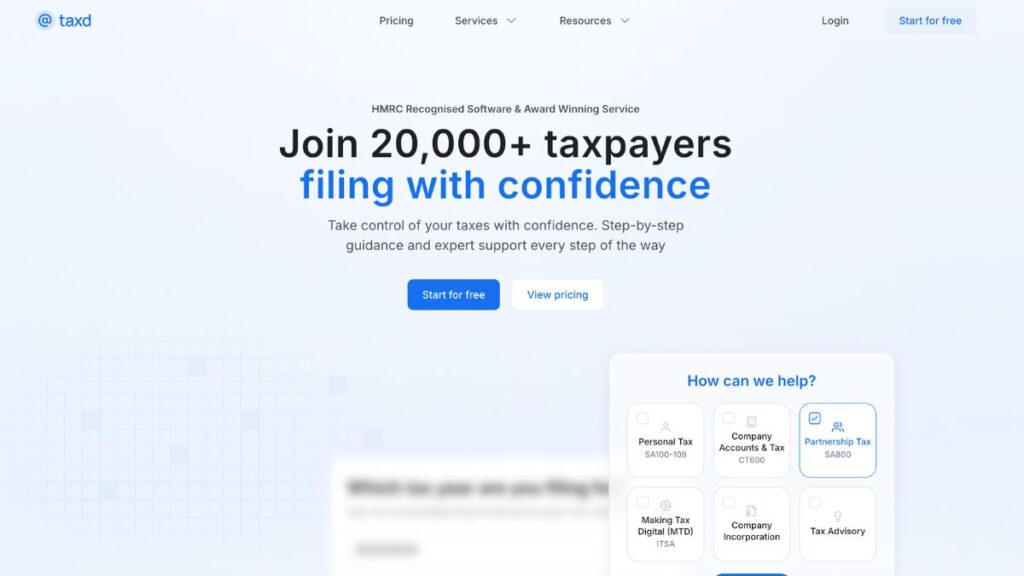
Establishing authority and consistent demand across high-intent tax searches.
The UK tax and fintech sector is highly competitive. Users search with a clear purpose. They often face deadlines, compliance concerns, or complex tax situations. In this environment, visibility must be supported by trust and clarity.
This case study explains how Rankfast supported a fintech SaaS platform in this niche by developing a structured, reliable organic growth strategy. The focus was long-term performance, not short-term traffic spikes.
A UK-based consumer fintech SaaS platform operating in the tax compliance and filing space. The platform supports users with complex tax needs. These include landlords, non-residents, expatriates, sole traders, and limited company directors.
Financial Services / Fintech
United Kingdom
1 Year 9 Month
The tax and fintech niche includes many established competitors. These brands already hold strong positions in organic search. They benefit from years of content creation and authority building.
Before working with Rankfast, organic growth had slowed. Traffic levels were stable but flat. Several pages were not indexed correctly. Service pages lacked clarity and depth. Content existed, but it was fragmented.
Seasonality was another challenge. Tax-related searches increase sharply during filing periods, especially in January. Outside these periods, demand reduces. Without early-stage visibility, growth becomes dependent on short timeframes.
There was also a visibility gap. The platform had strong subject knowledge, especially for non-resident and expatriate tax cases. However, this expertise was not reflected clearly in search results.
The objective was to build a stable, scalable SEO foundation. Rankfast focused on aligning technical performance, content structure, and user intent. Organic search was treated as a primary acquisition channel.
Keyword research focused on clear user intent. Core tax services were grouped into defined topic areas. Service pages were improved with structured content and relevant FAQs. Internal links were added to support navigation. Educational content addressed common tax questions in simple, direct language. This approach helped search engines understand topical relevance. It also helped users find the information they needed without confusion.
Technical issues were addressed early. Indexing errors were resolved. XML sitemaps were refined. Server-side indexing was implemented. Site speed improved across key pages. Mobile usability was enhanced to support tax filing on different devices. Secure HTTPS implementation was confirmed. These steps ensured that content could be discovered and crawled without limitations.
Tax calculators became a core part of the growth plan. Clear explanations and focused FAQs supported each calculator. New calculators were added regularly to cover additional tax scenarios.
These tools attracted users during early research stages. They also increased engagement and strengthened topical authority across the website.
Organic Traffic Growth
Organic traffic increased by 830%. Monthly visibility grew from a limited baseline to sustained five-figure traffic levels. Organic search became the primary acquisition channel.
Search Visibility
The platform generated 4.29 million search impressions. Visibility improved across service pages, guides, and calculator-related searches throughout the year.
Organic Engagement
More than 70,000 organic clicks were recorded over a 16-month period. Traffic came from high-intent pages and calculator-based entry points.
Results developed steadily over time. Improved visibility allowed the platform to attract users well before peak filing periods. This reduced reliance on seasonal demand. It also improved the stability of the acquisition flow.
Calculator tools and expert content increased user engagement. Repeat visits became more frequent. The platform gained trust as a reliable source for tax guidance.
Revenue followed expected seasonal patterns. Strong increases appeared during filing periods. The difference was preparedness. Users were already active on the platform when filing activity increased.