Did you know that optimized category pages can increase traffic by up to 413% compared to product pages?
Surprisingly, despite this massive potential, many ecommerce businesses overlook category page SEO while focusing exclusively on product pages. In fact, these often-neglected pages also rank for 19% more keywords than their product counterparts. Additionally, there’s 10x more traffic with navigation than with search in the apparel industry alone.
For your ecommerce business, this represents a significant untapped revenue opportunity. Category pages offer the biggest chance to earn new customers from non-brand organic rankings. While you’re busy optimizing product descriptions and images, your category pages could be quietly transforming into powerful traffic and conversion generators.
Technical SEO for ecommerce requires a strategic approach to category page optimization. High-converting category pages share common traits, including both horizontal and vertical category menus that enhance user experience. Beyond higher rankings, these optimized pages improve navigation and substantially increase organic traffic potential.
Here, you’ll discover how to transform your ecommerce category pages into revenue-generating assets through proven SEO strategies. Let’s uncover the most ignored revenue opportunity in ecommerce SEO today.
Understanding the Role of Category Pages in SEO
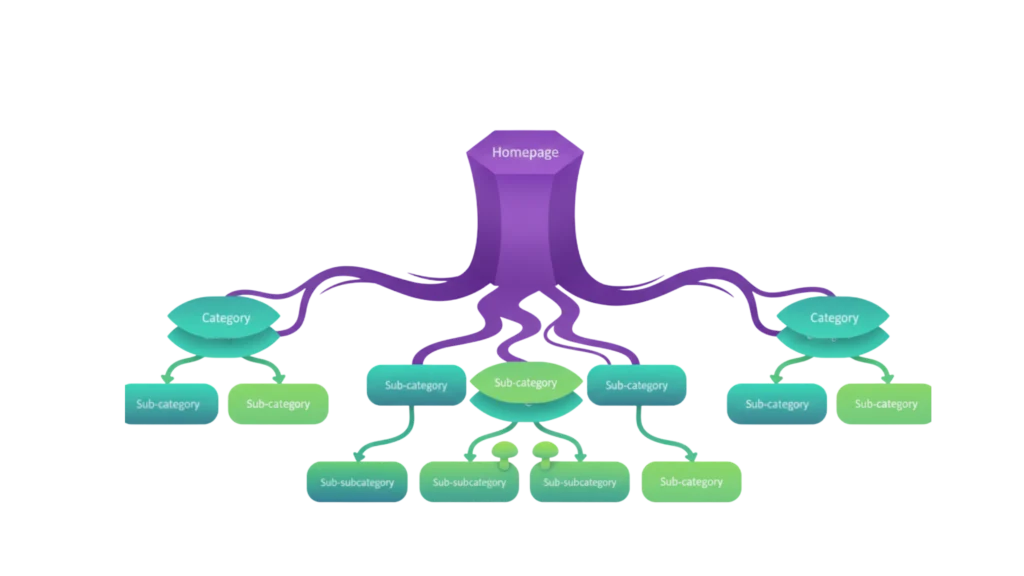
Category pages serve as the backbone of your ecommerce site’s architecture, yet they remain vastly underutilized for SEO potential. Understanding their unique role can transform your digital strategy and unlock substantial revenue growth.
What Makes Category Pages Different From Product Pages
Category pages function as gateways that organize related products, creating a hierarchical structure that guides users through your store. Unlike product pages that focus on a single item’s details, category pages cast a wider net, helping shoppers navigate through broader collections.
Consider this crucial distinction: when customers search online, they typically use generic queries rather than specific product names. For instance, they’ll search for “men’s running shoes” rather than “Nike Air Zoom Pegasus 38” – making category pages perfect targets for these broader terms.
The data confirms this difference in performance:
- Category pages rank for 19% more keywords than product pages
- They generate 32% more traffic potential
- Most importantly, they produce an astounding 413% more estimated traffic
Essentially, category pages sit between your homepage and product pages in the site hierarchy, serving as topic pages for product groups rather than individual items. This strategic position gives them unique value in your SEO ecosystem.
Why They Matter For Mid-Funnel Search Intent
Category pages perfectly align with mid-funnel shoppers who are actively researching and comparing options. During this consideration stage, users aren’t just browsing casually—they’re narrowing choices with specific criteria in mind.
Your category pages capture this intent by targeting broader, high-volume search terms that product pages simply can’t compete for. Furthermore, these pages naturally accommodate the comparison-focused mindset of mid-funnel shoppers through filtering options, product grids, and relevant category descriptions.
When optimized properly, category pages become powerful assets for attracting qualified traffic. For instance, creating focused category pages like “linen shirt dresses” instead of just “dresses” can align with specific, high-intent searches that drive meaningful conversions. This targeted approach ensures you’re capturing users with genuine purchase potential rather than just general browsers.
How They Impact Ecommerce Revenue Growth
The revenue impact of optimized category pages is substantial. Since they serve as primary traffic-generating pages for non-brand organic rankings, they represent your biggest opportunity to earn new customers. Consequently, these pages often outperform individual product pages in driving qualified traffic that converts.
When properly structured, category pages enhance discovery by helping users explore product ranges they might not otherwise find. This increased visibility naturally leads to higher average order values and improved conversion rates.
Real-world results demonstrate this impact. One case study showed a business achieving a remarkable 228% uplift in revenue after refining metadata, enriching on-page content, and launching new subcategory pages. Additionally, they saw a 262% increase in organic clicks and 338% growth in top-3 keyword rankings year-over-year.
For ecommerce businesses seeking technical SEO improvements, category page optimization offers the clearest path to revenue growth. By capturing mid-funnel demand and guiding users toward conversion, these pages transform qualified traffic into tangible business results—making them your most valuable yet frequently overlooked SEO asset.
Setting Up for Success: Technical SEO Essentials
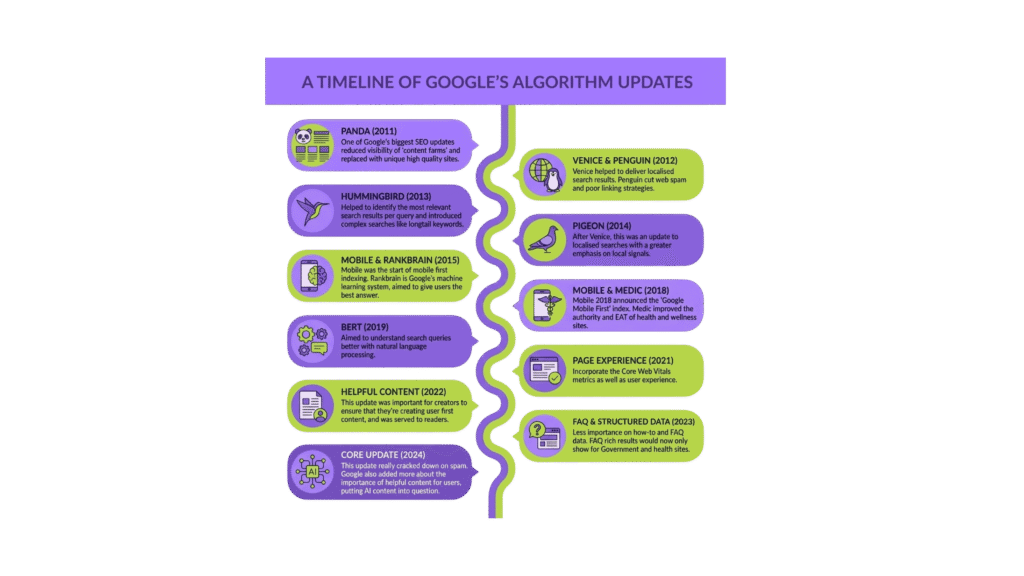
The technical foundation of your ecommerce site directly impacts its ability to rank and convert visitors. Properly configured category pages can make the difference between missed opportunities and significant revenue growth. Before diving into content creation, you must address these critical technical elements first.
Clean URL Structure And Metadata Optimization
A clean, logical URL structure forms the cornerstone of effective category page SEO. Search engines prefer URLs that are descriptive and user-friendly rather than filled with random characters or complex parameters.
For optimal results, structure your category page URLs with these characteristics:
- Keep them short (ideally 50-60 characters)
- Use hyphens to separate words (not underscores)
- Include primary category keywords naturally in the slug
- Create a flat structure to reduce crawl complexity
Consider the difference between these examples: ✅ example.com/womens-dresses ❌ example.com/c/5799324/
Major retailers like Walmart follow this approach with URLs such as “walmart.com/c/kp/nike-running-shoes” rather than cryptic number strings. This structure helps both users and search engines understand page content before they even visit.
Equally important is optimizing metadata—specifically title tags and meta descriptions. As vital on-page SEO factors for category pages, well-crafted title tags should remain under 60 characters, be descriptive, and include relevant keywords. Your meta descriptions should stay under 155 characters while providing compelling summaries that encourage clicks.
Faceted Navigation And Canonical Tag Setup
Faceted navigation creates a significant technical challenge in technical SEO for ecommerce. Although filters for attributes like size, color, and price greatly enhance user experience, they can generate thousands of URL combinations that create duplicate content issues.
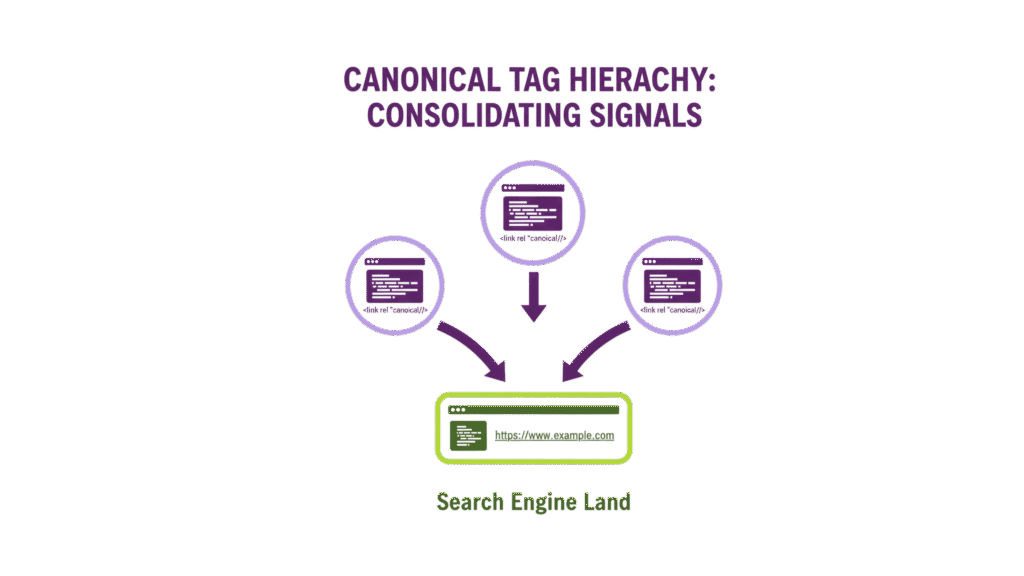
This proliferation of URLs leads to three major problems:
- Wasted crawl budget
- Index bloat
- Diluted ranking signals
To solve these issues, implement these strategies:
First, use canonical tags to indicate your preferred version of each page. These HTML elements tell search engines which URL should carry ranking weight. For instance, if users can filter by price, color, or size, your canonical tag should point back to the main category page URL.
Second, consider using robots.txt to block Googlebot’s access to problematic URL parameters. Specifically, disallow unnecessary filter combinations that don’t need indexing, such as price ranges or sorting options.
Additionally, for filters with search value, implement AJAX for on-page filtering, which avoids generating new URLs for each selection.
Structured Data For Better Serp Visibility
Structured data is a standardized format that helps search engines understand your category page content more deeply. By implementing schema markup, you can enhance how your category pages appear in search results and potentially qualify for rich results.
For ecommerce category pages, specifically consider these schema types:
- BreadcrumbList (shows your site’s hierarchy)
- ItemList (displays your product collections)
- FAQ (answers common customer questions)
- Review (highlights product ratings)
Adding structured data can yield impressive results. Rotten Tomatoes saw a 25% higher click-through rate for pages with structured data, while The Food Network experienced a 35% increase in visits after implementing schema markup. Moreover, Nestlé measured an 82% higher click-through rate on pages showing as rich results.
Through proper implementation of these technical SEO foundations, your category pages will be better positioned to capture organic traffic and drive conversions. As you move toward category page optimization, remember that these technical elements form the essential groundwork upon which all your content efforts will build.
Crafting High-Impact Content for Category Pages
Content is what transforms technically sound category pages into conversion powerhouses. After establishing your foundation, you must focus on creating compelling content that serves both search engines and users. Let’s explore how to craft high-impact content that drives category page SEO results.
Intro Copy That Answers User Questions
Your category page introduction should immediately address what shoppers want to know. This content serves two crucial purposes: helping users make informed decisions and signaling relevance to search engines.
When writing intro copy:
- Keep it concise (a few hundred words maximum) to avoid distracting shoppers from products
- Start with an attention-grabbing headline
- Follow with a brief introduction that contextualizes the category
- Add a clear call-to-action
- Include practical information that helps shoppers make decisions
Focus on providing value through unique selling points, product selection criteria, or material sourcing information. Avoid generic descriptions about product history or market trends. Remember that 89% of consumers check informational sections before making purchases, making your intro copy a powerful conversion tool.
Using FAQs And Comparison Blocks Effectively
FAQs represent one of the most valuable yet underutilized content elements for SEO ecommerce category pages. They simultaneously build trust, improve conversion rates, and create opportunities for featured snippets in search results.
The most effective FAQs come directly from real customer questions handled by your support team, not hypothetical concerns you imagine shoppers might have. This approach addresses genuine pain points while creating opportunities to rank in Google’s People Also Ask (PAA) sections.
For optimal results:
- Format questions as headings with answers directly beneath to increase “snippetability”
- Use schema markup on FAQs to boost SEO visibility
- Position FAQs strategically—they don’t need to occupy space at the top of the page
Similarly, comparison blocks help shoppers evaluate options within a category. These elements create relevant content that aids purchasing decisions. Implement comparison tables that highlight product differences based on materials, quality, or features. This approach naturally incorporates keywords while providing genuine value.
Avoiding Keyword Stuffing While Staying Relevant
Keyword stuffing remains a common pitfall in technical SEO for ecommerce. One ecommerce manager reported having a keyword appear over 190 times on a category page due to repetitive product names—a situation that can trigger penalties from search engines.
To maintain keyword relevance without overstuffing:
First, measure your keyword density using appropriate tools. Best practices suggest maintaining approximately 2% keyword density. This provides sufficient keyword signals without appearing manipulative.
Second, incorporate keywords naturally throughout different page elements. Use variations and long-tail phrases to maintain diversity. This creates flexibility while targeting related terms that shoppers might use.
Third, focus on writing for users rather than search engines. Google emphasizes valuable content, so prioritize quality information that helps customers make decisions. This approach naturally incorporates relevant keywords while avoiding artificial insertion.
Remember that category page content isn’t something to “publish and forget.” Revisit pages every 2-3 months, making updates based on performance data. This ongoing optimization ensures your content remains relevant to both users and search algorithms.
By carefully crafting high-impact category page content, you’ll create a better shopping experience that simultaneously boosts your ecommerce revenue growth potential through improved organic visibility.
Improving UX Without Sacrificing SEO
User experience and SEO often work hand-in-hand on category pages, creating a powerful combination for both conversion and visibility. Mastering this balance requires attention to three critical elements: mobile optimization, intuitive navigation, and visual presentation.
Designing Mobile-Friendly, Fast-Loading Pages
With mobile commerce representing over 60% of online shopping, optimizing your category page SEO must begin with a mobile-first approach. Start by implementing responsive design that adapts seamlessly across all screen sizes while maintaining visual hierarchy.
For optimal mobile performance, focus on Core Web Vitals—particularly Largest Contentful Paint (LCP), First Input Delay (FID), and Cumulative Layout Shift (CLS). These metrics directly impact both user experience and search rankings.
To improve mobile page speed:
- Compress category images using WebP format to reduce initial load time
- Implement lazy loading for images below the visible area
- Preload only the first 4-6 product images to improve perceived performance
- Optimize critical rendering paths to prioritize above-fold content
Remember that nearly half of users will abandon a site if pages take over 3 seconds to load, making speed optimization essential for both technical SEO for ecommerce and conversion rates.
Using Filters And Sort Options To Guide Users
Effective filtering systems dramatically improve category page optimization by helping shoppers quickly find what they need. However, only 60% of websites offer a good filtering experience, with 42% lacking category-specific filters.
For maximum effectiveness:
- Position filters as horizontal sliders just above the product grid on mobile
- Organize primary filters (price, size, color) prominently while making secondary filters expandable
- Implement dynamic result updates that show immediate results without page reloads
- Include “clear all filters” functionality for easy reset
Regarding sorting options, don’t assume your default method matches all customer preferences. Offer multiple sorting methods including price (low to high), customer ratings, and newest arrivals to accommodate different shopping priorities.
Balancing Product Grids With Helpful Content
The challenge of category page SEO involves balancing informational content with product visibility. On smaller screens, a 2-column product grid creates the ideal balance between visibility and scrolling efficiency.
For enhanced visual merchandising:
- Allow shoppers to toggle between grid and list views
- Use pagination rather than infinite scroll to make product selection less overwhelming
- Keep product descriptions concise but include differentiating information like size options and prices
Importantly, avoid placing too much content above product grids, as this pushes listings below the fold and reduces conversion rates. Consider adding informative content below products or in expandable sections that don’t interfere with browsing.
By maintaining this careful balance between user experience and SEO elements, your category page optimization efforts will drive both visibility and conversions—creating a powerful engine for ecommerce revenue growth.
Linking Strategies That Build Authority
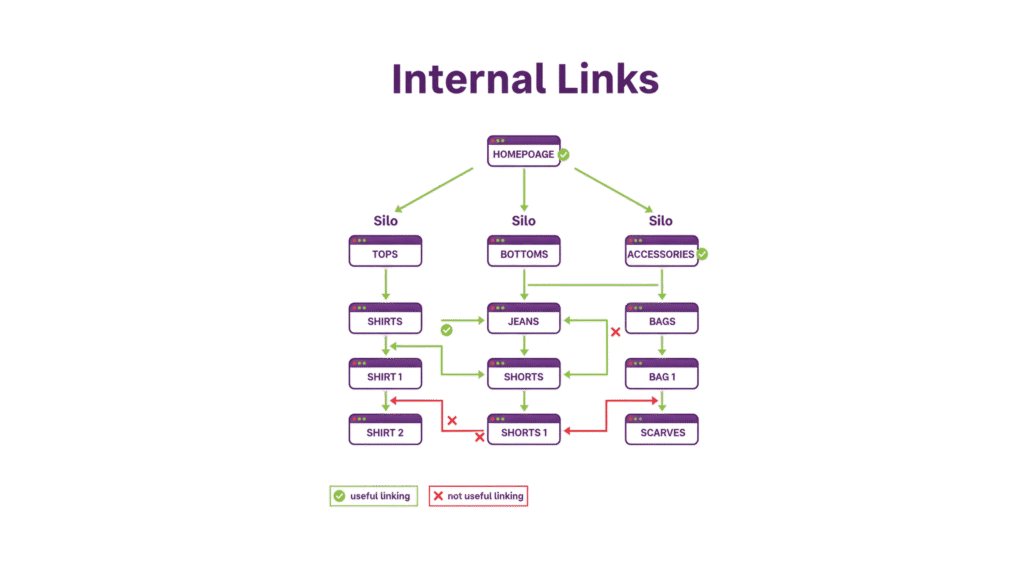
Strategic internal linking forms the invisible framework that strengthens your category pages and builds domain authority. Though often overlooked, proper linking structures help search engines understand your site hierarchy, distribute link equity, and improve user navigation throughout your ecommerce store.
Internal Links To Related Categories And Blogs
Many site owners focus exclusively on building external links yet neglect internal linking—a missed opportunity for category page SEO. Internal links serve as pathways connecting your content, allowing both users and search engines to discover more pages on your site.
When strategically implemented, internal links create topic clusters that signal topical authority to search engines. For instance, if you’ve written several articles about winter apparel, contextually linking them shows Google these pages are thematically related.
To maximize your category page optimization efforts:
- Link from high-authority pages to newer category pages to pass link equity
- Create contextual links within relevant sentences rather than generic “related products.”
- Connect supporting pages back to the cornerstone content to indicate importance
This approach not only improves crawl frequency but also enhances user engagement, ultimately supporting ecommerce revenue growth.
Breadcrumbs And Footer Links For Better Crawlability
Breadcrumb navigation provides critical pathways through your site hierarchy. These navigational elements show users their current location while signaling structure to search engines. When implemented with BreadcrumbList schema markup, breadcrumbs can appear in search results, increasing visibility and click-through rates.
Equally important, footer links serve as strategic internal linking opportunities. By incorporating links to key category pages in your footer, you improve crawlability and reinforce site structure. This practice distributes link equity across your website and helps search engines prioritize your most valuable pages.
For optimal results with technical SEO for ecommerce, limit footer links to 15-20 total, focusing on quality over quantity.
Avoiding Orphaned Category Pages
Orphaned pages—those without any internal links pointing to them—create significant SEO ecommerce category pages problems. Without internal links, these pages become invisible to search engines, wasting valuable crawl budget and potentially hiding important content.
To identify orphaned pages, check for “Orphaned sitemap pages” in your SEO tools. Once identified, implement these fixes:
- Add contextual links from relevant existing content
- Include links in navigation menus where appropriate
- Use descriptive, keyword-rich anchor text that provides context
By systematically addressing orphaned pages, you’ll create a robust internal linking structure that supports your entire site while highlighting your most valuable category pages.
Need help implementing these strategies? RankFast’s BigCommerce SEO services specialize in building authority through strategic internal linking tailored to your unique ecommerce structure.
Testing, Tracking, and Continuous Optimization
Ongoing measurement and testing form the backbone of successful category page optimization. After implementing your technical foundations and content strategy, you need to evaluate what’s working and what needs improvement through data-driven decisions.
Using GA4 and GSC To Monitor Performance
GA4 provides deeper insights into how users interact with your category pages. Track engagement metrics such as Average Engagement Time, which measures active interaction rather than simply time on page. GA4’s event-based tracking allows you to monitor specific user actions like scrolls, video plays, and file downloads through Enhanced Measurement.
Alongside GA4, Google Search Console offers invaluable data about your pages’ visibility in search results. GSC helps you:
- Analyze impressions, clicks, and positions for category-related queries
- Identify indexing issues that might prevent category pages from ranking
- Monitor Core Web Vitals on both mobile and desktop
Running A/B Tests On Layout And Content
A/B testing removes guesswork from category page SEO by providing concrete data about what drives conversions. Test different elements like:
- Filter placements and styles to improve product discovery
- Sorting options to determine what helps users find products faster
- Layout variations to increase add-to-cart actions
Remember that mobile A/B tests are particularly important given the high percentage of mobile shoppers. For maximum impact, use tests that automatically distribute more traffic to winning variations.
Tracking Conversions And Revenue Per Visit
Set up conversion tracking to measure when visitors take valuable actions on your category pages. Track clicks on “Buy Now” buttons or form submissions to understand which pages generate the most leads.
Above all, focus on Revenue Per Visit (RPV)—a metric that gives deeper insight than simple conversion rates. RPV quantifies the amount of money your site makes per unique visitor, providing actionable data for ecommerce revenue growth. This balanced measure helps understand the interaction between conversion rates and average order value.
For comprehensive category page optimization, trust RankFast’s BigCommerce SEO services to implement tracking and testing strategies tailored to your ecommerce business needs.
Why Choose RankFast for Category Page SEO
Choosing the right partner for your category page SEO can dramatically impact your ecommerce success. RankFast stands out as a specialized agency delivering measurable results for businesses seeking to unlock their category page potential.
Expertise In Technical Seo For Ecommerce
RankFast‘s team excels in the technical aspects of ecommerce SEO that most agencies overlook. Their experts conduct thorough (150-point) audits to identify critical issues affecting your site’s performance. Initially focusing on site speed optimization and mobile responsiveness, they ensure your category pages load quickly across all devices—a crucial ranking factor for ecommerce sites.
Proven Strategies For Category Page Optimization
RankFast has consistently delivered impressive results for clients through category page optimization:
- One client achieved more than 100 keyword rankings on Google SERP with over 20 keywords in the top 10 results
- Another client saw 35% growth in organic traffic and a 19% decrease in bounce rate
Their approach includes proper schema implementation, strategic internal linking, and carefully monitored performance metrics to track your ROI effectively.
Custom Solutions For Bigcommerce Seo Services
Primarily focused on platform-specific requirements, RankFast offers tailored BigCommerce SEO services that address unique challenges. Their specialists optimize faceted navigation, implement proper canonicals, and enhance category templates with short intros, spec tables, and curated links. Throughout your partnership, they provide regular performance reports with actionable insights to continuously improve your ecommerce revenue growth.
Conclusion
Category pages represent a goldmine of untapped potential for your ecommerce business. Undoubtedly, these pages offer significant advantages over product pages – ranking for 19% more keywords, generating 32% more traffic potential, and producing an impressive 413% more estimated traffic. Therefore, ignoring category page optimization means leaving substantial revenue on the table.
While technical foundations form the backbone of effective category pages, your approach must extend beyond basic structure. First, ensure clean URL structures and proper metadata optimization. Then, address faceted navigation with canonical tags to prevent duplicate content issues. Additionally, implement structured data to enhance SERP visibility and click-through rates.
Results come through continuous measurement and refinement. Accordingly, tracking performance through GA4 and GSC while conducting A/B tests on layouts and content elements leads to ongoing improvements. This data-driven approach ensures your category pages continuously evolve to meet both user needs and search engine requirements.
Ready to transform your category pages into powerful revenue generators? RankFast’s BigCommerce SEO services provide the expertise you need to implement these strategies effectively. With specialized knowledge in technical SEO for ecommerce and proven results for clients, RankFast offers custom solutions tailored to your specific business needs. Start unlocking the most overlooked revenue opportunity in ecommerce today and watch your organic traffic – and sales – grow.
FAQs
How can I improve the user experience on my ecommerce category pages?
To enhance user experience, focus on creating fast-loading, mobile-optimized pages. Implement intuitive filters and sorting options to help users find products quickly. Balance product grids with helpful content, and consider using features like toggleable grid/list views and pagination for easier browsing.
What's the importance of internal linking for category pages?
Internal linking is crucial for building authority and improving site structure. It helps distribute link equity, enhances crawlability, and signals topical relevance to search engines. Use contextual links, breadcrumbs, and footer links strategically to connect related categories and avoid orphaned pages.
How often should I update and optimize my category pages?
It's recommended to review and update your category pages every 2-3 months. Regularly monitor performance using tools like Google Analytics 4 and Google Search Console, conduct A/B tests on layout and content, and track key metrics like conversions and revenue per visit to guide your optimization efforts.
What role do category pages play in the overall SEO strategy for an ecommerce site?
Category pages are crucial for capturing mid-funnel search intent and often rank for broader, high-volume keywords that product pages can't compete for. They serve as gateways to your products, improve site navigation, and have the potential to significantly increase organic traffic and conversions when properly optimized.