A staggering 98% of visitors leave eCommerce sites without making a purchase. Your high-converting product pages might not perform as well as you think.
eCommerce conversion rates average between 2% to 4%. Only 2-4 customers out of every 100 visitors actually buy something from your store. These numbers can improve with the right product page optimization and understanding of ecommerce conversion triggers.
Your business should aim for a baseline conversion rate of 2.5%. The real impact comes from optimizing your website’s design, usability, and product presentation. Clear, clickable images with relevant information play a vital part in helping customers make purchasing decisions.
Here, we will reveal proven strategies that will turn your product pages from simple showcases into powerful conversion machines. Let’s take a closer look at tactics that for high converting product pages.
Optimize Your Product Copy
Your product SEO checklist makes the difference between making a sale and losing a customer. Words you choose can make or break whether visitors click that “Add to Cart” button or leave. Let me show you how to create product pages that convert through copy that speaks right to your customers.
Write Like A Cold Email To Grab Attention
You need to hook visitors right away with your first few lines, just like a good cold email does. Research shows that well-crafted cold emails can achieve a remarkable 56% open rate and a 9% positive reply rate. Here’s how you can use this approach on your product pages:
- Know your audience inside out – Get a clear picture of who’ll read your copy. Learn about your target customer’s pain points and how your product fixes their problems.
- Keep it short and sweet – Your descriptions should stay under 100 words to pack the most punch. Short copy keeps readers focused and leads them straight to conversion points.
- Make it personal – Content that speaks directly to customers boosts click-through rates by 14% and conversion rates by 10%. Talk about specific customer needs instead of general benefits.
- Get specific with examples – Show customers you get their situation with real details and use cases. This builds trust and shows you know what you’re talking about.
Your product description needs to answer one key question: “Why should I care about this?” This customer-first approach creates pages that actually sell.
Standardize Product Naming For Clarity
Clear, consistent product names help customers find what they want and buy it faster. Your inventory management gets easier too, and products become more searchable.
Here’s how to structure your product names:
- Main product type/category first
- Specific variety or model
- Grade or quality indicators
- Relevant attributes or certifications
Take this example: instead of “Organic Handcrafted Artisanal Roma Tomatoes,” write “Roma Tomatoes, Organic, Handcrafted.” Customers can scan and compare products much easier this way.
Clear naming cuts down confusion, especially when customers look at similar items. They’ll make buying decisions with more confidence when they can spot differences easily.
Include Specs And Benefits In Simple Language
Simple language sells better. Pages written at a 5th to 7th-grade reading level convert at 11.1% – that’s 56% higher than pages written at an 8th or 9th-grade level. Complex words (three or more syllables) actually hurt sales, showing a 24.3% negative correlation with conversion rates.
Here’s how to make this work:
- Keep it simple – Skip the fancy words. Say “works better” instead of “facilitates optimal performance.”
- Show the good stuff – Tell people how features make their lives better. Connect what your product does to real benefits.
- Paint a picture – Describe how things look, feel, sound, or taste. Help online shoppers really experience the product.
- Make it easy to read – Use bullet points for specs, bold text for key info, and short paragraphs that are easy to scan.
Present technical specs clearly without overwhelming anyone. List the most important details in plain English and explain why they matter.
These changes will help you create product pages that actually sell. RankFast’s On-Page SEO services can help you optimize your pages even further, boosting both visibility and sales. Check out our ecommerce seo link building services to learn more.
Improve CTA and Button Performance

Product copy needs effective calls-to-action to work. Your CTAs are vital conversion elements that can affect your bottom line. Research shows that poor CTAs are why 98% of visitors leave ecommerce sites without buying anything. Let’s get into how you can turn these elements into conversion powerhouses.
Make CTAs Responsive And Sticky
Customers shouldn’t need to scroll up and down to make a purchase. Sticky Add to Cart buttons stay visible as users browse product pages. This creates a smooth path to conversion whatever part of the page they’re on. Studies show that sticky Add to Cart buttons increase orders by about 8% compared to regular buttons.
Here’s what you need to do:
- Put your main CTA where users can always see it
- Make sure sticky elements don’t block important content
- Let buttons take up the full width on mobile screens
- Design CTAs that pass the “thumb zone” test for easy mobile use
Sticky CTAs work best on long product pages with detailed descriptions or lots of images. Customers shouldn’t have to search for the buy button after they decide to purchase. These sticky elements also make buying easier across all devices, which leads to a better shopping experience.
Use Contrasting Colors For Visibility
Colors can make or break your CTA performance. Buttons need to pop while meeting accessibility standards. Text and interactive elements must have contrast ratios of at least 4.5:1 for standard text and 3:1 for larger text or UI controls.
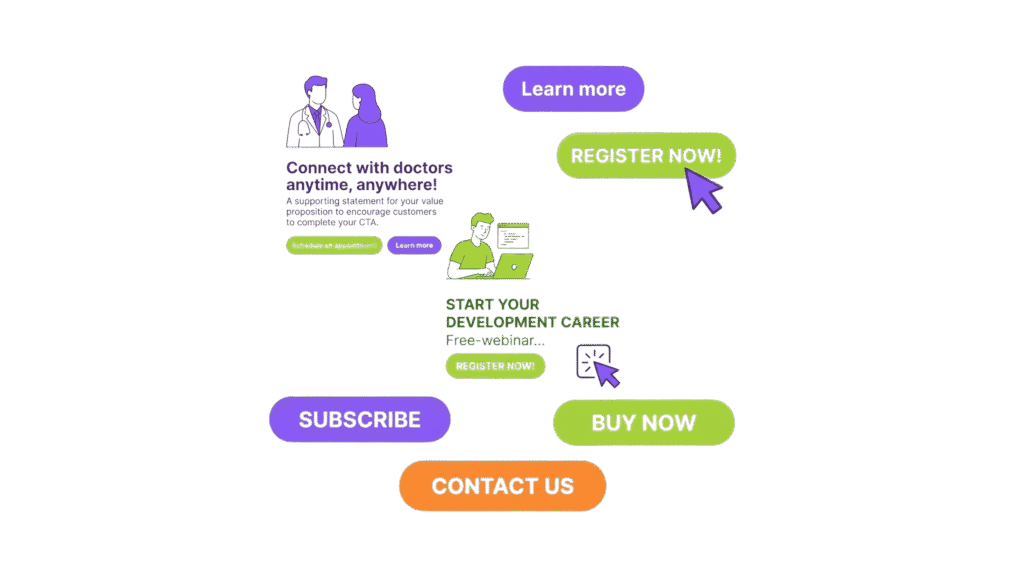
You can create better converting pages through color contrast by:
- Picking button colors that fit your brand but stand out from the background
- Making sure the button text is easy to read against the button color
- Using contrast checkers to test your color combinations
- Looking at complementary colors (opposite on the color wheel) to maximize visibility
Good contrast isn’t just about looks—it helps people use your site. High-contrast CTAs help users with visual impairments or color blindness, which grows your potential customer base and meets legal requirements.
Add Secondary CTAs, Like Wishlist or Share
Not everyone buys right away. Secondary CTAs give shoppers other ways to stay connected to your products. A wishlist button lets them save items they like without committing to buy.
Wishlists can help you:
- Drive more sales through return visits to saved products
- Keep customers engaged by making your store memorable
- Make it easier for users to track products they want
Share buttons also let customers spread your products on social media. This creates an easy one-click sharing option that helps get your content to more people in your target audience.
When you add secondary CTAs:
- Put them close to but less prominent than primary CTAs
- Style them differently to keep focus on the main buy button
- Look into wishlist apps like Growave or Swish that work with your platform
- Tell people about these features in newsletters or site announcements
RankFast’s On-Page SEO services can help you optimize product pages for both technical SEO and conversion elements like CTAs. Their team knows how to apply these strategies while handling the technical details that support your conversion goals.
Use Social Proof to Build Confidence
Social proof works like digital word-of-mouth recommendations for your ecommerce store. 93% of shoppers say online reviews affect how they shop. Reviews are vital elements of high converting product pages. Let’s look at ways to use customer feedback that builds confidence and drives conversions.
Feature Reviews In Visible Areas
Smart placement of customer reviews can transform purchase decisions. Research shows that shoppers who interact with user-generated content see a 144% lift in conversion rate and earn 162% more revenue per visitor. Your product page optimization can improve when you:
- Homepage placement – Show reviews on your homepage where visitors see them first
- Product page integration – Put reviews right under product descriptions where buying decisions happen
- Exit-intent displays – Show testimonials in popups when visitors try to leave
- Near call-to-action buttons – Place review snippets next to purchase buttons to remove last-minute doubts
About 88% of shoppers trust testimonials as much as recommendations from friends and family. You miss valuable conversion opportunities if you don’t place these trust signals throughout your site.
The best approach combines both company reviews about overall business experience and specific product feedback about individual items. Verified purchase badges add more trust – 92% of top stores use them because customers trust verified reviews 68% more.
Highlight One Strong Review
Featuring one powerful testimonial creates a focal point for uncertain shoppers. Experts call this the “review spotlight” effect.
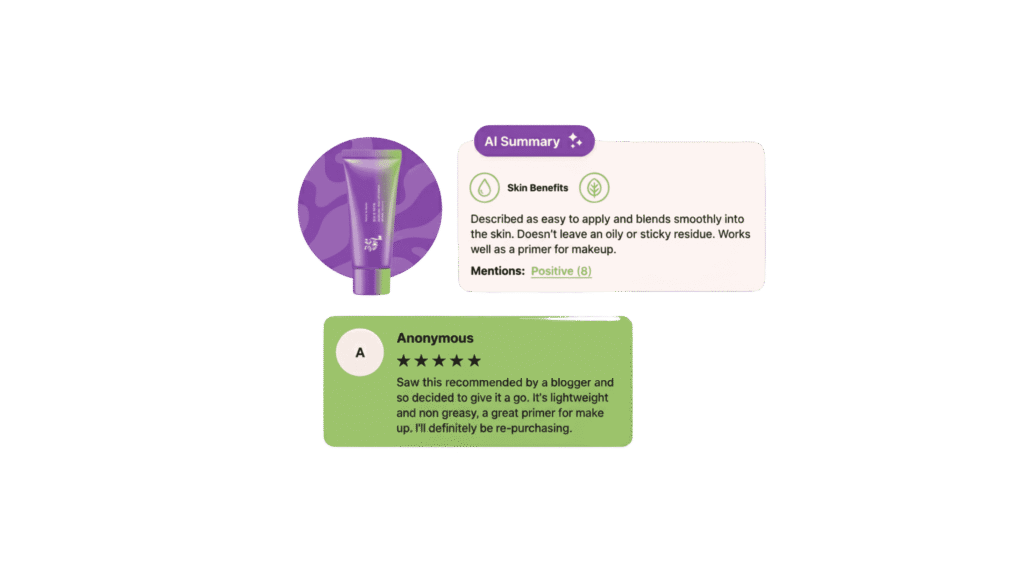
Trend Micro uses this approach well. They display average star ratings and highlight specific customer reviews that tackle common buying concerns. A fitness gear shop added video testimonials from buyers showing products in action and saw their conversion rate jump 45%.
Good reviews to highlight should:
- Talk about specific product benefits in real language
- Share doubts that were overcome
- Include real details about using the product
- Show verified purchase badges
Video reviews work really well as an ecommerce conversion trigger. Video review carousels can boost conversion rates 23%, while product-specific reviews increase add-to-cart rates 18%. Visual social proof creates better shopping experiences.
Make It Easy To Leave Detailed Reviews
A simple review process gets you more and better feedback. Shoppers read 10 online reviews on average before buying. Fresh reviews are essential for product page optimization.
Your review collection process should:
- Automate review requests – Set up systems that ask for reviews after purchase
- Offer smart incentives – Monthly gift card drawings can boost responses 63%
- Simplify submission forms – Ask for specific feedback but keep it simple
- Enable photo/video uploads – Make adding visual content easy on mobile
Recent reviews matter most. People ignore reviews older than three months 84% of the time. Fresh reviews make your social proof more credible.
Show both good and bad feedback – 68% of consumers trust reviews more when they see both positive and negative ratings. This honest approach builds real connections with potential customers.
These social proof strategies on your high converting product pages create shopping experiences built on trust. RankFast’s On-Page SEO services can help implement these strategies while supporting technical SEO for ecommerce basics.
Create Urgency and FOMO
Product pages that create a sense of urgency tap into a psychological trigger that affects buying decisions. Studies show 60% of people who feel FOMO buy something within 24 hours. Your high converting product pages can see better results by a lot when you tap into your customers’ fear of missing out. This helps speed up their purchase decisions.
Apply Urgency Labels Like ‘Selling Fast’
Shoppers take action right away when they see urgency labels that make them feel they might miss a great chance. The lack of something naturally makes people notice its value more. People value items more when they think these items are rare or limited.
These urgency labels work well:
- “Selling Fast” – Makes people decide quickly
- “Limited Edition” – Shows how rare and exclusive items are
- “Only X Left in Stock” – Shows exact numbers of items left
- “Final Chance” – Shows time is running out
Bed Bath & Beyond uses this strategy well. They add footer text to their deals with clear time limits: “Limited time,” “Valid thru [specific date],” and “While supplies last”. Marketers call this “artificial scarcity” – a powerful ecommerce conversion trigger that helps uncertain shoppers make up their minds.
Being honest with these labels is vital. Your customers can spot fake scarcity claims quickly. False claims can break trust and hurt your product page optimization results in the long run.
Show Real-Time Stock Availability
Live inventory updates create natural urgency and help shoppers make informed choices. Walmart’s strategy of showing “only 3 left!” in red text under prices works well. This proven method uses people’s natural desire not to miss out.
These approaches get results:
- Show exact numbers for items running low
- Let shoppers see how many people view the same item
- Display recent sales (e.g., “15 sold in the last hour”)
- Add countdown timers for limited-time deals
Booking.com uses this strategy brilliantly. They show how many others are looking at the same hotel room. This makes people book faster because they know the room might not be there later. Etsy shows both available quantities and cart additions, which gets shoppers to buy sooner.
Marketing data shows these inventory features can boost conversions by up to 332%. In spite of that, staying truthful matters most – your stock numbers must match what you actually have to keep customer trust.
Use Exit-Intent Pop-Ups With Offers
Exit-intent popups give you one last chance to convince leaving visitors. These smart tools spot when users plan to leave your site and show them special deals. Studies reveal these popups can improve conversions by 4-11%.
These popups work best when you:
- Use clear, action-focused CTAs
- Give real value (discounts, free shipping, etc.)
- Make them work on all screens
- Try different deals to find what works
Mobile devices need a different approach since they can’t track mouse movement. Popups can appear when users scroll up, hit back, switch tabs, or stay inactive. This helps maintain solid product page optimization on all devices.
Green Mountain Mustard combines “wait” with free shipping in their exit popups. This shows they know visitors thought about buying and gives them a good reason to buy now. Adding countdown timers to these popups magnifies results – one business saw leads jump by 300%.
Smart use of these urgency and FOMO techniques on your high-converting product pages creates powerful triggers that turn browsers into buyers. These strategies work even better when paired with solid technical SEO for ecommerce to get the most sales from your product pages.
Enhance The Shopping Experience
Your product’s visual presentation determines how customers interact with items they can’t touch in person. Better interactive elements on your product page optimization create shopping experiences that stand out from competitors.
Enable Hover-To-Zoom For Images
Visual details drive purchase decisions. Hover-to-zoom features let customers see product details up close. This builds their confidence to buy. The feature works great for products where texture, material quality, and fine details matter.
Here’s how to make zoom work well:
- Use high-resolution product images (at least 2048 x 2048 pixels) that stay clear during magnification
- Make sure images have good lighting and sharp focus to show product details
- Add smooth transition effects (0.3s speed works best) for a polished look
- Pick smart placement – zoom can show up next to, above, below, or inside the main product image
Studies show that customers who can inspect products closely feel more confident. This leads to fewer abandoned carts and better sales numbers.
Offer Samples For High-Ticket Items
Sample offers give customers a risk-free way to experience premium products. Peekage reports that 92% of customers try product samples when offered. About 53% end up buying the full-size product. This strategy works best for items needing fit checks or sensory testing.
E-commerce sampling shows amazing results. Almost every targeted consumer opens sample packages, and 97% try them. The conversion rates range from 14-33% – this is a big deal as it means that these rates beat most promotional methods. Customers love trying products at home, where they’re most likely to buy.
Add Live Shopping Or Video Demos
Product videos sell – 84% of consumers say they’ve bought something after watching a demo. These videos show how products work in real life, making them crucial for high converting product pages.
Live shopping takes video demos up a notch by mixing livestreams with shopping features. This creates an environment where:
- Hosts show products as they work
- Viewers get instant answers to their questions
- Buy buttons make purchasing quick and easy
- Limited-time deals create urgency
The results speak for themselves. Live shopping events get 10x more comments than regular videos and can convert up to 30% of viewers. Coresight data shows that live shoppers return items 40% less often than other online buyers.
RankFast’s On-Page SEO services can help you implement these strategies while following technical SEO for ecommerce best practices.
Support and Conversion Boosters
A resilient support system that answers customer questions sits behind every successful product page. The right tools can transform uncertain browsers into confident buyers and boost your high converting product pages through better customer experience.
Add Helpful FAQs And Q&A Sections
Most people now prefer digital channels over phone calls – about 73% according to [link_1]. Your website needs a well-laid-out FAQ section that serves as a vital knowledge hub. This removes buying anxiety and helps customers make purchase decisions confidently.
Q&A sections deliver remarkable results. Almost all consumers (99%) read this content occasionally. The numbers get even better – visitors who engage with Q&A content show a 157.1% higher conversion rate. This makes it the most effective form of user-generated content that influences buying decisions.
These approaches work best:
- Place FAQs where customers can find them easily
- Group related questions together for easy reading
- Revise content based on support team feedback
- Add a search feature if you have many FAQs
Use Canned Responses In Live Chat
Your team can answer common questions quickly and consistently with pre-written live chat responses. These ready answers reduce response times. Agents won’t need to type similar answers repeatedly.
Your product page optimization works better when you:
- Put chat windows where customers often pause
- Send chat invites based on how people browse
- Connect with analytics to measure conversion results
Track Micro-Conversions And Feedback
Small actions before purchases – micro-conversions – tell you a lot about your ecommerce conversion triggers. These actions help spot weak points in your sales funnel.
You can track effectively by:
- Watching email sign-ups and wishlist adds
- Looking at how people search products
- Getting quick feedback through post-chat surveys
Fixing problem areas makes a big difference. Reducing an 80% drop-off to 40% directly boosts conversions by removing obstacles that stop visitors from buying. These support features play a significant role in technical SEO for ecommerce strategies that focus on user experience.
Conclusion
Your product pages can become conversion powerhouses with the right optimization strategies. You now have a complete toolkit to substantially increase your ecommerce conversion rates above the standard 2-4% range. Your customers have one main question: “Why should I care about this?” You can address this by optimizing product copy with simple language, using standard product names, and showcasing clear benefits.
These details often determine whether product pages convert at average or high rates. A well-optimized page creates a continuous connection that naturally guides visitors toward purchases. RankFast‘s On-Page SEO services can help you optimize your product pages if you need expert guidance. Our team ensures your pages meet technical SEO requirements for maximum visibility and conversions.
Make these changes today and track your results to refine your approach. Your product pages will evolve from simple showcases into powerful sales tools. Soon, your conversion rates will climb nowhere near industry averages as your pages drive more sales effectively.
FAQs
What's the best way to use customer reviews on my product pages?
Feature reviews in visible areas like near the product description and call-to-action buttons. Highlight one particularly strong review that addresses common concerns. Make it easy for customers to leave detailed reviews, including photos and videos.
How can I create a sense of urgency to encourage purchases?
Use urgency labels like "Selling Fast" or "Limited Edition", show real-time stock availability, and implement exit-intent popups with special offers. These tactics can increase conversions by up to 332%.
What visual elements should I include to enhance the shopping experience?
Enable hover-to-zoom functionality for product images, offer samples for high-ticket items, and add live shopping or video demos. Product videos can convince up to 84% of consumers to make a purchase.
How can I improve my product page's call-to-action (CTA) performance?
Make CTAs responsive and sticky so they're always visible, use contrasting colors for better visibility, and add secondary CTAs like wishlist or share buttons. Implementing sticky Add to Cart buttons can increase orders by approximately 8%.