Did you know 90% of people looking to buy a home start their search online? The numbers tell an interesting story – 46% of Google searches have local intent, and “near me” searches have grown by over 500% over the last several years.
These statistics paint a clear picture, yet many real estate professionals can’t overcome SEO problems that make them invisible to potential clients. Your listings might be buried under Zillow, Redfin, and other major platforms, even though 47% of home buyers check Google before they talk to an agent. This lack of visibility doesn’t just create frustration – it directly impacts your client base and commission earnings.
Real estate agents need specific SEO strategies to tackle unique challenges. Several technical factors might keep your business from showing up in the map pack for real estate searches. Duplicate MLS content and missing schema markup are common culprits.
Here, will show you what the real estate local SEO issues are and give you applicable information to climb those local search results. Your listings deserve better visibility, and we’ll help you achieve it!
Why Real Estate Agents Struggle to Appear in Local Search
Local searches make up almost half (46%) of all Google queries. ‘Near me’ searches have shot up by 500% over the last several years. Real estate professionals need to understand why their listings don’t show up in these vital local searches to fix their real estate local SEO issues.
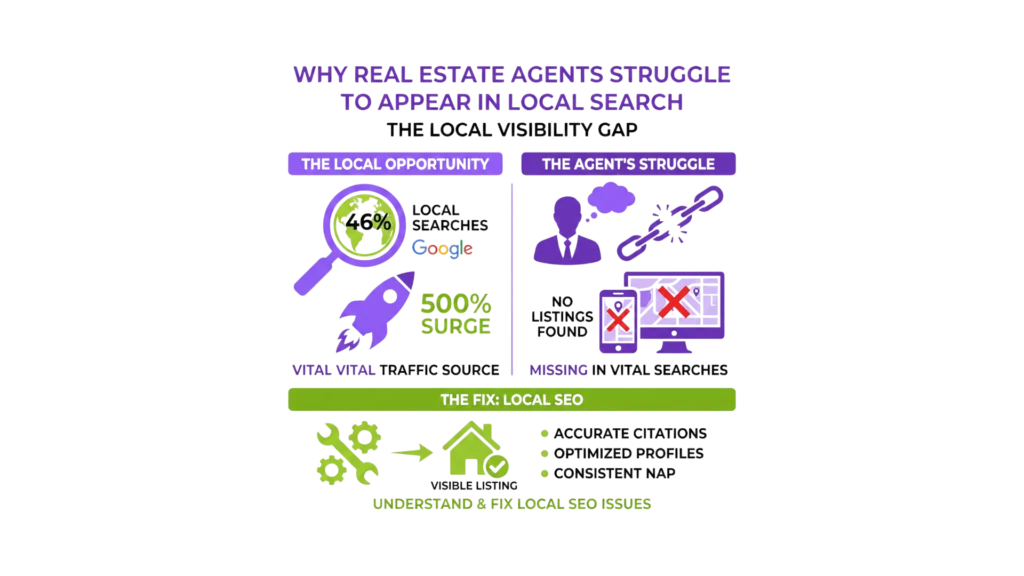
The Rise of ‘Near me’ Searches and Local Intent
Eight in ten consumers look up local businesses every week. One-third of them do it daily. Google leads the pack – 80% of people use Google Search, and 49% rely on Google Maps to find local businesses. The map has changed, though. Social platforms now play a bigger role. Facebook (32%), Instagram (19%), and TikTok (15%) help buyers explore neighborhoods.
Reddit and ChatGPT (both at 11%) are becoming popular spots for individual-specific recommendations. This spread means your potential clients might find listings through several channels before they reach out to you.
BrightLocal’s research shows something interesting: 76% of smartphone users who look up nearby businesses visit them within a day. People searching for “real estate agent near me” want to connect with a local agent right away.
How Google ranks local real estate results
Google uses three vital factors to determine local rankings: relevance, distance, and prominence.
Relevance shows how well your business profile matches search intent. For seo for real estate agents, your online content should clearly show local expertise through location-based keywords.
Distance looks at how far your business sits from the searcher. Google likes nearby businesses, but you can overcome location challenges. Try targeting niche searches like “coastal properties near [Neighborhood]”.
Prominence measures your business’s reputation. This depends on:
- Review quality and quantity
- Business information consistency across platforms
- Backlinks from trusted local sources
- Regular updates and activity
Your Google Business Profile stands as your strongest ranking signal. It drives over 30% of map pack visibility for real estate.
The dominance of Zillow, Redfin, and Realtor.com
A major realtor ranking issue comes from competing with industry giants. Beyond local agent competition, you face powerhouses like Zillow, Realtor.com, and Redfin. These platforms control search traffic and shape what users expect.
These platforms come with built-in advantages:
- Zillow has the biggest online home inventory with nationwide listings
- Realtor.com updates listings every 15 minutes in some areas
- Redfin offers live data with features like “Hot Homes” labels
The numbers tell the story – 97% of homebuyers start their search online. They often land on these major sites before finding individual agents.
This creates opportunities though. As an agent tackling real estate local SEO issues, you can win with detailed, location-specific searches that big portals miss. You can attract serious local buyers and sellers by creating neighborhood-focused content and using your local knowledge.
The key to real estate SEO lies in understanding the game. While Zillow dominates broad searches, they leave gaps in specific, hyper-local queries – exactly where motivated buyers and sellers look.
Common SEO Mistakes That Hurt Your Visibility
Real estate agents often struggle to get their websites noticed in local search results. Your success online depends on avoiding some critical SEO mistakes that run rampant in the industry. A Raven study shows that 29% of internet pages contain duplicated content. This creates a substantial problem for many real estate websites.
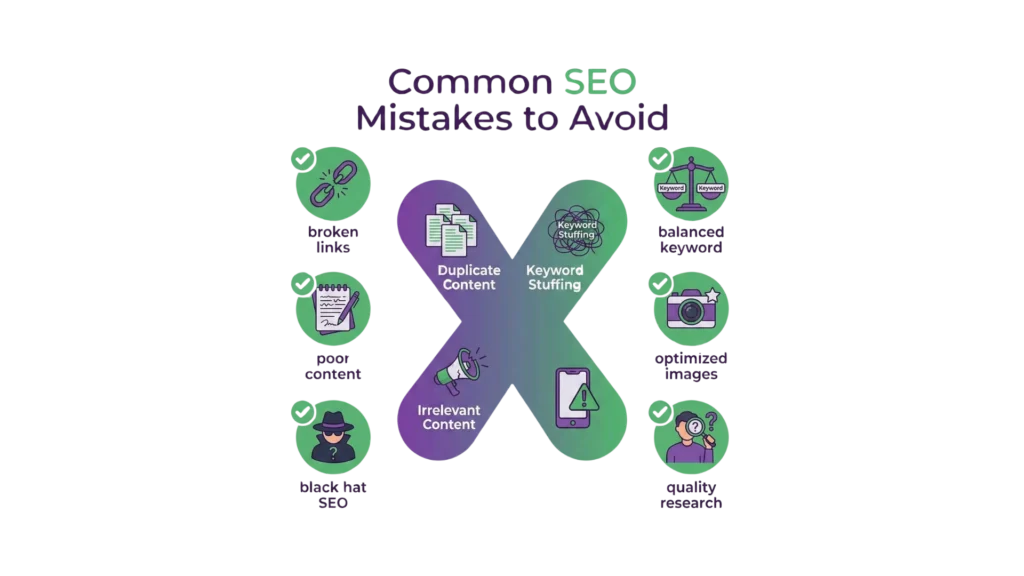
Using duplicate MLS content
Your website loses visibility when you copy MLS descriptions word-for-word. Google doesn’t deal very well with duplicate content because it must choose which version deserves top ranking. So, when you use the same property descriptions as other agents, Google usually picks just one to show—typically giving preference to 10+ year old sites like Zillow.
This duplication weakens your site’s authority and spreads link equity across multiple pages instead of focusing it on your original content. The solution to these real estate local SEO issues lies in rewriting MLS descriptions with your unique view. You can add neighborhood details, walk scores, nearby amenities, and your personal take on properties. This difference helps Google see your content as valuable and original.
Missing or incorrect schema markup
Schema markup gives search engines a clear picture of your content, yet many agents skip this vital step. Without proper schema, Google has to guess what your content means—and often gets it wrong. Your real estate SEO needs these specific types of structured data:
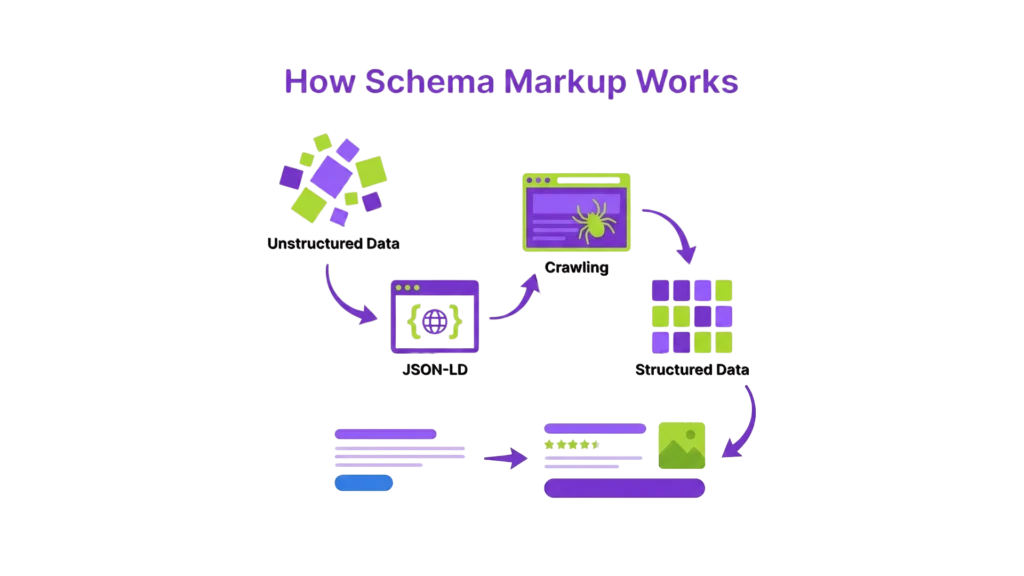
- LocalBusiness schema on your homepage with exact NAP (Name, Address, Phone)
- RealEstateAgent schema on your about page
- PropertyListing schema on listing pages
- Proper geo-coordinates (vital for “near me” searches)
Common schema errors include using scraped third-party reviews, choosing generic “Residence” instead of specific “House” or “Apartment”, and leaving outdated schema on sold listings. The right schema helps you show up in rich snippets and boosts your visibility in the map pack for real estate searches.
No keyword targeting in property descriptions
Property descriptions are a great way to get keyword optimization right, but most agents miss this opportunity. Generic descriptions won’t cut it. You need location-specific terms and property features that buyers actually search for.
Keyword stuffing will hurt your rankings and makes content sound artificial. Focus on what home buyers in your area want. To name just one example, someone who searches “best schools in [City]” probably cares about education when house hunting, so mention nearby schools when they matter.
Unoptimized images and slow-loading pages
Real estate websites rely heavily on images, which often create performance issues. The median load time for real estate websites hits 6.9 seconds—nowhere near the 3-5 seconds users expect. This delay drives visitors away, pushing bounce rates from 11% to 53%.
Big, uncompressed images (2-4MB) might look great but they kill load speed, especially on mobile devices. Mobile optimization matters because 73% of home buyers use their phones during their search. This makes image optimization essential for seo for real estate agents.
These fixes will help:
- Compress images while maintaining quality (aim for 75-80% compression)
- Use WebP format where possible
- Add descriptive alt text (e.g., “Rooftop pool with skyline view in District 2”)
- Use lazy loading for off-screen images
Fast-loading pages keep potential buyers on your site longer, which means more leads. Good image optimization can cut image size by 64% and speed up page loads from 6.9 to 3.3 seconds—giving your realtor ranking issues a serious boost.
These SEO fixes will help your real estate business compete better in local search results. You’ll see better visibility and more engagement from interested local buyers as you implement these changes.
How to Optimize Your Google Business Profile
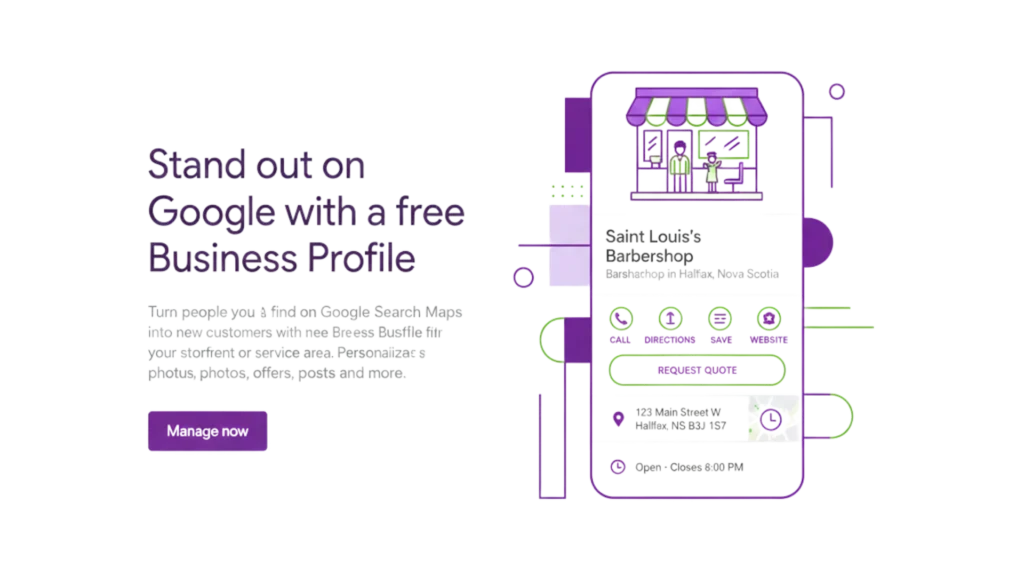
Your Google Business Profile (GBP) works as your digital storefront for potential clients in local searches. Properly optimized profiles get 40% more requests for directions and 35% more website clicks. This free tool is vital to solve your real estate local SEO issues.
Claim And Verify Your Profile
Start by searching for your business on Google Business (business.google.com). You can claim an existing listing or click “Add your business” to create a new one. Fill in your details including name, category (“Real Estate Agent”), contact information, and service areas. Google protects users through verification—usually by postcard, though some realtors can verify by phone or email. This step proves you have the authority to manage the profile and your information will display correctly on Google Maps and local search results.
Add Location-Specific Keywords In Your Description
Your business description should pack keywords and location details in 750 characters. Use terms like “real estate agent,” your city name, neighborhoods, and specialties. Google looks for relevance in this section, so include phrases your potential clients might search. Write a professional and engaging description that shows what makes you stand out in your local market. This helps boost your visibility in the map pack for real estate searches.
Upload High-Quality Photos Of Listings And Neighborhoods
Photos and images can transform your profile’s performance. Add professional headshots, office photos, property listings, and neighborhood pictures. Put your photos in the right categories: identity (logo), exterior, interior, team, and at work.
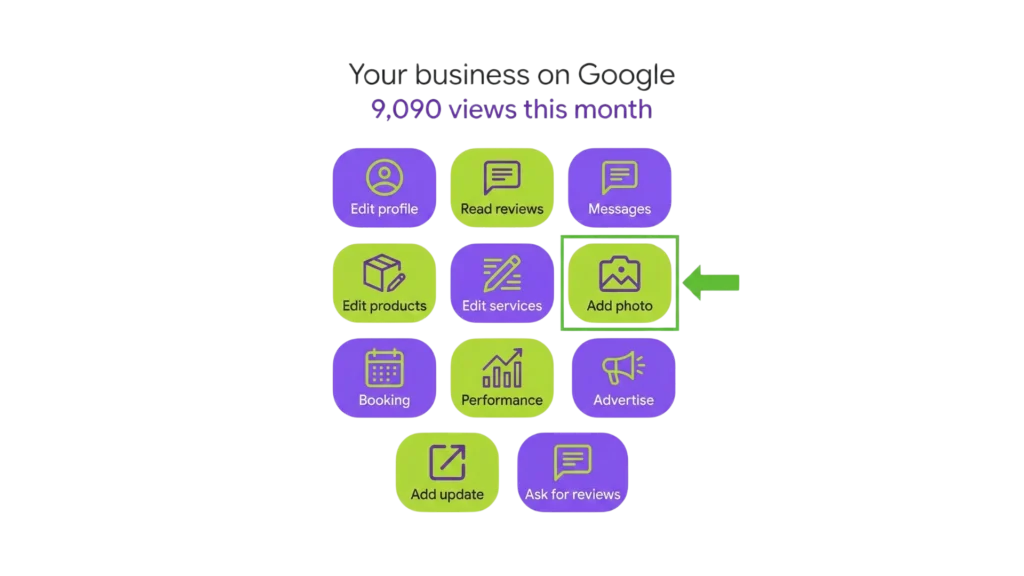
You should have at least five images that showcase your properties, team, services, or business location. New images tell Google your business is active and legitimate, which improves your local search ranking.
Encourage And Respond To Client Reviews
Reviews play a big role in your real estate SEO ranking. Send your clients a direct link to your GBP with a personal note asking for feedback after closing. Always respond quickly to reviews—good and bad. Thank clients who leave positive reviews and mention specific details about your work together. Handle negative reviews professionally by acknowledging concerns and offering to resolve issues offline. Quick responses show your steadfast dedication to client satisfaction.
Post Regular Updates And Market Insights
Think of your GBP as another social channel and post updates weekly. Share content about new listings, market reports, open houses, or local community events. Google lets you create different types of posts, including updates, offers, and events—each with its own format. Regular posts keep your profile active and show Google your business stays relevant. Fresh content helps potential clients learn about your expertise and current offerings.
Need help with these real estate SEO strategies? RankFast’s real estate SEO services can optimize your Google Business Profile and fix your realtor ranking issues using proven techniques that bring qualified leads.
Boosting Local SEO with Content and Keywords
Hyper-local content serves as the lifeblood of effective real estate SEO. Your website should connect with potential clients in specific locations rather than general home buyers.
Use Hyper-Local Keywords In Your Pages And Blogs
Location-specific, long-tail keywords perform better than broad terms because they attract motivated buyers. Generic searches like “real estate agent” don’t match the intent of hyper-local terms like “single-family homes in the north Burbank area”. Your content should highlight neighborhood names, local landmarks, and specific property types to capture high-intent searches.
Create Neighborhood Guides And Market Updates
Neighborhood guides establish you as a local expert and work well as lead magnets. Real estate agents who share neighborhood content strategically see a 43% increase in organic traffic within three months. The guides should feature demographics, amenities, transportation options, and market trends. Buyers can picture themselves living in specific areas while you showcase your deep community knowledge.
Add Location In Title Tags And Meta Descriptions
Local rankings can jump 21% with location-specific landing pages. Your title tags should include geographic identifiers (keep under 60 characters) and meta descriptions (under 160 characters). Search engines will better understand your business location, making your pages relevant for local searches.
Embed Google Maps And Use Local Schema Markup
Embedding Google Maps on location pages strengthens your geographic relevance. Local Business schema markup helps search engines interpret your content accurately and boosts visibility in local search results. This structured data highlights key details about your business and properties, helping Google display your content in rich results.
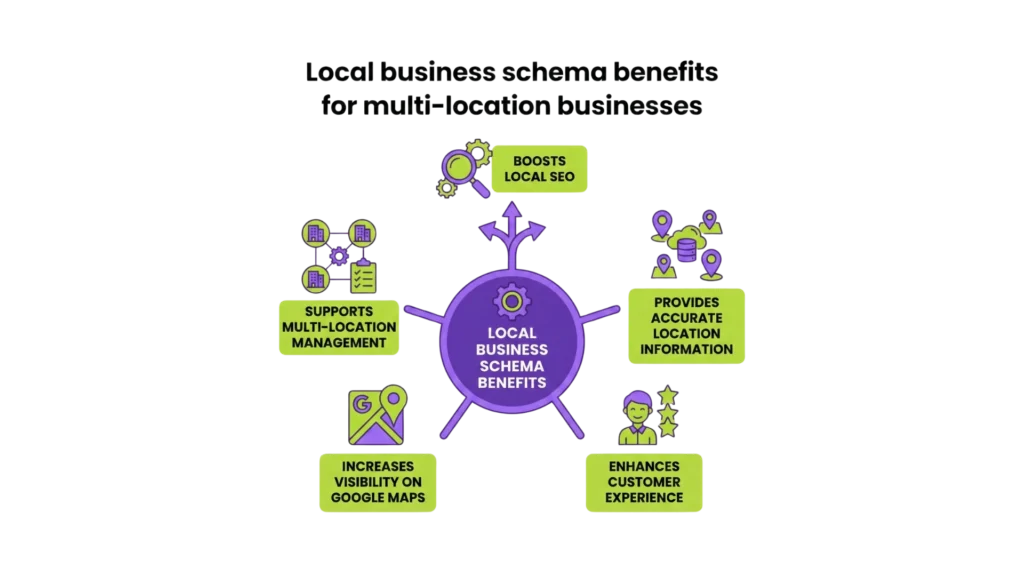
Our team at RankFast’s real estate SEO services can help you implement these strategies and solve your real estate local SEO problems with proven techniques that bring qualified leads.
Building Authority with Backlinks and Citations
Backlinks and citations work as trust signals for search engines and directly affect your real estate local SEO issues. Your authority grows through strategic collaborations and consistent information management across the web.
Get Listed In Real Estate Directories Like Zillow And Yelp
Directories with high domain authority add credibility to your business. Zillow boasts a domain authority of 90, and Realtor.com follows with 89. The best platforms where buyers actively search include:
- Zillow: Draws 25 million monthly visitors
- Realtor.com: The official NAR site with detailed listings
- Homes.com: Lists over 1 million agent profiles
- Yelp: Uses customer feedback to help find agents
A few perfect, authoritative listings work better than many error-filled ones.
Partner With Local Businesses For Backlinks
Local business collaborations create benefits for everyone involved. You could team up with:
- Home inspectors who provide technical property advice
- Interior designers who share staging tips
- Mortgage lenders who offer financial guidance
Simple link exchanges won’t cut it. Create valuable joint content instead. Local events or community projects sponsorship helps earn authentic backlinks while building your reputation.
Ensure NAP Consistency Across All Platforms
NAP (Name, Address, Phone number) consistency substantially influences your real estate SEO performance. Search engines get confused by small differences—like using “Ave” versus “Avenue”—which can hurt your rankings.
Businesses with consistent NAP details are 70% more likely to attract local customers. Perfect uniformity requires you to:
- Create a master record of your standard format
- Audit your listings regularly
- Update all platforms right away when information changes
Use Citations To Reinforce Your Location Relevance
Citations—online mentions of your business information—help search engines verify your legitimacy. These digital breadcrumbs show up in structured directories and unstructured mentions in blogs or social media.
Search engines trust you more when your citations are accurate and consistent. This improves your map pack for real estate rankings. Your citation network boosts visibility in local search results, giving you a solid SEO advantage.
RankFast’s real estate SEO services can help fix your realtor ranking issues with proven techniques if you need help with your backlink strategy.
Conclusion
You now understand why your real estate business isn’t visible in local searches. The digital world creates unique challenges for real estate professionals, but you can overcome these obstacles. Your visibility in local search results will improve by a lot when you optimize your Google Business Profile, create hyper-local content, and build a strong network of backlinks and citations.
Your first steps should focus on the basics. Rewrite those duplicate MLS listings, add proper schema markup, optimize your images, and keep your NAP information consistent across all platforms. Your local expertise will shine through neighborhood-specific content that attracts high-intent searchers.
The technical requirements might seem daunting. RankFast’s real estate SEO services can help you implement these proven strategies to boost your visibility and generate qualified leads. You’re an expert at selling homes—you shouldn’t need to become an SEO specialist overnight.
Better local search rankings need consistent effort, but the results make it worthwhile. These strategies will help you outrank competitors in search results, attract more qualified leads, and close more deals. Your real estate business should be easily accessible to clients who need your services the most.
FAQs
How can real estate agents improve their Google Business Profile?
To optimize your Google Business Profile, claim and verify your listing, add location-specific keywords to your description, upload high-quality photos of listings and neighborhoods, encourage and respond to client reviews, and post regular updates about market insights and new properties.
What are some common SEO mistakes real estate agents make?
Common SEO mistakes include using duplicate MLS content, neglecting schema markup, failing to target keywords in property descriptions, and having unoptimized images that slow down page loading times. These issues can significantly impact your visibility in search results.
How important is local content for real estate SEO?
Local content is crucial for real estate SEO. Creating neighborhood guides, using hyper-local keywords, and embedding Google Maps on your pages can boost your relevance for local searches. This type of content helps position you as a local expert and attracts motivated buyers in your area.
What role do backlinks and citations play in real estate SEO?
Backlinks and citations are essential for building authority and improving local search rankings. Getting listed in reputable real estate directories, partnering with local businesses for backlinks, and ensuring NAP (Name, Address, Phone) consistency across all platforms can significantly enhance your online visibility and credibility.